Quranic Answer
The Holy Quran serves as a profound source of guidance for billions of people around the world. Among its many themes, one of the most poignant is the unwavering hope it instills in the hearts of believers, especially during challenging times. Life is filled with ups and downs, and often, its harsh realities can leave us feeling hopeless and despondent. However, the Quran consistently encourages us to hold onto hope and reminds us of the infinite mercy of Allah. This encouragement is especially evident in Surah Az-Zumar, verse 53, where Allah addresses His servants with a powerful call: 'O My servants who have believed, do not despair of the mercy of Allah.' This profound statement encapsulates the essence of faith, urging us to embrace hope even when engulfed by darkness. ## The Nature of Despair and Hope Despair is a natural human reaction when faced with adversity. It can manifest as a heavy burden, weighing down on our spirits, causing us to feel isolated and helpless. However, the Quran reminds us that no situation is beyond redemption. Instead of allowing despair to consume us, we are encouraged to turn our gaze towards the Divine. The very act of reaching out for hope can be transformative, awakening a sense of purpose within us. In times of turmoil, the psychological effects of clinging to hope can be profound. Hope acts as a light in the shadows, fostering resilience and motivating individuals to take proactive steps towards improving their situations. It can uplift us from the depths of silence and anguish, pushing us to confront challenges with renewed vigor. The Quran serves not only as a spiritual guide but also as a beacon of hope, urging us to remain steadfast in our belief in Allah’s compassion and mercy. ## Understanding Allah’s Mercy The concept of Allah’s mercy is central to Islamic teachings. It is articulated in numerous verses throughout the Quran, each emphasizing the boundless nature of Divine compassion. Allah's mercy is often described as encompassing all things; it does not discriminate between those who are righteous and those who have strayed from His path. This is beautifully exemplified in Surah Al-Baqarah, verse 286, which states that Allah does not burden a soul beyond what it can bear. This reassurance is vital, especially during moments of crisis. It serves to remind us that challenges are not meant to break us but rather to shape and strengthen our characters. Life’s tribulations are often viewed as tests – opportunities crafted by the Divine for spiritual and personal growth. When we adopt this perspective, we can approach our problems with a mindset geared towards overcoming them rather than succumbing to defeat. By trusting that we have the capacity to endure our trials, we simultaneously foster resilience and cultivate hope that there will be light at the end of the tunnel. ## The Role of Faith in Overcoming Challenges Faith is a powerful ally in overcoming life’s difficulties. The Quran encourages us to establish a close relationship with Allah, especially during trying times. This bond not only provides spiritual sustenance but also imbues us with strength. Believers are reminded that they are never alone; Allah is always present to listen and to provide aid. This faith serves as a protective shield against despair. When we develop a deep sense of trust in Allah's plan, we can navigate through chaos with a sense of calm and equanimity. Prayer, supplication, and reflection are keys to nurturing this relationship. In moments of uncertainty, turning to Allah through prayer allows us to express our fears, seek guidance, and reaffirm our hope in His mercy. Moreover, community plays a pivotal role in reinforcing hope. The Islamic community, or Ummah, serves as both a support system and a reminder that we are all interconnected. Sharing our struggles with others, seeking advice, and receiving support can provide comfort, reminding us that we are not alone in our challenges. The Quranic teachings emphasize compassion and brotherhood, fostering an environment where individuals can uplift each other during difficult times. ## The Power of Positive Affirmation In addition to prayer and community support, cultivating a positive mindset is crucial. The Quran advocates for positive thinking, encouraging us to see the good in all situations. Gratitude, for example, is a recurring theme that reinforces hope. When we practice gratitude, we shift our focus away from our struggles to the blessings that surround us, no matter how small. By acknowledging even the slightest positive aspects of our lives, we create a mental environment conducive to hope and resilience. This shift in perspective is vital in combating despair. Reminding ourselves of past triumphs and recognizing our strengths can reignite our determination to face current challenges with confidence. ## Conclusion: Embracing Hope in the Light of Faith The teachings of the Quran provide invaluable tools for navigating life’s difficulties, emphasizing that hope should be an integral part of our lives. We are constantly reminded that despite the darkness we may encounter, the light of hope is never extinguished as long as we keep faith in Allah's mercy alive in our hearts. By adhering to the guidance presented in the Quran, we can cultivate resilience, embrace challenges as opportunities for growth, and continually reach for the higher hopes Allah invites us to attain. In moments of trial, let us remember that the nurturing embrace of Divine mercy awaits us, and that hope is not merely a fleeting feeling but a guiding light illuminating our path through darkness.
Related Verses
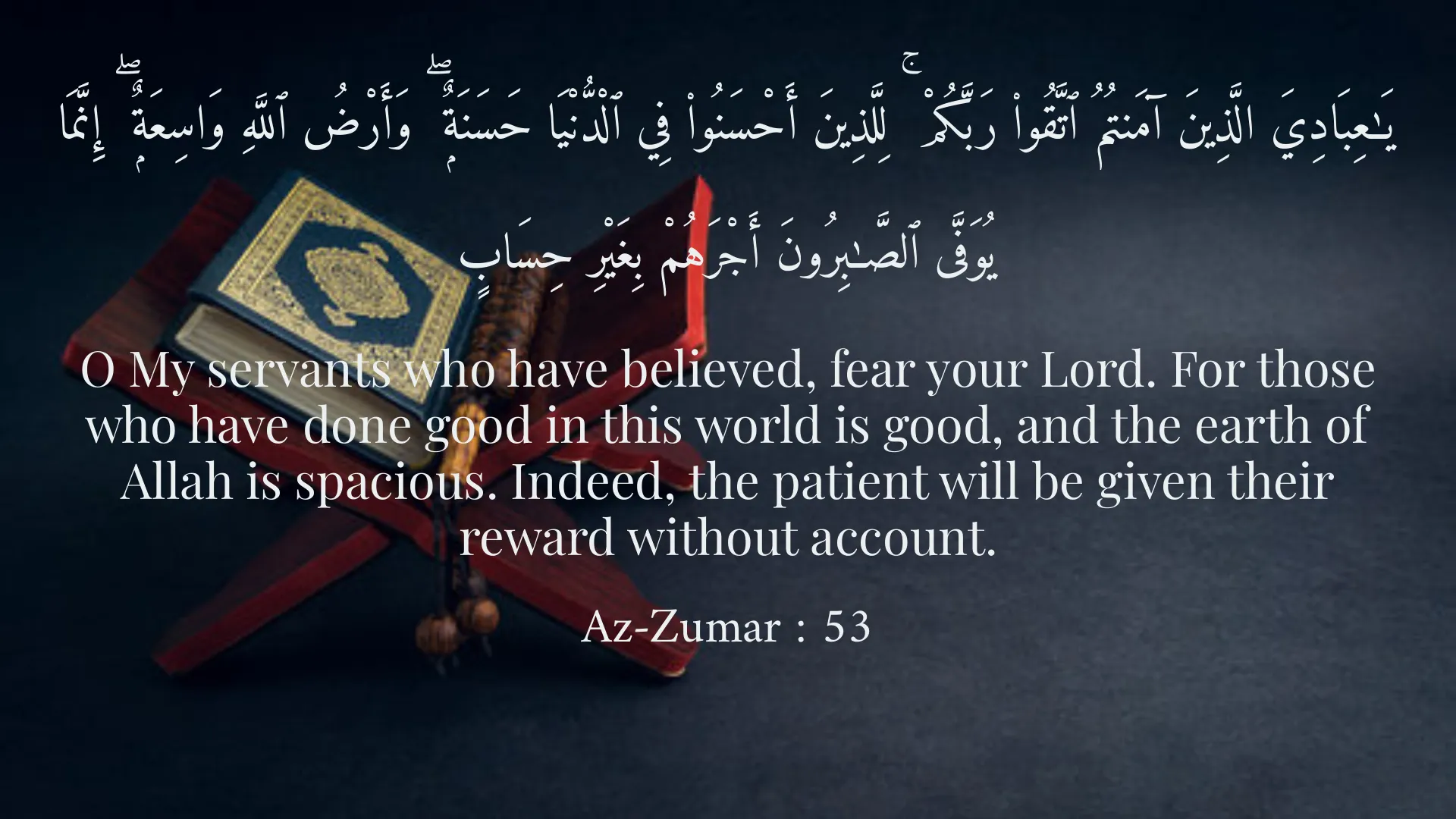
يَـٰعِبَادِيَ الَّذِينَ آمَنتُمُ ٱتَّقُوا۟ رَبَّكُمْ ۚ لِلَّذِينَ أَحْسَنُوا۟ فِي ٱلْدُّنْيَا حَسَنَةٌۭ ۖ وَأَرْضُ ٱللَّهِ وَاسِعَةٌۭ ۖ إِنَّمَا يُوَفَّى ٱلصَّـٰبِرُونَ أَجْرَهُمْ بِغَيْرِ حِسَابٍ
O My servants who have believed, fear your Lord. For those who have done good in this world is good, and the earth of Allah is spacious. Indeed, the patient will be given their reward without account.
Az-Zumar : 53
لَا يُكَلِّفُ اللَّهُ نَفْسًا إِلَّا وُسْعَهَا ۚ لَهَا مَا كَسَبَتْ وَعَلَيْهَا مَا اكْتَسَبَتْ ۗ رَبَّنَا لَا تُؤَاخِذْنَا إِن نَّسِينَا أَوْ أَخْطَأْنَا ۚ رَبَّنَا وَلَا تَحْمِلْ عَلَيْنَا إِصْرًا كَمَا حَمَلْتَهُ عَلَى الَّذِينَ مِن قَبْلِنَا ۚ رَبَّنَا وَلَا تُحَمِّلْنَا مَا لَا طَاقَةَ لَنَا بِهِ ۖ وَاعْفُ عَنَّا وَاغْفِرْ لَنَا وَارْحَمْنَا ۖ أَنتَ مَوْلَانَا فَانصُرْنَا عَلَى الْقَوْمِ الْكَافِرِينَ
Allah does not burden a soul beyond that it can bear. It will have [the consequence of] what [good] it has gained, and it will bear [the consequence of] what it has earned. Our Lord, do not impose blame upon us if we have forgotten or made a mistake. Our Lord, and lay not upon us a burden like that which You laid upon those before us. Our Lord, and burden us not with that which we have no ability to bear. And pardon us; and forgive us; and have mercy upon us. You are our protector, so give us victory over the disbelieving people.
Al-Baqarah : 286
Short Story
Once in ancient times, a man found himself lost in the deep darkness of a forest. He was extremely frightened and felt as if he had lost everything. But suddenly, a melodious voice echoed through the darkness, reminding him of God's mercy and urging him to remain hopeful even in darkness. After hearing this voice, the man decided to move forward with hope, and eventually, he found his way out.