Quranic Answer
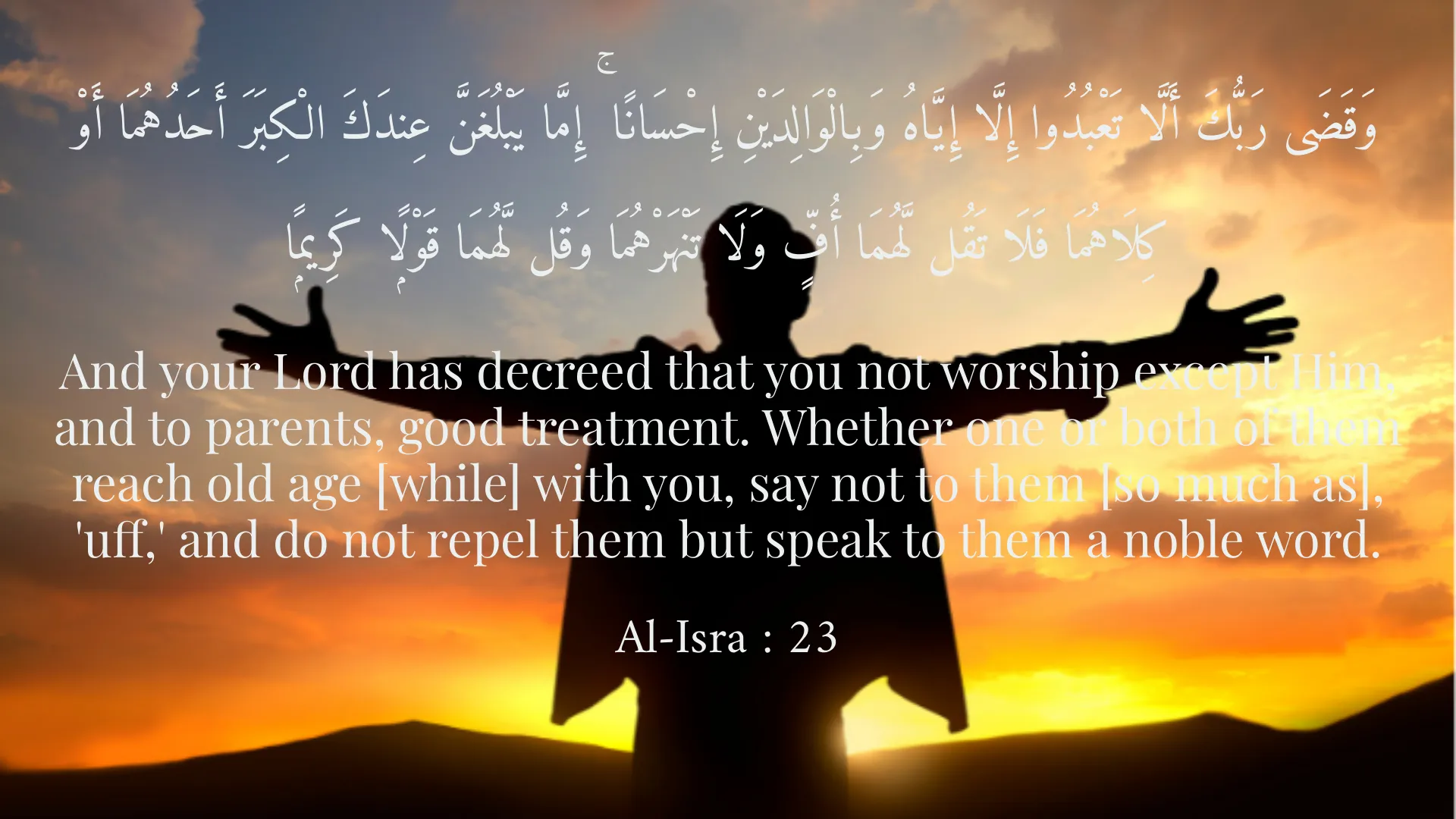
Respecting and being kind to parents is a deeply embedded principle in Islam, captured in the Holy Quran. The Quran places a significant emphasis on this moral obligation, elaborating on the importance of familial bonds and the profound respect that is owed to one’s parents. The teachings of the Quran not only provide guidance but also serve as a foundation upon which Islamic cultures are built. In this article, we will explore the various teachings in the Quran that underline the importance of respecting parents, the cultural implications of these teachings, and the broader human significance involved in honoring our parents. One of the most notable verses regarding this matter can be found in Surah Al-Isra, verse 23, where Allah explicitly states, 'And your Lord has decreed that you not worship except Him and to parents, good treatment.' This verse encapsulates a critical teaching of Islam: that the duty to worship Allah is intrinsically linked to the duty of showing kindness and respect towards one’s parents. By placing the rights of parents directly after the command of worshipping God, the Quran highlights the immense value that parents hold in the lives of their children. This dual obligation suggests that a person’s faith in God is intertwined with their treatment of their parents. Ignoring the latter could lead one to question their devotion to the former. In Islamic cultures, the role of parents transcends mere biological connection. Parents are often viewed as the primary caregivers, harboring the love, support, wisdom, and guidance necessary for their children’s growth and development. The emotional bond between parents and children is cherished and nurtured, shaping the identity, values, and beliefs of the latter. The Quran acknowledges this sentiment, stating in Surah Luqman, verse 14, 'And We have enjoined upon man [care] for his parents.' Here, we see a profound emphasis on the responsibility that falls on the shoulders of every individual to care for their parents. This care is not limited to physical needs; it includes emotional, spiritual, and psychological support as well, showcasing the depth of this relationship. However, it is important to recognize that respecting parents is not without its challenges. As individuals grow, they may find themselves at odds with their parents on various issues, driven by generational differences, cultural shifts, or personal beliefs. Despite these potential conflicts, Islamic teachings encourage patience and understanding when dealing with such discrepancies. The Quran not only calls for respect but also emphasizes compassion and gentleness in interactions, urging individuals to maintain a spirit of love and understanding in difficult times. The command to be good to one’s parents remains steadfast, underscoring that patience and kindness should prevail even in moments of disagreement. The importance of respecting one’s parents is further illustrated through various anecdotes and teachings from the life of Prophet Muhammad (PBUH). His life serves as a paragon of respect and kindness to one’s family members, and he often emphasized the significance of these values. Through his teachings, he encouraged his followers to prioritize their parents’ needs and comfort, to speak kindly to them, to be patient, and to show gratitude for the sacrifices that parents make. The Prophet's ability to embody these teachings in his daily life serves as a powerful example for Muslims everywhere. These narratives shape the cultural landscape of Islamic societies, where respect for parents is a norm celebrated by many. Additionally, the Quran does not merely focus on the obligations of the children towards their parents; it also calls upon parents to uphold their respective duties in raising their children with care, love, and guidance. This reciprocal relationship is essential for maintaining the integrity of the family unit. While children are commanded to respect and care for their parents, parents are equally tasked with the responsibility of nurturing their children’s well-being, morals, and values. By emphasizing this bilateral relationship, the Quran stresses the idea that family is a two-way street, where respect, love, and support must flow in both directions. The sense of duty towards parents also stems from the recognition of their sacrifices. Parents often invest their time, effort, and resources into raising their children, creating a sense of indebtedness that goes beyond the material realm. When children choose to show kindness and respect to their parents, they acknowledge and honor these sacrifices. Failing to do so not only reflects a lack of gratitude but also erodes familial bonds, causing potential rifts and deep emotional pain that can last a lifetime. By understanding the motivations behind parental care, children can develop a profound appreciation for the sacrifices made on their behalf, reinforcing the importance of demonstrating respect and care. Through various teachings, the Quran encourages a blend of love, respect, and gratitude towards parents, paving the way for stronger familial connections and healthier societies. This emphasis on the importance of respecting parents transcends cultural boundaries, resonating with individuals worldwide. In a time when relationships can sometimes become strained or neglected, the call to respect and honor one’s parents serves as a reminder of the universal values of love and compassion. In conclusion, respecting and being kind to parents is not just a moral obligation emphasized in the Holy Quran, but it remains one of humanity's most important responsibilities. The intricate teachings surrounding this relationship demonstrate the significance of honoring parental figures and the cultural values rooted in Islamic societies. Rooted in love, sacrifice, and mutual respect, the teachings of the Quran remind us of the critical role that family plays in our lives. Upholding the principles of kindness and respect toward parents is both a religious command and a testament to the fundamental human and social principles that underlie our existence. By emphasizing the importance of respecting parents, we not only uphold our faith but also cultivate a society that values family connections, love, and sacrifice.
Related Verses
وَقَضَى رَبُّكَ أَلَّا تَعْبُدُوا إِلَّا إِيَّاهُ وَبِالْوَالِدَيْنِ إِحْسَانًا ۚ إِمَّا يَبْلُغَنَّ عِندَكَ الْكِبَرَ أَحَدُهُمَا أَوْ كِلَاهُمَا فَلَا تَقُل لَّهُمَا أُفٍّ وَلَا تَنْهَرْهُمَا وَقُل لَّهُمَا قَوْلًۭا كَرِيمًۭا
And your Lord has decreed that you not worship except Him, and to parents, good treatment. Whether one or both of them reach old age [while] with you, say not to them [so much as], 'uff,' and do not repel them but speak to them a noble word.
Al-Isra : 23
وَوَصَّيْنَا الْإِنسَانَ بِوَالِدَيْهِ ۚ أَنِ اشْكُرْ لِي وَلِوَالِدَيْكَ ۚ إِلَيَّ الْمَصِيرُ
And We have enjoined upon man [care] for his parents. But if they endeavor to make you associate with Me that of which you have no knowledge, do not obey them. To Me is your return, and I will inform you about what you used to do.
Luqman : 14
Short Story
Once upon a time, a young man named Ahmad was searching for answers to his questions about life and his conscience. He always felt indebted due to the efforts of his parents, but he often neglected them in his daily life. One day, he decided to seriously respect his parents and spend more time with them. Ahmad became a storyteller of his newfound respect and love for his parents, and in doing so, he found greater peace in his life.