Quranic Answer
Respecting parents is one of the fundamental principles of Islamic ethics, and it holds an esteemed position in the fabric of Islamic teachings. The importance of this principle is profoundly articulated in the Holy Quran, as it emphasizes that kindness and good treatment towards parents is not just commendable but obligatory. This moral underpinning is rooted in a deeply spiritual context, where the relationship between children and their parents is seen as a vital element of societal harmony and individual growth. Numerous verses in the Quran reference the significance of treating parents with respect and honor, with one of the most notable being found in Surah Al-Isra, verse 23: 'And your Lord has decreed that you not worship except Him, and to parents, good treatment.' This verse captures a dual obligation: the worship of God and the honorable treatment of one's parents. It highlights an intrinsic priority in acknowledging and appreciating the role of parents in an individual's life. The verse serves as a reminder that even in challenging situations, where one might face unkindness or negligence from their parents, the responsibility of maintaining respect and kindness toward them remains unchanged. It is vital to understand that parents, like any human being, can be influenced by various factors that might lead them to exhibit imperfect behavior. These influences may stem from life’s adversities, psychological challenges, or simply a lack of knowledge. It is not uncommon for individuals to find themselves in familial situations where parental behaviors do not align with the ideals of respect and nurturing that one might hope for. Despite these circumstances, Islamic teachings urge us to adhere to the principles of kindness and respect. In Islam, the concept of parental respect transcends the actions of the parents themselves; it is about upholding a divine command that fosters love and respect within familial relationships. Reflecting on the role of parents elucidates the foundation they provide in our lives. Parents are often seen as the first teachers and caregivers, imparting lessons of love, morality, and guidance. Regardless of their actions, the love they have for their children generally lays the groundwork for the values that children carry into adulthood. This intrinsic bond, marked by shared experiences, sacrifices, and affection, is an indelible part of one's identity. Even if parents falter in their duties, the legacy of love and care should be something that remains ingrained in our hearts. In Islam, the importance of respect towards parents also mirrors a broader ethical framework that urges followers to exhibit piety and goodwill in all relationships. The teachings of Prophet Muhammad (PBUH) further affirm this principle. He stated, 'The best deeds are prayers performed on time and then kindness to parents.' This indicates that amongst the most revered acts of worship, kindness towards parents holds an exalted status, reinforcing the idea that good deeds towards one's parents are intrinsically linked to an individual's spirituality and moral character. This connection serves as a reminder that by showing respect and kindness to our parents, we are not merely fulfilling a duty but also seeking the pleasure of Allah. The relationship with our parents often reflects our relationship with God, as both relationships require mutual respect, understanding, and compassion. In this light, one's attitude towards parenting can act as a gauge for their moral standing and commitment to their faith. Moreover, recognizing and responding to our parents’ struggles is crucial in nurturing a compassionate environment. Many parents may be battling personal demons or are untrained in the art of parenting. Instead of harboring resentment or frustration, cultivating empathy and patience is essential. It's pivotal to understand that their reactions and behaviors may not always be a reflection of how they feel about us but could stem from deeper, unresolved issues. This perspective allows children to respond with compassion rather than hostility. In navigating these sometimes tumultuous relationships, it is imperative to engage through open dialogue fostered by respect. Discussing feelings and viewpoints can lead to better understanding and healing, not just for the children but for the parents as well. This path of dialogue can often illuminate the stressors or emotional challenges that one might not have previously recognized. Listening actively and showing understanding might be the key to unlocking a deeper relationship, one that is fortified by respect and kindness. Conclusively, respecting parents is an integral part of living a life aligned with Islamic values. It is a reflection of one’s faith and the moral compass that guides interactions, not only with family but also within the broader community. Upholding the tenets of kindness, patience, and respect fundamentally shapes an individual and lays the groundwork for a compassionate society. Such values, when ingrained in the youth, can ripple outward, acting as a catalyst for change in social dynamics. As Allah has decreed, the essence of respect towards parents is a divine command that holds the power to transform individual lives, build resilient families, and foster a community rooted in mutual respect and understanding. Ultimately, each act of kindness towards our parents not only reinforces our bond with them but also aligns us closer to the essence of our faith, creating a legacy of love, respect, and compassion that can be passed down through generations.
Related Verses
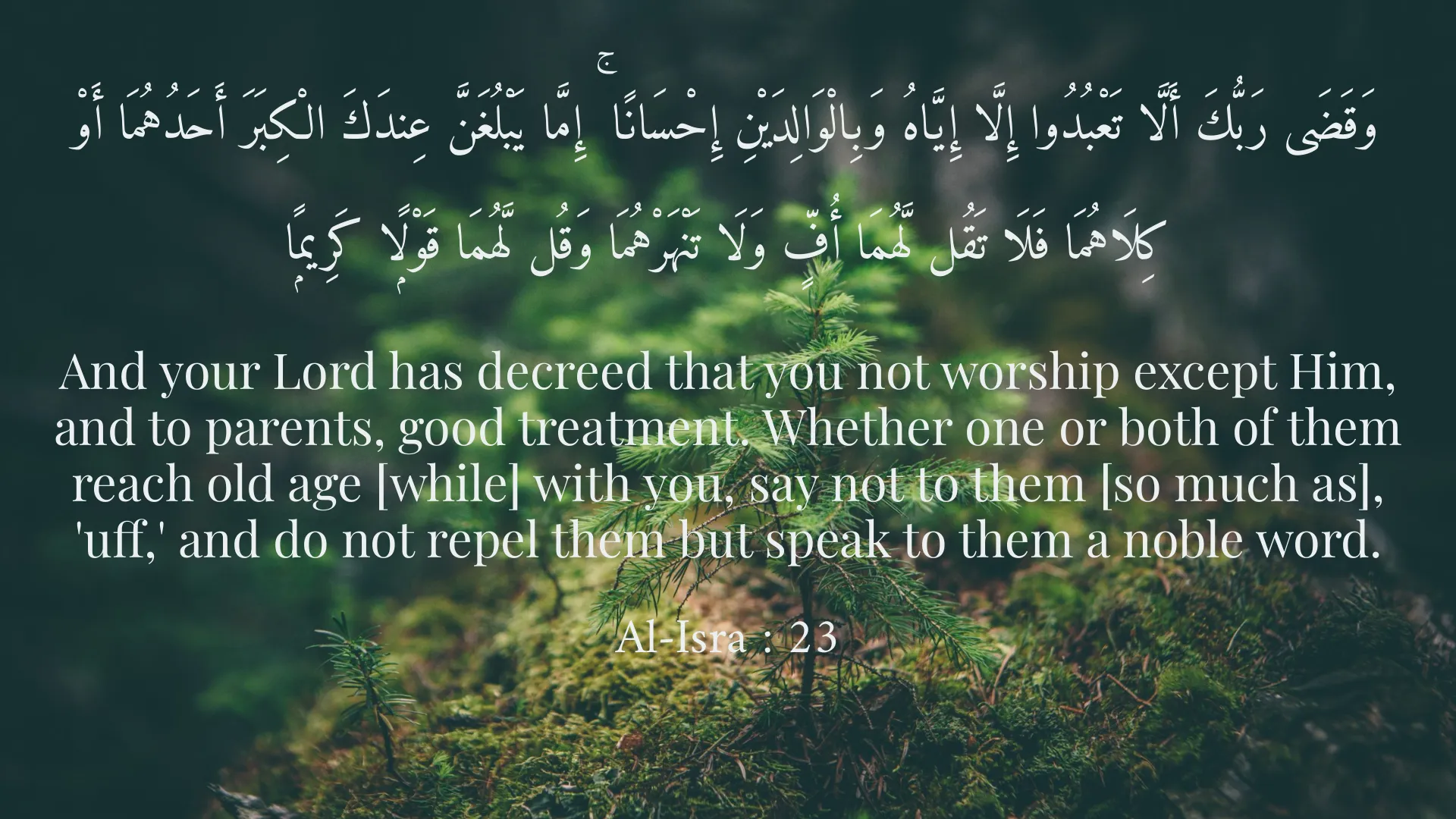
وَقَضَى رَبُّكَ أَلَّا تَعْبُدُوا إِلَّا إِيَّاهُ وَبِالْوَالِدَيْنِ إِحْسَانًا ۚ إِمَّا يَبْلُغَنَّ عِندَكَ الْكِبَرَ أَحَدُهُمَا أَوْ كِلَاهُمَا فَلَا تَقُل لَّهُمَا أُفٍّ وَلَا تَنْهَرْهُمَا وَقُل لَّهُمَا قَوْلًۭا كَرِيمًۭا
And your Lord has decreed that you not worship except Him, and to parents, good treatment. Whether one or both of them reach old age [while] with you, say not to them [so much as], 'uff,' and do not repel them but speak to them a noble word.
Al-Isra : 23
وَوَصَّيْنَا الْإِنسَانَ بِوَالِدَيْهِ ۚ أَنِ اشْكُرْ لِي وَلِوَالِدَيْكَ إِلَيَّ الْمَصِيرُ
And We have enjoined upon man [care] for his parents. But if they endeavor to make you associate with Me that of which you have no knowledge, do not obey them. To Me is your return, and I will inform you about what you used to do.
Luqman : 14
قُلْ إِن كَانَ آبَاؤُكُمْ وَأَبْنَاؤُكُمْ وَإِخْوَانُكُمْ وَأَزْوَاجُكُمْ وَعَشِيرَتُكُمْ وَأَمْوَالٌ اقْتَرَفْتُمُوهَا وَتِجَارَةٌ تَخْشَوْنَ كَسَادَهَا وَمَسَاكِنُ تَرْضَوْنَهَا أَحَبَّ إِلَيْكُمْ مِّنَ اللَّهِ وَرَسُولِهِ وَجِهَادٍ فِي سَبِيلِهِ فَتَرَبَّصُوا حَتَّى يَأْتِيَ اللَّهُ بِأَمْرِهِ ۚ وَاللَّهُ لَا يَهْدِي الْقَوْمَ الْفَاسِقِينَ
Say, 'If your fathers, your sons, your brothers, your wives, your relatives, the wealth which you have obtained, and the commerce in which you fear decline, and the dwellings in which you delight are more beloved to you than Allah and His Messenger and jihad in His cause, then wait until Allah executes His command. And Allah does not guide the defiantly disobedient people.'
At-Tawbah : 24
Short Story
Saeed was a boy who was always upset with his father's strict behavior. However, one day while reading the Quran, he came across a verse that said, 'Be kind to your parents,' reminding him that parental love is always important. So, he decided to show more respect to his father and patiently deal with his behavior. After some time, his father also changed his behavior and showed Saeed more love and affection.