Quranic Answer
Generosity and Helping Others in the Holy Quran In the Islamic faith, generosity is not only seen as a virtue but is also considered a fundamental aspect of one’s commitment to spirituality and moral righteousness. The Holy Quran, which Muslims believe to be the word of God revealed to the Prophet Muhammad, frequently underscores the significance of generosity and the importance of helping one another. This attribute is highly exalted, particularly during contemporary times when there are increasing demands on communal support, solidarity, and empathy. ### The Divine Command for Generosity In Surah Al-Baqarah, verse 267, Allah commands His believers to spend from the best of what they have earned, stating, "O you who have believed, spend from the best of what you have earned." This directive serves as a reminder that generosity is not merely about giving; it’s about the quality and intention behind one’s acts of charity. By urging followers to give from the best of their possessions, the Quran emphasizes the importance of intentionality in acts of kindness. It’s a reminder that one's generosity should stem from their wealth—not just in terms of material goods but also knowledge, time, and efforts aimed at uplifting others. Moreover, the framework for generosity established in the Quran encourages believers to engage in a culture of philanthropy. This culture is deeply rooted in the understanding that when one assists others, they not only enhance the lives of those around them but also move closer to their Creator. ### The Universal Value of Saving Lives The Quran does not restrict its teachings to merely material wealth. In Surah Al-Ma'idah, verse 32, it states that saving one life is akin to saving all humanity. This profound statement carries universal significance, as it teaches that every human life has immense value. This sacred admonition encourages individuals to extend their helping hands to those in distress or danger, fostering a sense of duty among believers to prioritize humanitarian efforts over self-interest. The notion of saving lives transcends individual acts of charity; it cultivates a spirit of communal responsibility. When society recognizes the intrinsic worth of each member, this leads to unity, cooperation, and mutual respect. The collective ambition to help one another in times of need creates resilient communities, bound together through shared values of compassion and altruism. ### The Cycle of Blessings Interestingly, the act of giving in Islam is portrayed not just as a duty but also as an invitation to receive—not only in terms of material returns but also in spiritual growth. Surah Fatir, verse 29 articulates this principle, affirming that Allah has promised increased rewards for those who spend in His way. "Whatever you spend, Allah will replace it, and He is the best of providers." This reflects a profound and cyclical relationship between giving and receiving; when one gives generously, they are not left in want, but rather their blessings are amplified. Furthermore, this principle serves to motivate believers to cultivate generosity, breaking the cycle of greed and fostering a spirit of giving. The understanding that sharing blessings can lead to greater abundance reinforces the belief in reliance on divine providence—a reminder that true wealth is measured not by possession but by one's willingness to share. ### Generosity: A Mark of Faith Ultimately, the act of giving and helping others is a true reflection of one’s faith and love for Allah’s creation. It is not simply about fulfilling a moral obligation; it is about embodying the core tenets of Islamic teachings. When generous acts are performed with pure intentions, they transcend material exchange and serve to strengthen an individual’s connection with the divine. Generosity is deeply interwoven with gratitude. When individuals recognize the bounties they have received, sharing those blessings becomes an expression of thankfulness to Allah. Realizing that all gifts are ultimately from Him leads to a humbled spirit and inspires believers to look for opportunities to aid others as an extension of their own gratitude. ### Practical Applications of Generosity in Daily Life In the modern context, generosity can take many forms—whether it is through financial support, volunteering time, providing emotional support, or simply showing kindness to those around us. Community outreach programs, charity organizations, and mutual aid networks are practical avenues through which believers can fulfill their divine obligation to help others. Moreover, there is an emphasis on fostering a culture of charity within families and communities. Teaching children about the importance of giving—whether it be through simple acts of kindness or participating in larger charitable endeavors—instills a sense of responsibility toward others and promotes lifelong habits of generosity. ### Conclusion In conclusion, the teachings of the Holy Quran serve as a guide for believers not only to embrace generosity but also to recognize the powerful impact it can have on the world. Through acts of kindness and the willingness to help those in need, individuals are given the opportunity to deepen their faith and contribute to the creation of a compassionate and united society. Ultimately, generosity exemplifies a believer’s commitment to Allah, embodying love not just for one’s fellow humans but for the divine essence that connects all of creation. By sharing a portion of our abundance, we embrace our moral duty, ensure a connection to divine blessings, and reflect the core values that underline Islamic teachings.
Related Verses
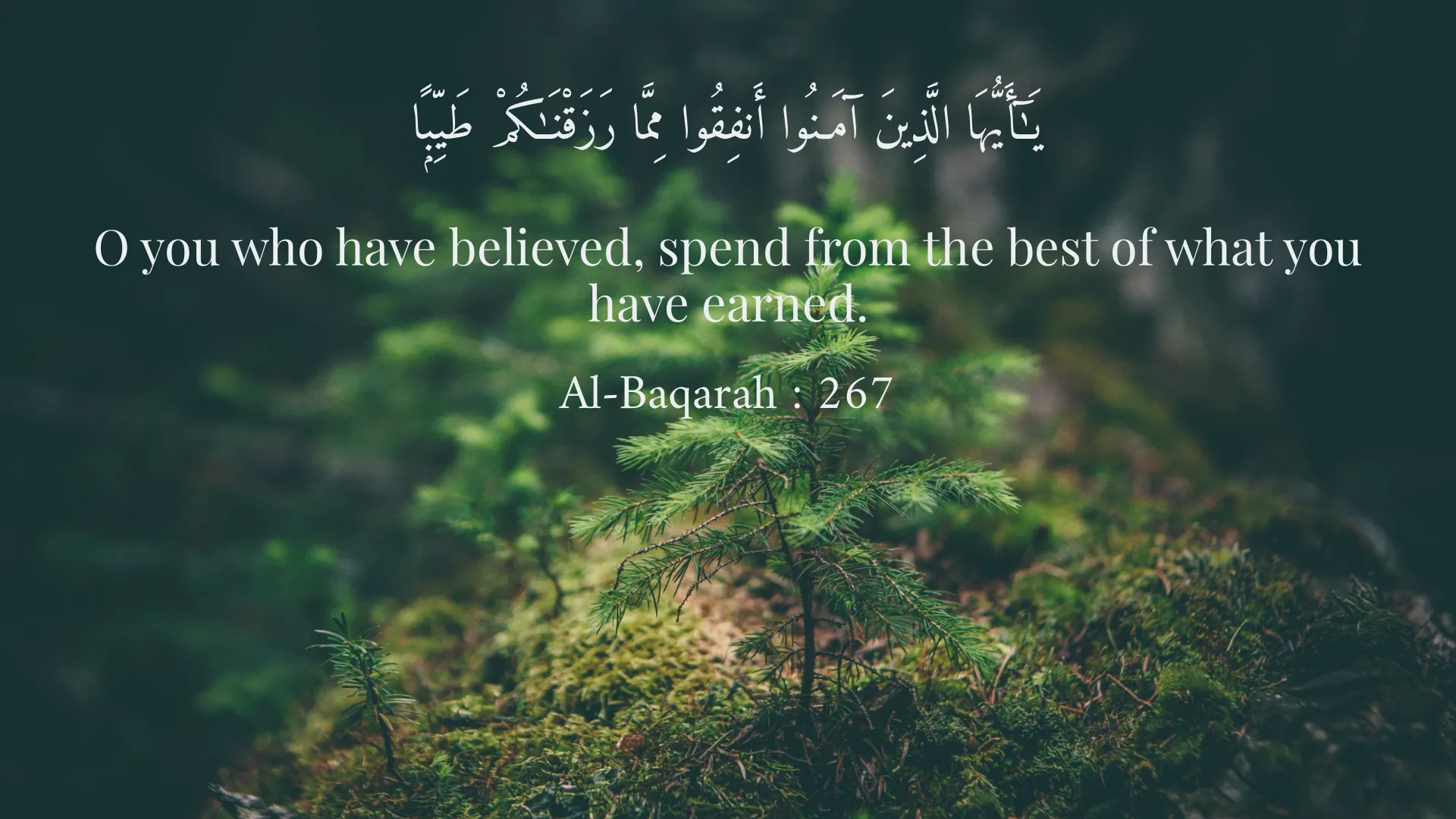
يَٰٓأَيُّهَا الَّذِينَ آمَـنُوا أَنفِقُوا مِمَّا رَزَقْنَـٰكُمْ طَيِّبًۭا
O you who have believed, spend from the best of what you have earned.
Al-Baqarah : 267
مَن قَتَلَ نَفْسًۭا بِغَيْرِ نَفْسًۭ أَوْ فَسَادًۭ فِي ٱلْأَرْضِ فَكَأَنَّمَا قَتَلَ ٱلنَّاسَ جَمِيعًۭا.
Whoever kills a soul unless for a soul or for corruption done in the land - it is as if he had slain mankind entirely.
Al-Ma'idah : 32
إنَّ الَّذِينَ يَتْلُونَ كِتَـٰبَ ٱللَّهِ وَأَقَامُوا ٱلصَّلَاةَ وَأَنفَقُوا مِمَّا رَزَقْنَـٰهُمْ سِرًّۭا وَعَلَانِيَةًۭ يَرْجُونَ تِجَارَةً لَّن تَبُورَ
Indeed, those who recite the Book of Allah and establish prayer and spend from what We have provided them, secretly and publicly, can expect a trade that will never perish.
Fatir : 29
Short Story
Once upon a time, there was a man named Hossein who led a comfortable life. He greatly valued helping others. One day, he decided to donate part of his wealth to those in need. He realized that aiding others was part of his faith and would bring blessings into his own life. After Hossein helped the needy, more blessings flowed into his life, and he found greater happiness and contentment.