Quranic Answer
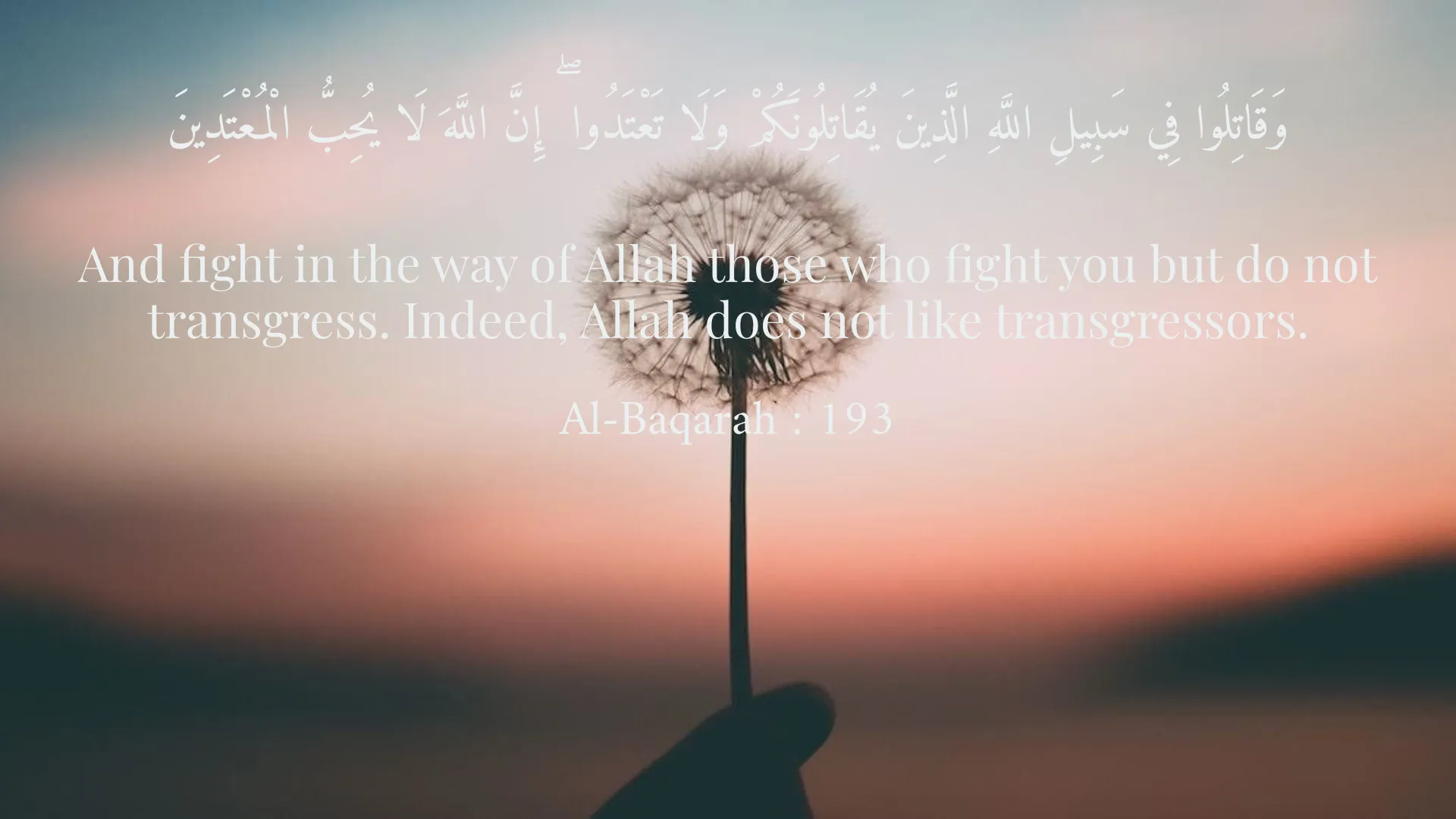
In the Holy Quran, there is a clear emphasis on the necessity of standing up against oppression and tyranny. This call for justice rings especially loud in Surah Al-Baqarah, verse 193, where Allah instructs the believers to engage in a struggle against those who exert oppression over them: 'And fight in the way of Allah those who fight you but do not transgress. Indeed, Allah does not like transgressors.' (Al-Baqarah: 193). This verse conveys a profound moral lesson about the importance of defending one's rights and seeking justice for oneself and others in the face of oppression. The Quran speaks to the fundamental human value of self-defense against tyranny and injustice. In a world where individuals and communities face discrimination, exploitation, and brutality, this divine guidance plays an essential role in shaping ethical responses and social actions. The highlighted directive to "fight in the way of Allah" can be understood as a metaphorical call to action for all believers to rise against injustice using all permissible means. However, it is paramount that one adheres to the Quranic caveat of ‘do not transgress’, which serves to remind believers that ethical conduct must be maintained, even in the pursuit of justice. It emphasizes that seeking justice does not condone violence or wrongdoing; rather it instructs one to engage in righteous actions. Furthermore, Surah Al-Imran, verse 104, expands upon this idea and underscores the collective responsibility of the community. It states: 'And let there be [arising] from you a nation inviting to all that is good and advising what is right and forbidding what is wrong.' (Al-Imran: 104). This passage pushes the believer to participate in the promotion of good and to oppose bad. Here, the Quran encourages the establishment of a proactive community where members are not indifferent to the plight of others but instead take initiative in advocating for justice and moral rectitude. The concept of standing against oppression is deeply embedded in Islamic teachings. Silence in the face of wrongdoing, as suggested, is a form of complicity. The Quran exhorts believers to be vigilant and proactive. The advocacy for goodness and the prohibition of wrongdoing emphasizes a communal responsibility rather than an individualistic approach. It highlights that the fight against tyranny is not merely a personal struggle but a collective duty that requires rising together against injustice. The implications of these verses stretch beyond the mere exhortation; they suggest that believers owe it to themselves and their community to vocalize their discontent and act against oppression. Looking into Islamic history, we find the infallible Imams who personified the stance against tyranny and oppression. Figures such as Imam Ali (AS) and Imam Hussain (AS) are laurels of resilience, having firmly stood against tyrants of their times and set high moral standards that resonate deeply with the above Quranic values. The life of Imam Hussain, particularly during the tragedy of Ashura, epitomizes the Islamic stance against oppression. His sacrifice for justice against the tyrannical regime of Yazid highlights that upholding justice may often require extreme measures. It teaches us the values of dignity, honor, and resilience. Their actions teach invaluable lessons regarding the importance of standing against oppression. Such historical examples reinforce the notion that taking a stand, irrespective of the consequences, is a hallmark of Islamic teaching. It instills a sense of duty upon every believer to act in the face of injustice, which can harm the community and humanity at large. Across the globe today, countless individuals find themselves in various forms of oppression, be it due to political tyranny, social injustice, or economic disparities. The direct teachings from the Quran and the historic legacy of Islamic figures create a framework for believers to act upon. The growing movements for social justice echo deeply within the Quranic references, encouraging individuals to unite against the forces that seek to silence the marginalized. Standing against oppression, as discussed, extends beyond the realm of religious obligation; it is a humanitarian imperative. It is critical that human rights become a central concern in our communities, and that we each take action to support those who cannot stand against their oppressors. As global citizens, it is our responsibility to foster an environment that detests injustice in all its forms. In conclusion, the Quran unequivocally advocates for resistance against tyranny and oppression. Verses like those from Surah Al-Baqarah and Surah Al-Imran not only provide spiritual guidance but also serve as a clarion call for social activism. Furthermore, the embodiment of these teachings by the infallible leaders in Islamic history serves as a potent reminder of the importance of standing against injustice. It becomes our collective duty to echo these sentiments through our actions and ensure that the principles of justice and truth prevail against oppression in our world. Thus, standing against oppression is not merely a religious duty, but a universal necessity that should be ingrained in all aspects of our lives.
Related Verses
وَقَاتِلُوا فِي سَبِيلِ اللَّهِ الَّذِينَ يُقَاتِلُونَكُمْ وَلَا تَعْتَدُوا ۖ إِنَّ اللَّهَ لَا يُحِبُّ الْمُعْتَدِينَ
And fight in the way of Allah those who fight you but do not transgress. Indeed, Allah does not like transgressors.
Al-Baqarah : 193
وَلْتَكُن مِّنكُمْ أُمَّةٌ يَدْعُونَ إِلَى الْخَيْرِ وَيَأْمُرُونَ بِالْمَعْرُوفِ وَيَنْهَوْنَ عَنِ الْمُنْكَرِ
And let there be [arising] from you a nation inviting to all that is good and advising what is right and forbidding what is wrong.
Al-Imran : 104
Short Story
One day in a village, a man named Hossein rented his house to a tyrant who was exploiting the people. Hossein decided to stand against this oppression. Courageously, he joined a gathering of the people and protested loudly against the oppressor. This action of Hossein inspired others to join him and raise their voices against tyranny. Eventually, the oppression of that man came to an end, and Hossein and the others could have a peaceful and free life.