Quranic Answer
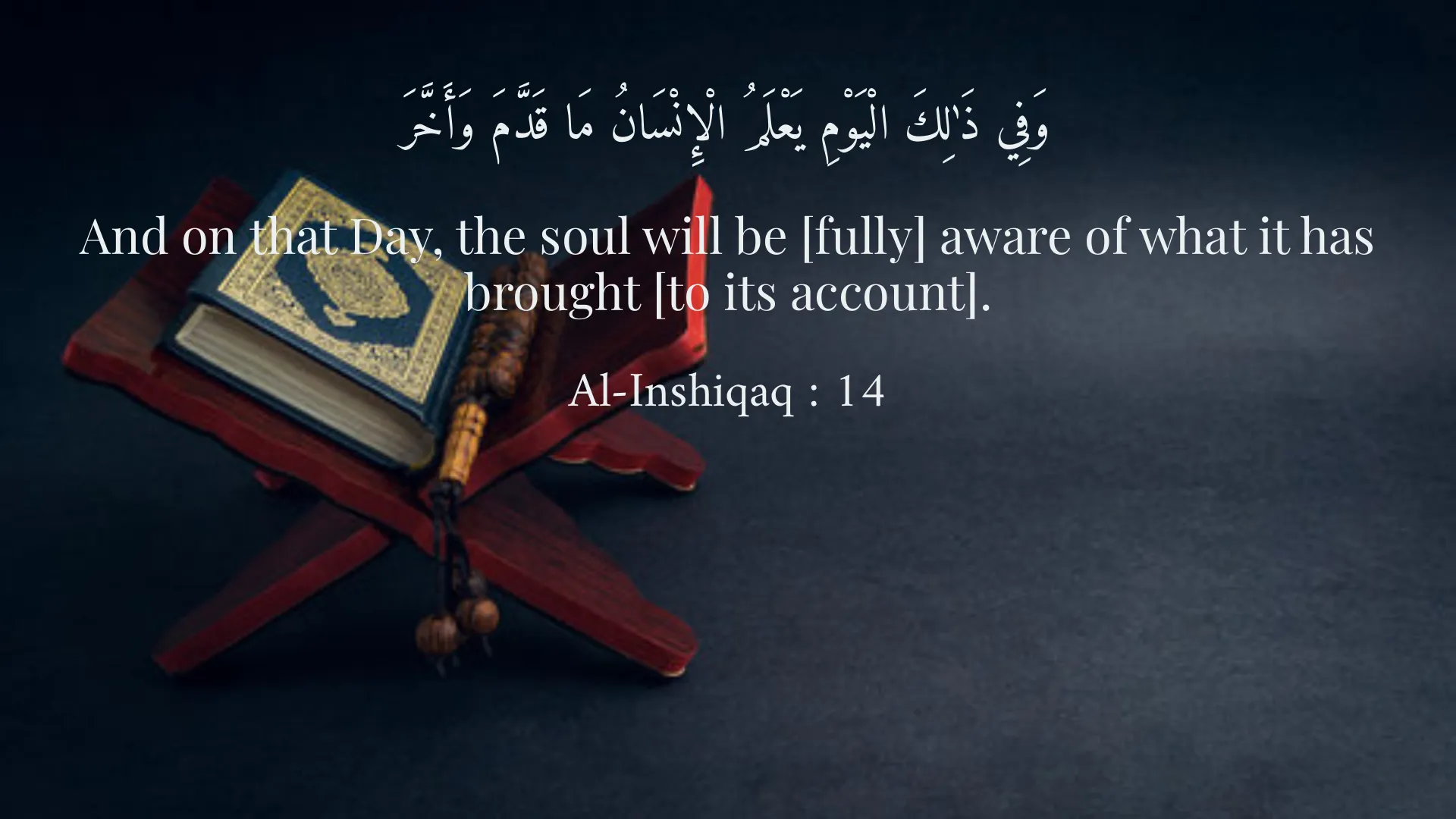
In the Holy Quran, the concept of taking account of oneself is clearly articulated, serving as a pivotal element in the spiritual and moral framework of Islamic teachings. Self-accountability, or muhasabah, is a profound practice that encourages individuals to critically evaluate their actions, intentions, and overall behavior in the pursuit of spiritual excellence and righteousness. This practice is not only a means to achieve personal growth but is fundamental in fostering a deeper relationship with Allah. The Quran recounts significant verses emphasizing the necessity of self-reflection and individual responsibility, further illustrating the importance of this concept in everyday life. First and foremost, one cannot discuss self-accountability in the context of the Quran without referencing Surah Al-Inshiqaq (Chapter 84), verse 14, where Allah states, "And on that Day, the soul will be [fully] aware of what it has brought [to its account]." This verse underscores the inevitable reality of accountability in the hereafter, where each soul will realize the consequences of its actions in this world. The imagery of the Day of Judgment speaks to the weight of one's actions and serves as a powerful motivator for believers to conduct themselves with integrity and righteousness. This verse serves as a reminder that life is not merely a series of random events, but rather a continuous journey in which every decision and deed has significance. Additionally, Surah Az-Zumar (Chapter 39), verse 18 complements this notion by stating, "Those who listen to the speech and follow the best of it." This verse emphasizes the importance of being mindful and receptive to the teachings of Allah and the lessons derived from them. Listening attentively and striving to implement what is best cultivates a sense of mindfulness, urging believers to reflect upon their actions and choices. Collectively, these verses paint a clear picture and framework for the practice of self-accountability, presenting it as an essential duty for every Muslim. Taking account of ourselves goes beyond merely recognizing our mistakes; it lays the groundwork for spiritual growth and development. When individuals take the time to evaluate their behavior, they create an opportunity to gain insight into their strengths and weaknesses. This act of introspection is vital as it allows believers to uncover their shortcomings and take actionable steps toward improvement. Rigorous self-assessment fosters honesty and authenticity in one's personal journey, enabling Muslims to align their lives more closely with Islamic values and teachings. Furthermore, the practice of self-accountability can lead to profound transformations in various aspects of life. By regularly reflecting on one’s actions, individuals may find themselves making better decisions, prioritizing their spiritual obligations, and actively pursuing a path toward righteousness. This continuous evaluation does not only elevate an individual's spirituality but also enhances their relationships with others. When one is in tune with their own emotions and behavior, they become more compassionate, understanding, and often less judgmental towards others. This interconnectedness between self-accountability and interpersonal relationships showcases the holistic impact of this essential practice in a believer's life. The significance of self-accountability is particularly pronounced during specific times of the Islamic year, such as the holy month of Ramadan. As Muslims worldwide prepare to enter this sacred period of fasting and reflection, many engage in practices meant to heighten their spiritual awareness. They take time during this month to evaluate their past behavior, repent for any misdeeds, and set intentions for spiritual growth and improvement. Ramadan serves as a prime opportunity for believers to reflect deeply on their actions and the direction of their lives. Additionally, the traditions of Islam encourage regular reminders of self-accountability. The practice of attending weekly congregational prayers, participating in community workshops, or engaging in discussions about spiritual and ethical dilemmas all contribute to a culture of accountability among believers. This communal involvement reinforces the belief that individual actions resonate beyond oneself; they contribute to the collective wellbeing of the community. It creates an environment where individuals are more inclined to be diligent in their pursuits of righteousness and to hold each other accountable as they navigate personal growth. In conclusion, the concept of taking account of oneself as articulated in the Holy Quran is a profound principle that resonates deeply within the lives of believers. The verses from Surah Al-Inshiqaq and Surah Az-Zumar emphasize the importance of being self-aware while inspiring individuals to adopt a proactive approach towards self-reflection and improvement. Self-accountability not only serves as a means of personal growth and spiritual development but also fosters better relationships with others and strengthens the community as a whole. Therefore, engaging in continual self-assessment places us on a clearer path, facilitating a deeper connection with Allah and a fuller understanding of our lives. As we strive to embody these teachings, we embark on a transformative journey toward becoming better individuals and more compassionate members of society.
Related Verses
وَفِي ذَٰلِكَ الْيَوْمِ يَعْلَمُ الْإِنْسَانُ مَا قَدَّمَ وَأَخَّرَ
And on that Day, the soul will be [fully] aware of what it has brought [to its account].
Al-Inshiqaq : 14
الَّذِينَ يَسْتَمِعُونَ الْقَوْلَ فَيَتَّبِعُونَ أَحْسَنَهُ
Those who listen to the speech and follow the best of it.
Az-Zumar : 18
Short Story
Once upon a time, there was a man named Ali who often pondered fundamental questions about his actions in life. He decided to dedicate one night each week to account for himself and reflect on his deeds. One night, he recollected the verses of the Quran and realized that remembering Allah and performing good deeds helped him transform into a better person. This shift in perspective changed his life profoundly, and Ali continued his journey with more happiness and peace.