Quranic Answer
The Heart in the Holy Quran: A Symbol of Spirituality and Connection with God The Holy Quran seeks to guide humanity towards a life imbued with spiritual recognition, and a significant element of this guidance revolves around the concept of the heart. The heart, more than just a vital organ, is presented in the Holy Quran as a profound symbol of one’s feelings, intentions, and overall spiritual condition. This article delves into the multifaceted significance of the heart in the Quran, examining how it serves as a primary tool in establishing a connection with God and leading a fulfilling life. One of the salient references to the heart is found in Surah Al-Baqarah (Chapter 2), verse 10: "In their hearts is a disease, and Allah has increased their disease." This verse encapsulates the idea that the heart can experience ailments that are not tangible yet critical to a person’s spiritual well-being. Just as the body can suffer from physical maladies, the heart can be afflicted by spiritual disease — including doubt, malice, and neglect. The phrasing "Allah has increased their disease" highlights a crucial aspect of divine justice; when individuals choose to ignore the promptings of their heart or the signs of divine guidance, they may find themselves in an even worse spiritual state. The implication here is that neglecting one’s heart can lead to a cycle of further estrangement from divine blessings and direction. The heart is thus presented not only as a vessel for emotions but also as a representation of human intentions. If one’s heart is clouded with negativity and worldly distractions, they become increasingly distanced from the truth and the righteousness that God offers. Therefore, it can be concluded that nurturing and maintaining a healthy heart is essential for a deeper connection with God and an improved state of being. In Surah Al-Imran (Chapter 3), verse 14, Allah mentions: "Beautified for people is the love of that which they desire — of women and children, heaped-up sums of gold and silver, fine branded horses, and tilled land." This verse exposes a critical concern regarding the nature of desires and materialism. Humans naturally form attachments to the comforts and luxuries of life. However, the Quran warns against letting these worldly desires dominate the heart. When someone’s heart is consumed by material aspirations, it becomes increasingly challenging to focus on spiritual growth and the pursuit of knowledge. This serves as a cautionary note by the Quran: an overemphasis on the temporary pleasures of the world can lead to neglect of the eternal promises of the hereafter. Human susceptibility to desires can cause individuals to drift away from their purpose on Earth and detach from the fundamental teachings of faith and righteousness. In this way, the heart reminds us of the delicate balance that must be maintained between worldly engagements and spiritual responsibilities. The Prophet Muhammad (peace be upon him) further underscores the importance of the heart in his teachings, famously stating, "In the body, there is a piece of flesh, and if it is good, the whole body is good, and that is the heart." This saying reveals deep truth: the heart influences one's moral compass and ethical decision-making. When the heart is aligned with righteousness and integrity, it can guide the individual toward actions and decisions that reflect good character and piety. Thus, a healthy heart lays the foundation for a life oriented towards the fulfillment of God's will. Maintaining a pure heart is paramount for anyone seeking a closer relationship with God. When the heart is free from malice, greed, and hatred, it becomes a beacon of divine light. This purity not only enhances personal faith and understanding but also establishes a rapport with others in the community, fostering an environment of goodwill and compassion. It reminds us that spiritual health is integrally linked to personal happiness and communal harmony. Prayer (Salah) is one of the most powerful means of purifying the heart. Engaging in regular prayers allows individuals to seek forgiveness, reflect on their shortcomings, and open up to God’s mercy. The act of bowing and prostrating serves as a physical manifestation of humility and submission, essential qualities for anyone striving to nourish a healthy heart. Additionally, remembrance of God (Dhikr) plays a crucial role in fortifying one's connection to the Divine. Engaging in the remembrance of Allah refreshes the soul, revitalizes the heart, and directs the person back to a path of righteousness. Interacting with righteous individuals also aids in maintaining a healthy heart. The influence of a righteous company can inspire personal growth and accountability. Friends that remind one to pray, engage in good deeds, and avoid sinful behavior contribute to the development of a more potent heart aligned with divine guidance. Furthermore, such associations can provide encouragement and support in moments of spiritual struggle, which emphasizes the profound connection between community and individual spirituality. Moreover, the heart’s condition can often be a reflection of one’s environment and lifestyle choices. Engaging in activities that promote peace, joy, and positivity can, in turn, contribute to a healthy heart. Conversely, harboring ill thoughts or indulging in negative influences can harm one's heart. It's within this vein that self-care and mental well-being intersect with spirituality, offering a holistic approach to nurturing the heart. In conclusion, the concept of the heart in the Holy Quran transcends mere physicality to embody the emotional and spiritual dimensions of human existence. As a center of intentions, feelings, and moral compass, the state of the heart directly influences an individual’s relationship with God and impacts their spiritual journey. Regular self-assessment, prayer, remembrance of Allah, and the company of righteous individuals are essential strategies to maintain a healthy heart. By prioritizing spiritual health, one not only fosters a closer connection with the Divine but also navigates towards a life of happiness, fulfillment, and ultimately, salvation.
Related Verses
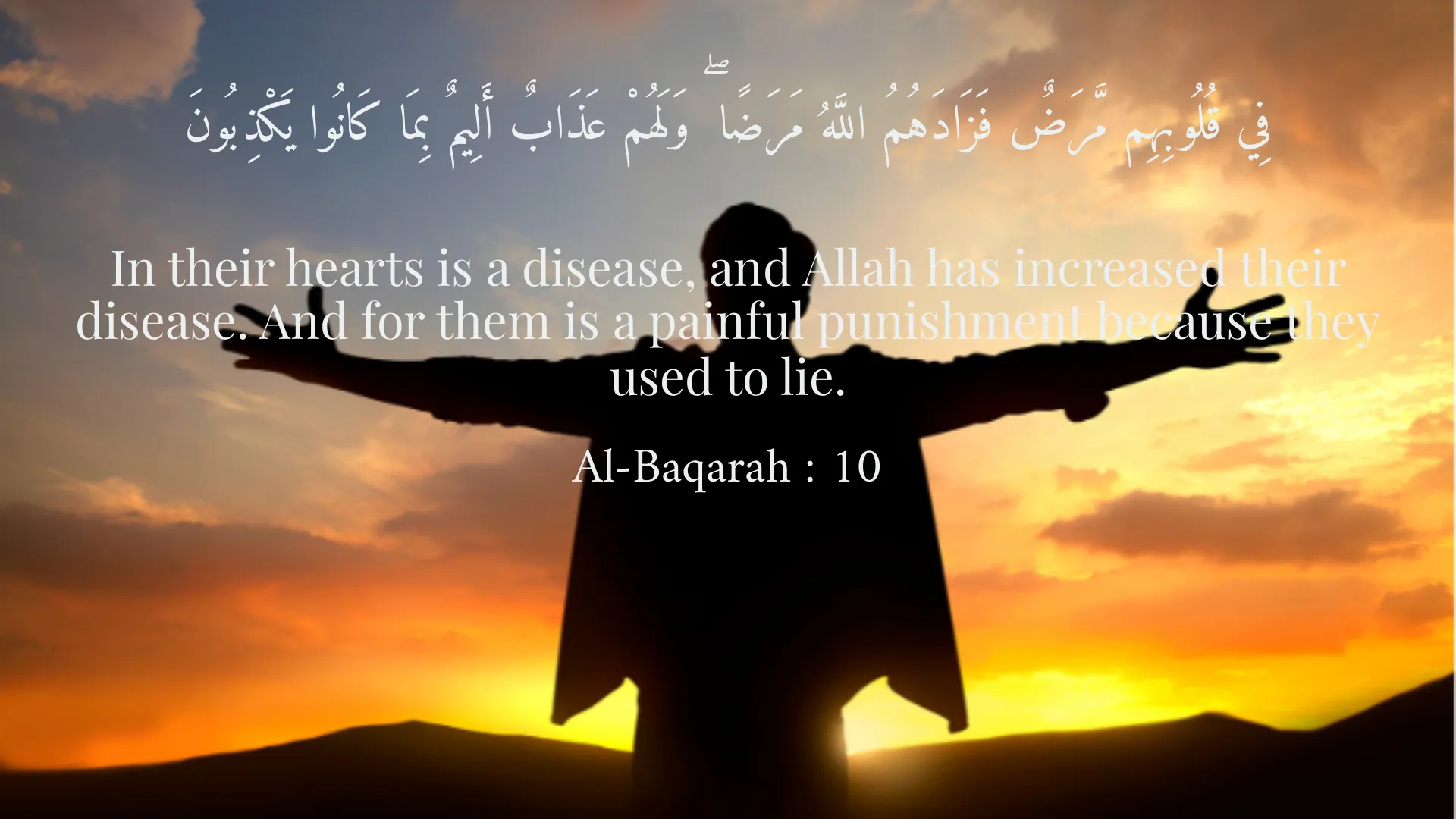
فِي قُلُوبِهِم مَّرَضٌ فَزَادَهُمُ اللَّهُ مَرَضًا ۖ وَلَهُمْ عَذَابٌ أَلِيمٌ بِمَا كَانُوا يَكْذِبُونَ
In their hearts is a disease, and Allah has increased their disease. And for them is a painful punishment because they used to lie.
Al-Baqarah : 10
زُيِّنَ لِلنَّاسِ حُبُّ الشَّهَوَاتِ مِنَ النِّسَاءِ وَالْبَنِينَ وَالْقَنَاطِيرِ الْمُقَنطَرَةِ مِنَ الذَّهَبِ وَالْفِضَّةِ وَالْخَيْلِ الْمُسَوَّمَةِ وَالْأَرْضِ الْمَزْرُوعَةِ ۗ ذَٰلِكَ مَتَاعُ الْحَيَاةِ الدُّنْيَا ۖ وَأَخْلَصَ يَدُ اللَّهِ خَيْرٌ مِّنَ اللَّذَاتِ.
Beautified for people is the love of that which they desire — of women and children, heaped-up sums of gold and silver, fine branded horses, and tilled land. That is the enjoyment of worldly life, but Allah has better than that.
Al-Imran : 14
Short Story
Once upon a time, in a small village, there lived a man who was passionate about nature. He constantly remembered God in his heart and prayed for his soul. One day, due to the allure of worldly embellishments, his heart suffered a spiritual ailment. But through the remembrance of God and abstaining from sin, his heart returned to a good state. This story reminds us that the health of the heart is solely dependent on the remembrance of God and we must always take care of our hearts.