Quranic Answer
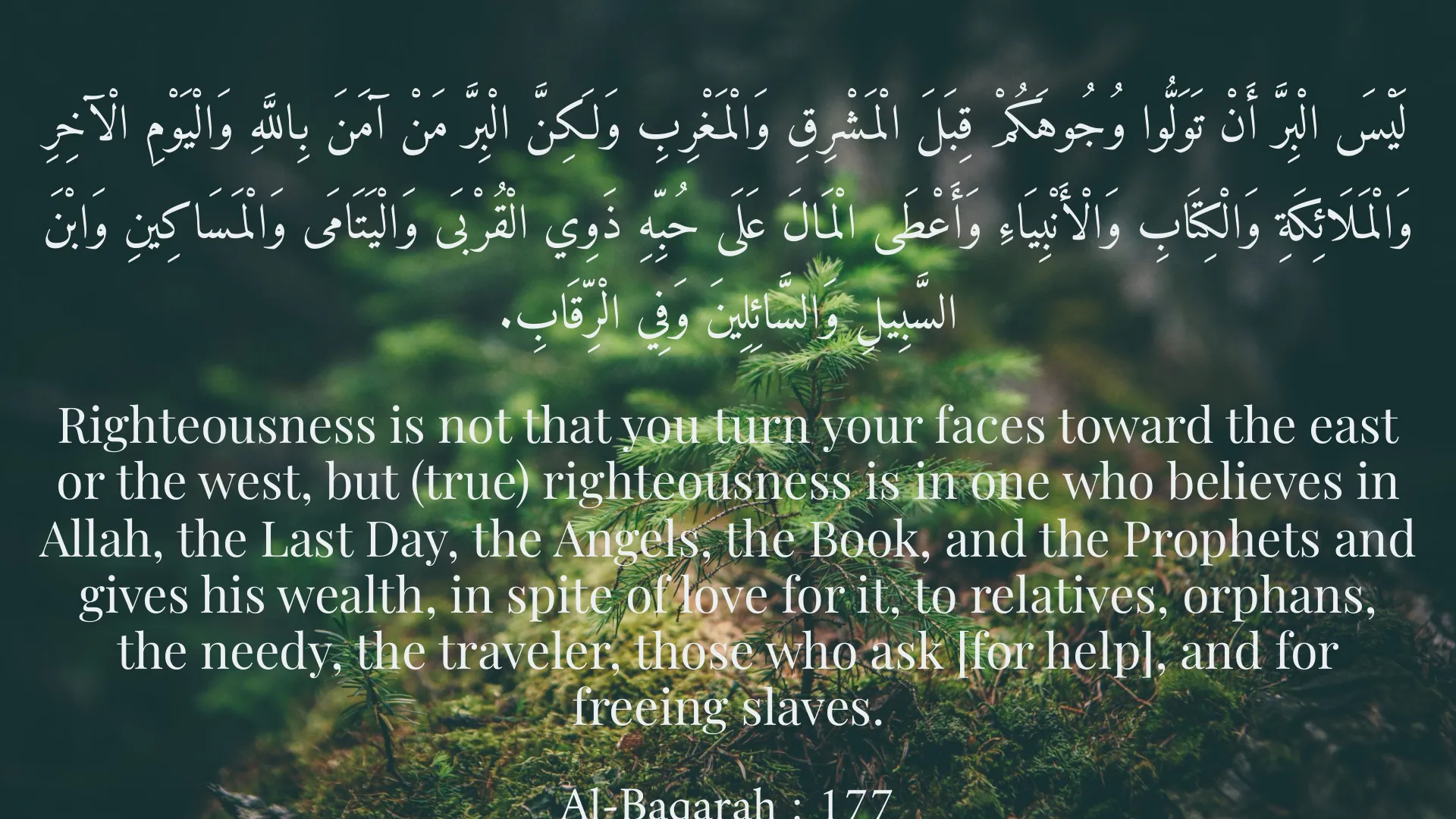
In the Holy Quran, the concept of righteousness and the significance of taking initiative in doing good deeds are profoundly emphasized. The teachings within the Quran provide not only a moral compass for Muslims but also an ethical guideline that transcends time and culture. Starting with Surah Al-Baqarah, verse 177, the Quran states, 'Righteousness is not that you turn your faces toward the east or the west, but (true) righteousness is in one who believes in Allah, the Last Day, the Angels, the Book, and the Prophets and gives his wealth, in spite of love for it, to relatives, orphans, the needy, the traveler, those who ask [for help], and for freeing slaves.' This elucidates that genuine righteousness is deeply rooted in belief and manifests itself through actions, specifically through charitable deeds and supporting those in need. The verse underscores that mere outward practices of faith, which may include ritualistic prayers or facing a particular direction in prayer, do not define a person’s righteousness. True goodness lies in one’s actions and behaviors towards others. It emphasizes that an individual’s wealth should not be hoarded for personal gain, but should be shared with those who lack resources. This aspect of sharing wealth and helping others is what truly exemplifies a person's faith in Allah and their moral character. Furthermore, the Quran encourages believers to take the initiative in ensuring that their goodness translates into action. When an individual actively engages in acts of kindness and charity, they not only reap the spiritual rewards but also inspire others to follow in their footsteps. The ripple effect of such actions can lead to broader societal transformations, where individuals become more inclined to support one another, fostering a culture of compassion, empathy, and altruism. By participating in doing good, individuals contribute to the physical and spiritual betterment of their communities, thereby creating a solid foundation for a healthier society. In Surah Al-Imran, verse 114, we find further reinforcement of this concept: 'They do not fail in good deeds.' This verse encapsulates the essence of persistence and dedication in the pursuit of good. The exhortation to 'not fail in good deeds' suggests that Muslims are encouraged to remain vigilant and proactive in seeking out opportunities to do good, regardless of the circumstances or challenges they may face. This does not only create avenues for service to others but fosters a mindset where doing good becomes a habitual norm rather than an exception. The call to identify opportunities to help others, whether they relate to financial assistance, emotional support, or general kindness, is a clarion call to cultivate an enduring spirit of benevolence and service. Additionally, the teachings of the Quran indicate that taking initiative in doing good has positive repercussions on one's mental and spiritual well-being. Engaging in acts of kindness brings about genuine joy and satisfaction, contributing to mental peace and contentment. Numerous studies have shown that altruism and acts of service result in a positive reinforcement loop, enhancing overall emotional wellness among individuals. Furthermore, the act of helping others can diminish feelings of isolation and despair, leading to a stronger sense of community. The importance of these teachings cannot be overstated. The Quranic verses align with various social justice movements and charitable organizations today, which advocate for ongoing community service and contribute to positive societal shifts. Through faith-inspired actions, individuals ignite the potential for change, and when congregated, these efforts can amount to significant societal contributions. In embracing the Quranic ethos of good deeds, communities can pave their way toward unity, justice, and compassion. The outpouring of goodness doesn't merely stop at charitable giving; it extends to how we treat our immediate circles including family, friends, co-workers, and even strangers. The nurturing of relationships through kindness can help dismantle barriers and foster a sense of belonging. Recognizing the humanity in each individual fosters inclusiveness and harmony, which are essential elements in building a collaborative society. In summary, the Quran not only emphasizes the importance of righteousness derived from belief but also beautifully unfolds the practical steps one can take to embody such beliefs through actions. Taking the initiative in good deeds encourages selflessness, unity, and growth within individuals and communities alike. As people strive to embody these values, they cultivate environments that inspire goodwill, resilience, and compassion ultimately leading to a more connected and better society. The call to leverage faith into actionable change is one of the critical teachings of the Quran, urging individuals to not only reflect upon their beliefs but to live them out in meaningful and impactful ways.
Related Verses
لَيْسَ الْبِرَّ أَنْ تَوَلُّوا وُجُوهَكُمْ قِبَلَ الْمَشْرِقِ وَالْمَغْرِبِ وَلَكِنَّ الْبِرَّ مَنْ آمَنَ بِاللَّهِ وَالْيَوْمِ الْآخِرِ وَالْمَلَائِكَةِ وَالْكِتَابِ وَالْأَنْبِيَاءِ وَأَعْطَى الْمَالَ عَلَى حُبِّهِ ذَوِي الْقُرْبَى وَالْيَتَامَى وَالْمَسَاكِينِ وَابْنَ السَّبِيلِ وَالسَّائِلِينَ وَفِي الْرِّقَابِ.
Righteousness is not that you turn your faces toward the east or the west, but (true) righteousness is in one who believes in Allah, the Last Day, the Angels, the Book, and the Prophets and gives his wealth, in spite of love for it, to relatives, orphans, the needy, the traveler, those who ask [for help], and for freeing slaves.
Al-Baqarah : 177
لَا يَسْتَكْبِرُونَ عَنْ خَيْرٍ.
They do not fail in good deeds.
Al-Imran : 114
Short Story
Once upon a time, there was a young man named Amir living in a village. He always wanted to help others but sometimes hesitated to take the first step. One day, he decided to take initiative in doing good by drawing inspiration from the Quranic verses. Every Friday, he visited a nursing home and assisted the elderly. Amir realized that every time he performed a good deed, not only did he bring joy to others, but he also felt a deep sense of happiness himself. This experience encouraged him to dedicate every day to doing good.