Quranic Answer
The Quran, the holy book of Islam, emphasizes the importance of justice and standing against oppression repeatedly throughout its verses. This call for justice and resistance against tyranny is not just a theological ideal but a moral obligation that resonates deeply with believers. In this article, we will delve into several Quranic verses that highlight the significance of defending the truth and opposing injustice, examining the implications these teachings have for individuals and societies as a whole. One of the most poignant reminders of this obligation can be found in Surah An-Nisa (4:135), where Allah commands believers to bear witness in justice, even if it is against their own interests. The verse reads, "O you who have believed, be persistently standing firm in justice, witnesses for Allah, even if it be against yourselves or parents and relatives." This instruction uncovers the essence of justice in Islamic thought — that truth must prevail irrespective of personal or familial allegiance. This entails a profound moral strength that is not only expected but is a pathway to divine favor. By insisting that believers uphold justice even when it damages their personal advantage or familial relationships, this verse illustrates the fundamental Islamic belief that justice is paramount. The courage to testify against one’s self-interest speaks volumes about the religious and ethical fabric that is essential for any community striving for righteousness. In many ways, this mandate can serve as a litmus test for one's faith and moral integrity. Moving forward, we turn our attention to Surah Al-Imran (3:112), where Allah articulates a dire warning concerning the detrimental effects of enduring oppression without resistance. The verse states, "Never will they be harmed by it except for what Allah has decreed. And upon Allah let the believers rely." Here, we learn that a society that embraces oppression and injustice will eventually lose the grace and mercy of Allah. The Quran cautions that silence in the face of wrongdoing not only endangers the soul but also the collective spirit of the community. With such a clear warning, it is evident that the worship of God is intricately linked to the pursuit of justice. The silence of individuals in the face of oppression may provide a temporary sense of comfort or security, but it ultimately distances them from divine mercy. In action, this means that social justice and personal piety are not separate entities; rather, they must coexist in the fabric of a faithful Muslim's life. The narrative then shifts from just an individual responsibility to a collective duty, urging entire communities to reject injustice actively. Furthermore, Surah Ibrahim (14:5) echoes this theme through the endorsement that Prophets are appointed by Allah to guide the people toward truth and righteousness while resisting oppression. The verse proclaims, "And We sent Moses with Our signs, saying, 'Bring out your people from darkness into light and remind them of the days of Allah.'" Through this divine exhortation, the Quran emphasizes that guidance entails actively refuting falsehood and oppression. This not only implores Prophets but also extends to every believer, as they are messengers of their moral and ethical beliefs. The implication is clear: This continuous call to resist tyranny and advocate for justice is a non-negotiable aspect of faith. The teachings of Islam are not passive; they require believers to engage actively in thwarting oppression wherever and whenever it may arise. The involvement ranges from personal integrity to collective activism, echoing the belief that silence and inaction are tantamount to complicity. Throughout history, many movements for justice across Muslim societies have taken inspiration from these teachings, advocating for the oppressed and challenging unjust systems. Moreover, the Quran elucidates how the consequences of injustice extend beyond the immediate context. A society that remains indifferent to injustice, as predicted in Surah Al-Imran, risks undergoing the divine wrath that befalls those who fail to uphold justice. This connection between divine justice and human agency underlines the severe ramifications of disengagement from the struggle against oppression. In contemporary contexts, the message of the Quran serves as a powerful reminder for Muslims and non-Muslims alike that defending the truth and upholding justice is not merely an option but a divine obligation. The various interpretations and applications of these teachings may vary widely, but the central tenets remain constant across contexts. Engaging with these verses compels Muslims to reflect on their responsibilities in society: How can one witness injustice and turn away unbothered by its consequences? How does one reconcile their faith in God with inaction? Ultimately, the teachings of the Quran regarding justice cannot be compartmentalized into the spiritual realm alone; they demand action, empathy, and solidarity. The verses cited compel us to question ourselves and our environments, urging us toward advocacy and the courage to stand up for what is right. In today’s world, where injustices abound, embracing this divine direction is more crucial than ever. Consequently, it becomes essential for every believer to revisit the depth of these verses and internalize their meanings. Are we standing firm in our duties to witness for justice? Are we willing to sacrifice personal comfort for the broader call of righteousness? The Quran clearly indicates that divine mercy follows those who act justly and reject oppression, demonstrating that true faith necessitates action against injustice. In conclusion, this call to action remains a timeless and urgent challenge - a commitment to humanity's collective conscience.
Related Verses
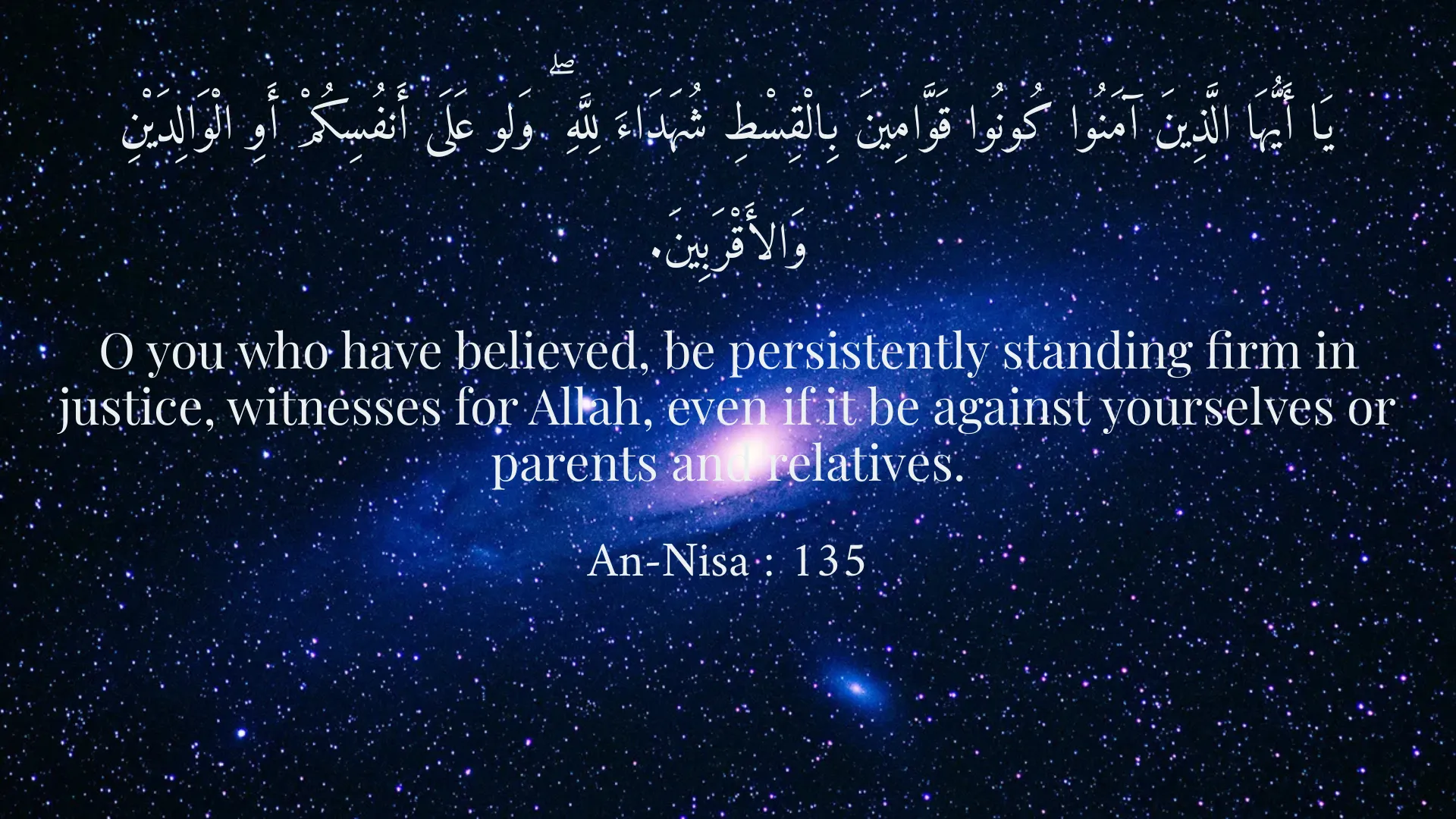
يَا أَيُّهَا الَّذِينَ آمَنُوا كُونُوا قَوَّامِينَ بِالْقِسْطِ شُهَدَاءَ لِلَّهِ ۖ وَلو عَلَى أَنفُسِكُمْ أَوِ الْوَالِدَيْنِ وَالأَقْرَبِينَ.
O you who have believed, be persistently standing firm in justice, witnesses for Allah, even if it be against yourselves or parents and relatives.
An-Nisa : 135
لَن يَضُرُّوكَ إِلَّا أَذًى ۖ وَإِن يَقَاتِلُوكَ يُولُّوكُمُ الْأَدْبَارَ ثُمَّ لَا يُنصَرُونَ.
They will not harm you except for a slight annoyance. And if they fight you, they will turn their backs to you; then they will not be aided.
Aali Imran : 112
وَلَقَدْ أَرْسَلْنَا مُوسَى بِآيَاتِنَا أَن أَخْرِجْ قَوْمَكَ مِنَ الظُّلُمَاتِ إِلَى النُّورِ.
And we sent Moses with Our signs, [commanding him], 'Bring out your people from darkness into the light.'
Ibrahim : 5
Short Story
Once upon a time, in a small village, there lived a man named Rahim. He always remained silent in the face of oppression, but one day he decided not to remain silent anymore. When he witnessed an innocent person being oppressed, he gathered his courage and stood up to defend him. With his shout, he reminded others that oppression should not be tolerated in society. From that day on, Rahim became a symbol of bravery and defense for rights, inspiring others in his village to join him in never staying silent.