Quranic Answer
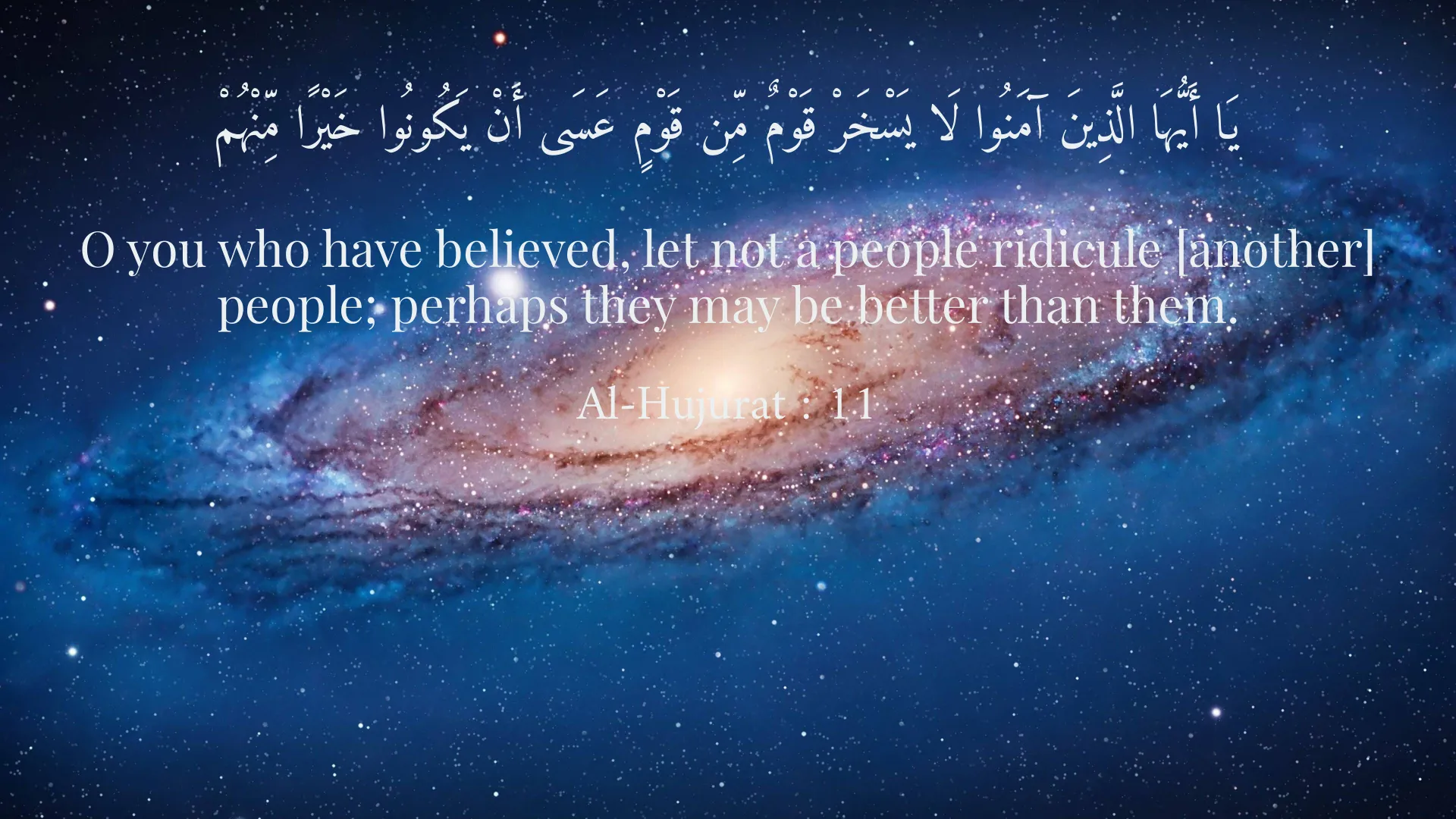
In the Holy Quran, we are reminded not to rejoice in the difficulties of others. The Islamic perspective promotes a community grounded in empathy, compassion, and mutual support. The act of celebrating someone else's misfortune is not only morally reprehensible but fundamentally damaging to the fabric of humanity. It reflects an insensitivity that can potentially erode the bonds that unite us as human beings. In Surah Al-Hujurat, verse 11, Allah states: 'O you who have believed, let not a people ridicule [another] people; perhaps they may be better than them.' This profound admonition serves as a reminder to each of us that life is unpredictable, and anyone may find themselves in challenging circumstances at some point. It is a clear directive that we should refrain from mocking, belittling, or deriving pleasure from the hardships faced by others. Indeed, this verse encapsulates the essence of humility and respect for our fellow humans, no matter their circumstances. The wisdom embedded in these Quranic verses offers a powerful framework for improving interpersonal relations and cultivating a spirit of understanding and humility. When we derive joy from the misfortunes of others, we nurture a toxic mentality that can foster hatred, division, and strife within our communities. The feelings that accompany malicious glee – such as satisfaction or superiority – are fleeting and ultimately hollow. They serve only to isolate individuals, creating a chasm that undermines the sense of belonging and unity among us. The Quran emphasizes the importance of empathy and love among individuals, as evident in Surah Al-Imran, verse 159, where Allah commands the Prophet to be soft and kind towards the people: 'So by mercy from Allah, [O Muhammad], you were lenient with them.' The significance of this verse lies in its guidance for leaders and individuals alike: compassion must govern our actions. It is perfectly natural to experience joy in our own successes, but we must ensure that this joy does not come at the expense of others. This practice of mercy and gentleness cultivates an environment where individuals feel safe and valued. Instead of allowing ourselves to become envious or arrogant when witnessing the difficulties of others, we should strive to cultivate a heart full of compassion. Responding to others with kindness can help mitigate their suffering, allowing them to feel less alone in their struggles. When we offer support during hard times, we not only allow ourselves to grow in empathy, but we also create a ripple effect of positivity that can transform our communities. Support can manifest in many forms, from a simple kind word to offering assistance in times of need. When we unite to uplift one another, we create a collective strength greater than the sum of its parts. Empathy enables us to understand and relate to the struggles of others. This understanding can trigger acts of kindness, leading to stronger friendships and community ties. When one person suffers, the entire community can feel the effects; therefore, it is our moral duty as human beings to assist those in need, being their source of strength and resilience. In a practical sense, fostering an environment of kindness requires intentional effort. Educational strategies that encourage compassion and teamwork can help cultivate these crucial values from a young age. Initiatives such as community outreach programs, volunteer opportunities, and interfaith dialogues can also be fruitful in promoting empathy and understanding among diverse groups. Schools and organizations should aim not just to teach academic knowledge but also to instill positive character traits and values that will enable future generations to engage in mutually supportive relationships. In a world increasingly driven by competition and the pursuit of individual success, the teachings of the Quran remind us of the profound importance of community and interconnectedness. By embracing the moral principles embedded in the Islamic texts, we can actively work towards eradicating toxic behavior and practices while fostering love, understanding, and harmony. This journey begins with each individual making a conscious choice to reject arrogance and embrace vulnerability. In addition, considering the global challenges we face today - from economic crises to natural disasters - it has never been more critical for individuals and communities to come together in solidarity. When we witness the suffering of others, particularly those outside our immediate circles or societies, we must respond with humanity. The act of opening our hearts to those who are in pain not only enriches their lives but also deepens our own understanding of what it means to be human. A community that supports its members through adversity grows stronger and more resilient as its members learn to rely on each other. In doing so, we strengthen feelings of solidarity and unity, further reinforcing the virtue of kindness in our interactions. In conclusion, the Quran offers timeless wisdom that urges us to act with compassion and empathy towards others rather than reveling in their misfortunes. By refraining from mockery or ridicule and instead fostering an atmosphere of support and love, we can build communities that truly embody the spirit of humanity. Our purpose as individuals should transcend the pursuit of personal gain; it should incorporate a commitment to uplifting those around us. When we respond to adversity with kindness and understanding, we not only enrich the lives of others but also cultivate a better world for ourselves and future generations. Through our actions, we can create a legacy of empathy, illustrating that although trials are a part of the human experience, the joy found in lifting each other up is far more rewarding than any fleeting moment of triumph derived from witnessing another's pain.
Related Verses
يَا أَيُّهَا الَّذِينَ آمَنُوا لَا يَسْخَرْ قَوْمٌ مِّن قَوْمٍ عَسَى أَنْ يَكُونُوا خَيْرًا مِّنْهُمْ
O you who have believed, let not a people ridicule [another] people; perhaps they may be better than them.
Al-Hujurat : 11
فَبِمَا رَحْمَةٍ مِّنَ اللَّهِ لِنْتَ لَهُمْ
So by mercy from Allah, [O Muhammad], you were lenient with them.
Al-Imran : 159
Short Story
One day, a man was conversing with a friend about people and their behaviors. The friend remarked, 'No one ever feels happy during tough times, especially if they find themselves in others' troubles.' The man thoughtfully responded, 'Perhaps we should remember that we all live on one planet, and if someone is in distress, we must stand by them and help.' After this conversation, the man decided to always lend a helping hand in difficult situations and never rejoice in others' struggles.