Quranic Answer
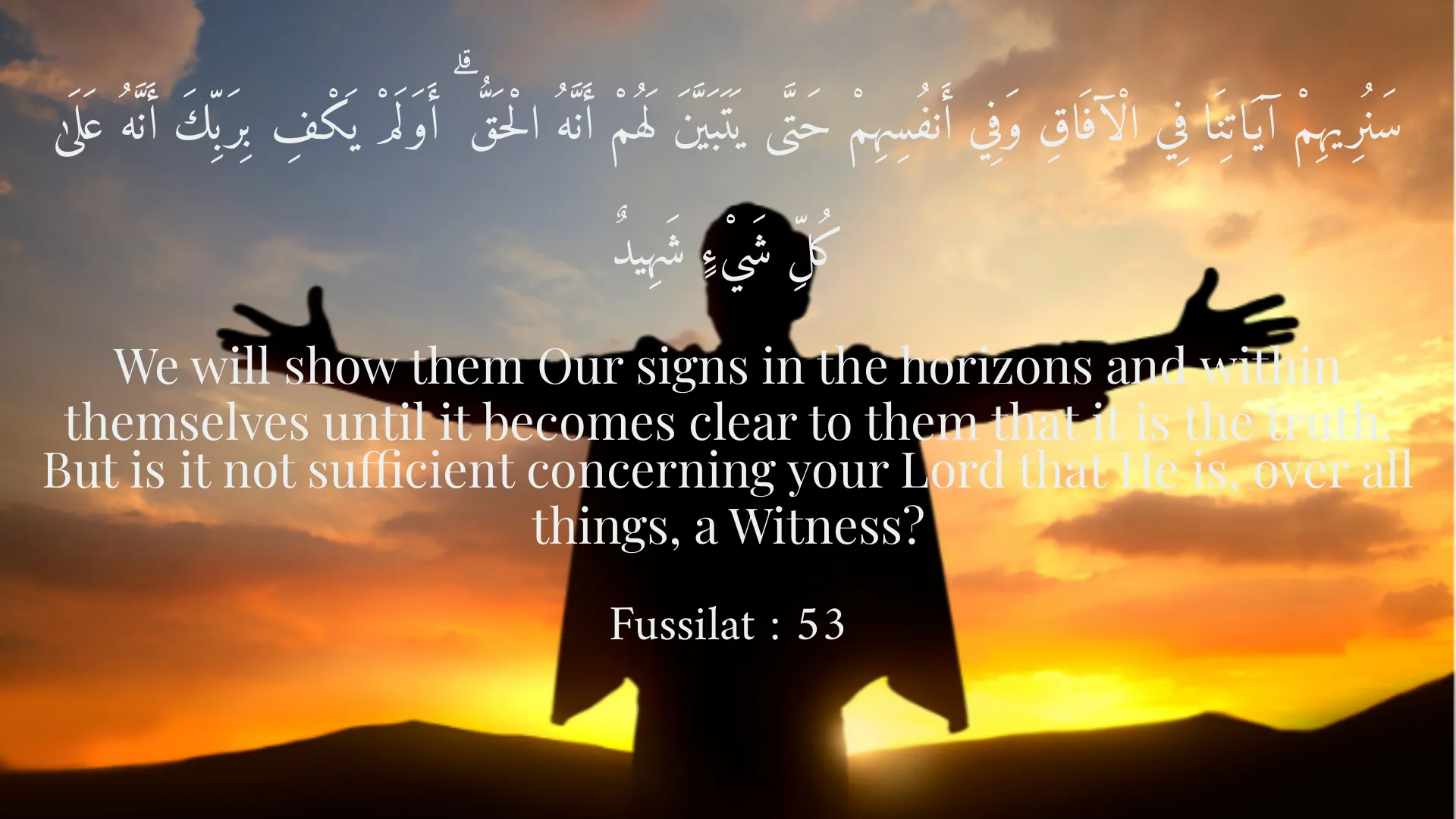
In the Holy Quran, while the term 'self-knowledge' in its modern, specialized sense might not be explicitly used, its essence and fundamental principles are deeply woven into numerous verses in profound and meaningful ways. The Quran invites humanity to ponder and reflect on their own existence and creation, thereby leading them to understand the truth of their being and their relationship with the Creator of the universe. This understanding not only helps individuals grasp their place in the world but also guides them towards a meaningful, purposeful, and ethical life in this world and salvation in the Hereafter. One of the most significant criteria for self-knowledge in the Quran is its emphasis on human beings as 'signs' (Ayat) of Allah. In Surah Fussilat, verse 53, Allah states: "سَنُرِيهِمْ آيَاتِنَا فِي الْآفَاقِ وَفِي أَنفُسِهِمْ حَتَّى يَتَبَيَّنَ لَهُمْ أَنَّهُ الْحَقُّ ۗ أَوَلَمْ يَكْفِ بِرَبِّكَ أَنَّهُ عَلَىٰ كُلِّ شَيْءٍ شَهِيدٌ" (We will show them Our signs in the horizons and within themselves until it becomes clear to them that it is the truth. But is it not sufficient concerning your Lord that He is, over all things, a Witness?). This verse explicitly indicates that within human beings lies a treasure trove of divine signs, and reflecting upon them leads to the recognition of the Lord and ultimately to profound self-knowledge. From the complexities of the brain and nervous system to the wonders of fetal development in the womb, all are signs proclaiming the Creator's grandeur and wisdom. Pondering these signs teaches humanity that they are not random beings but are created with a wise purpose and design. Furthermore, in Surah Adh-Dhariyat, verses 20 and 21, we read: "وَفِي الْأَرْضِ آيَاتٌ لِّلْمُوقِنِينَ. وَفِي أَنفُسِكُمْ ۚ أَفَلَا تُبْصِرُونَ" (And on the earth are signs for those of assured faith. And in yourselves. Then will you not see?). These verses, in a way, emphasize the importance of 'looking within' and discovering the hidden truths within ourselves. Recognizing one's strengths and weaknesses, talents and limitations, desires and motivations, are all part of this process. This inner understanding liberates individuals from heedlessness and self-conceit, leading to humility before the Creator's majesty and gratitude for His blessings. Another criterion for self-knowledge is the divine 'Fitra' (innate nature). The Holy Quran, in Surah Ar-Rum, verse 30, states: "فَأَقِمْ وَجْهَكَ لِلدِّينِ حَنِيفًا ۚ فِطْرَتَ اللَّهِ الَّتِي فَطَرَ النَّاسَ عَلَيْهَا ۚ لَا تَبْدِيلَ لِخَلْقِ اللَّهِ ۚ ذَٰلِكَ الدِّينُ الْقَيِّمُ وَلَٰكِنَّ أَكْثَرَ النَّاسِ لَا يَعْلَمُونَ" (So direct your face toward the religion, inclining to truth. [Adhere to] the fitrah of Allah upon which He has created [all] people. No change should there be in the creation of Allah. That is the correct religion, but most of the people do not know). Fitra is the pure, divine inherent disposition of humanity that naturally inclines towards monotheism, truth, justice, and goodness. Quranic self-knowledge means returning to this original, pure Fitra and shedding the deviations and impurities that accumulate over a lifetime. The closer one is to their Fitra, the better they know themselves and the easier they find the path to guidance. Understanding the purpose of human creation is another core aspect of Quranic self-knowledge. In Surah Adh-Dhariyat, verse 56, we read: "وَمَا خَلَقْتُ الْجِنَّ وَالْإِنسَ إِلَّا لِيَعْبُدُونِ" (And I did not create the jinn and mankind except to worship Me). Recognizing this ultimate purpose imbues human beings with a profound identity and a noble meaning. Worship in the Quran is not merely confined to ritualistic acts but encompasses every thought, word, and deed that is in line with Allah's pleasure and serves His creation. Grasping this purpose helps individuals understand their true worth and realize why they were created and to where they will return. This understanding influences all their decisions and choices. The Quran also refers to different states of the 'Nafs' (the soul or self), the understanding of which is essential for self-knowledge. From the 'Nafs al-Ammarah' (the soul commanding evil) which inclines one towards sin and desires, to the 'Nafs al-Lawwamah' (the self-reproaching soul) which blames one after committing sin, and finally, the 'Nafs al-Mutma'innah' (the tranquil and assured soul) which has attained divine peace and contentment. The path of Quranic self-knowledge is a journey from the Nafs al-Ammarah towards the Nafs al-Mutma'innah through 'Jihad al-Nafs' (the greater struggle against one's lower self) and 'Tazkiyah al-Nafs' (purification of the soul). This process involves self-reckoning, mindfulness, piety, and abstaining from sins, all of which lead to a deeper understanding of oneself and one's hidden potential for achieving perfection. The issue of human responsibility and free will also holds a special place in Quranic self-knowledge. The Quran clearly states that every human being is accountable for their actions: "Faman ya’mal mithqala dharratin khayran yarah. Waman ya’mal mithqala dharratin sharran yarah" (Surah Az-Zalzalah 99:7-8: "So whoever does an atom's weight of good will see it. And whoever does an atom's weight of evil will see it."). Understanding this responsibility and recognizing the freedom of will in choosing the path of truth or falsehood grants individuals immense power to guide their lives and build a better future. This awareness frees them from viewing themselves as victims of fate or external circumstances and enables them to be active and constructive agents in their own lives. Ultimately, Quranic self-knowledge is inseparable from 'Ma'rifat Allah' (knowledge of God). The famous saying, "Man 'arafa nafsahu faqad 'arafa Rabbahu" (Whoever knows himself has known his Lord), although not directly from the Quran, its spirit perfectly aligns with Quranic teachings. The more one comprehends their own weaknesses, needs, limitations, and dependencies, the more they become aware of the power, self-sufficiency, perfection, and grandeur of their Creator. Understanding the various dimensions of human existence – physical, intellectual, emotional, and spiritual – ultimately leads to a more complete comprehension of the Creator of this complex being. This knowledge not only brings inner peace and contentment but also motivates individuals towards good deeds, serving society, and spiritual elevation. Therefore, it can be said that the Holy Quran not only provides criteria for self-knowledge but also offers a comprehensive and complete guide for achieving this profound and transformative understanding.
Related Verses
سَنُرِيهِمْ آيَاتِنَا فِي الْآفَاقِ وَفِي أَنفُسِهِمْ حَتَّى يَتَبَيَّنَ لَهُمْ أَنَّهُ الْحَقُّ ۗ أَوَلَمْ يَكْفِ بِرَبِّكَ أَنَّهُ عَلَىٰ كُلِّ شَيْءٍ شَهِيدٌ
We will show them Our signs in the horizons and within themselves until it becomes clear to them that it is the truth. But is it not sufficient concerning your Lord that He is, over all things, a Witness?
Fussilat : 53
وَفِي الْأَرْضِ آيَاتٌ لِّلْمُوقِنِينَ
And on the earth are signs for those of assured faith.
Adh-Dhariyat : 20
وَفِي أَنفُسِكُمْ ۚ أَفَلَا تُبْصِرُونَ
And in yourselves. Then will you not see?
Adh-Dhariyat : 21
فَأَقِمْ وَجْهَكَ لِلدِّينِ حَنِيفًا ۚ فِطْرَتَ اللَّهِ الَّتِي فَطَرَ النَّاسَ عَلَيْهَا ۚ لَا تَبْدِيلَ لِخَلْقِ اللَّهِ ۚ ذَٰلِكَ الدِّينُ الْقَيِّمُ وَلَٰكِنَّ أَكْثَرَ النَّاسِ لَا يَعْلَمُونَ
So direct your face toward the religion, inclining to truth. [Adhere to] the fitrah of Allah upon which He has created [all] people. No change should there be in the creation of Allah. That is the correct religion, but most of the people do not know.
Ar-Rum : 30
وَمَا خَلَقْتُ الْجِنَّ وَالْإِنسَ إِلَّا لِيَعْبُدُونِ
And I did not create the jinn and mankind except to worship Me.
Adh-Dhariyat : 56
Short Story
It is narrated that a spirited young man spent years in pursuit of wisdom and knowledge. He traveled to every land and befriended every scholar, yet each time he felt something was missing. One day, he came upon an old sage and asked him, 'O wise elder, for years I have sought self-knowledge, but each time I find something, it seems to move further from me.' The sage smiled and said, 'My son, you are like one who carries a lantern, searching for the sun. The signs of truth are within you, not in distant lands. Whatever you wish to know, ask the mirror of your own heart.' The young man was awakened by these words and understood that the path to knowing God passes through knowing oneself, and this was the very treasure hidden within the sanctuary of his being. From then on, he embarked on self-discovery and found true peace. This tale reminds us that truth is closer than we imagine, and the true treasure is hidden within one's own heart.