Quranic Answer
From the perspective of the Holy Quran, the concept of 'deficiencies' or 'shortcomings' is a complex issue with profound spiritual dimensions. Contrary to the common perception that deficiency is merely a form of loss or misfortune, Quranic teachings reveal that many of what we label as 'deficiencies' or 'hardships' can actually serve as hidden blessings, tools for growth, tests of faith, and paths to drawing closer to God. This perspective transforms human suffering and deprivation from mere adversities into opportunities for deep inner reflection and spiritual flourishing. The Quran explicitly states that worldly life is full of trials and tribulations. In Surah Al-Baqarah, verse 155, Allah says: "And We will surely test you with something of fear and hunger and a loss of wealth and lives and fruits, but give good tidings to the patient." This verse clearly mentions various forms of 'deficiencies' – fear, hunger, reduction in wealth, lives, and products – as an inevitable part of the divine test. The crucial point here is that these deficiencies are not ends in themselves, but rather means to assess human patience, faith, and reliance on Allah. In this light, a 'deficiency' transforms into an instrument through which a greater blessing, such as divine pleasure, spiritual elevation, and forgiveness of sins, is attained. A believer, when facing loss, finds an opportunity to demonstrate patience and steadfastness, the result of which is an immeasurable reward, as stated in Surah Az-Zumar, verse 10: "Indeed, the patient will be given their reward without account." This reward manifests not only in the Hereafter but also in the form of inner peace and insight in this very world. Another positive aspect of deficiencies is their ability to awaken the human spirit and direct it towards God. During times of abundance and comfort, humans sometimes become heedless of their Creator and become engrossed in worldly allurements. However, when faced with a deficiency or a problem, they are compelled to extend their hand of need to the Absolute Power, and their supplication and prayer become deeper and more sincere. This return to God is itself a great blessing that can transform an individual's life path and connect them to the source of eternal peace. Many times, what we detest and dislike (such as an illness, a financial setback, or a loss) actually contains hidden good and benefit for us. The Quran in Surah Al-Baqarah, verse 216, states: "...But perhaps you hate a thing and it is good for you; and perhaps you love a thing and it is bad for you. And Allah Knows, while you know not." This verse clearly shows that human understanding of 'good' and 'evil' is limited, while divine knowledge is comprehensive and complete. Therefore, an apparent 'deficiency' might be a barrier preventing us from falling into a deeper abyss, or a path towards growth and perfection that we would never have achieved under normal circumstances. Moreover, deficiencies can be a means of expiating sins. Islamic narrations emphasize that any hardship, illness, or calamity that befalls a believer leads to the removal of their sins, even if it is as small as a thorn prick. This perspective transforms the pain and suffering caused by deficiency into a righteous act leading to divine forgiveness. This cleansing from sins is itself a tremendous blessing that paves the way for a person to enter Paradise. Furthermore, the experience of deficiency can strengthen empathy and social solidarity. Someone who has experienced poverty can better understand the pain of the poor and empathize with them. Someone who has suffered illness appreciates health more and visits the sick. These personal experiences of 'deficiency' not only lead to individual growth but also strengthen the spirit of cooperation and benevolence in society, transforming it into a kinder and more just community. In fact, deficiencies offer humans the opportunity to free themselves from material dependence and turn towards noble human and spiritual values, discovering their inner strength. This internal transformation, often forged in the crucible of hardship, is the greatest blessing of all. In conclusion, the Holy Quran does not view deficiencies merely as lacks or misfortunes. Instead, it regards them as educational and testing tools from Allah, essential for growth, elevation, purity of the soul, and a deeper understanding of life's truth. With the right attitude and trust in Allah, every deficiency can be transformed into a ladder for spiritual ascent and the attainment of more lasting blessings in this world and the Hereafter. This divine wisdom demonstrates the boundless mercy of Allah, where even in what appears to be undesirable, a great good is hidden.
Related Verses
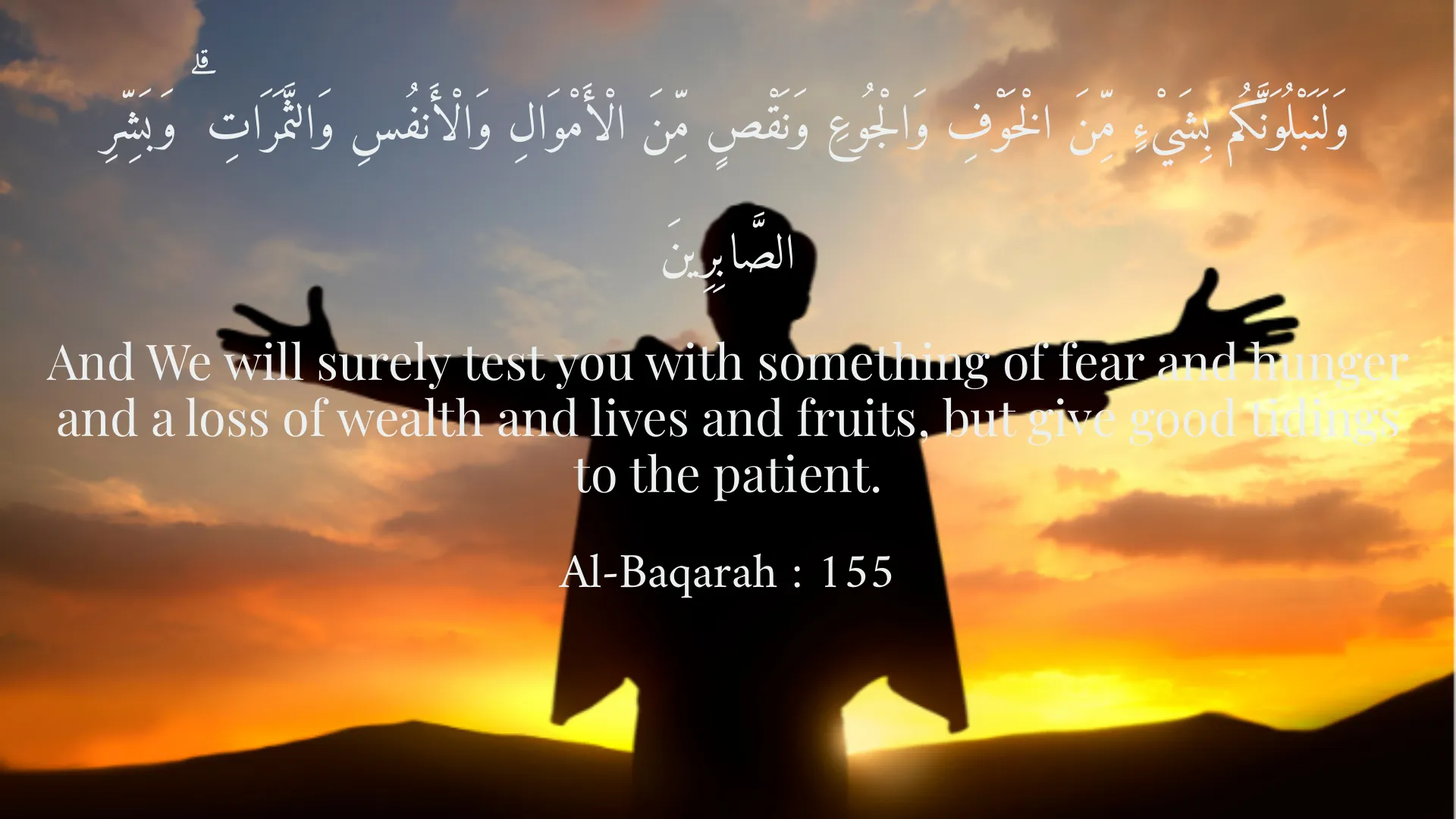
وَلَنَبْلُوَنَّكُم بِشَيْءٍ مِّنَ الْخَوْفِ وَالْجُوعِ وَنَقْصٍ مِّنَ الْأَمْوَالِ وَالْأَنفُسِ وَالثَّمَرَاتِ ۗ وَبَشِّرِ الصَّابِرِينَ
And We will surely test you with something of fear and hunger and a loss of wealth and lives and fruits, but give good tidings to the patient.
Al-Baqarah : 155
كُتِبَ عَلَيْكُمُ الْقِتَالُ وَهُوَ كُرْهٌ لَّكُمْ ۖ وَعَسَىٰ أَن تَكْرَهُوا شَيْئًا وَهُوَ خَيْرٌ لَّكُمْ ۖ وَعَسَىٰ أَن تُحِبُّوا شَيْئًا وَهُوَ شَرٌّ لَّكُمْ ۗ وَاللَّهُ يَعْلَمُ وَأَنتُمْ لَا تَعْلَمُونَ
Fighting has been enjoined upon you, though it is hateful to you. But perhaps you hate a thing and it is good for you; and perhaps you love a thing and it is bad for you. And Allah Knows, while you know not.
Al-Baqarah : 216
قُلْ يَا عِبَادِ الَّذِينَ آمَنُوا اتَّقُوا رَبَّكُمْ ۚ لِلَّذِينَ أَحْسَنُوا فِي هَٰذِهِ الدُّنْيَا حَسَنَةٌ ۗ وَأَرْضُ اللَّهِ وَاسِعَةٌ ۗ إِنَّمَا يُوَفَّى الصَّابِرُونَ أَجْرَهُم بِغَيْرِ حِسَابٍ
Say, "O My servants who have believed, fear your Lord. For those who do good in this world is good, and Allah's earth is spacious. Indeed, the patient will be given their reward without account."
Az-Zumar : 10
Short Story
Once upon a time, a wealthy and perpetually anxious merchant passed by the humble hut of a simple dervish. Despite possessing no worldly riches, the dervish had a cheerful and serene countenance. The merchant, puzzled, asked, "O Dervish, how can you be so joyful and at ease with so many deficiencies and lack of possessions?" The dervish smiled and replied, "My dear friend, I lack nothing but worry! You possess much, but you are enslaved by your possessions. My deficiencies in material things have freed my heart, while your abundance has placed a heavy burden on your soul. By God, what you perceive as my 'deficiency' is my true freedom, and what you consider 'abundance' is your true captivity." The merchant was astonished by the dervish's wise words and fell into deep thought, beginning to re-evaluate the true meaning of wealth and peace.