Quranic Answer
The Holy Quran, the divine scripture of Islam, serves as a profound guide for humanity, providing insights into the nature of existence, the purpose of life, and the relationship between the Creator and creation. One of the central themes within the Quran is the emphasis on establishing closeness to Allah (God). This closeness is not only vital for individual spiritual development but also serves as a foundation for moral and ethical living. The importance of nurturing this relationship is vividly illustrated in various verses of the Quran, particularly in Surah Az-Zumar and Surah Al-Ma'idah. In Surah Az-Zumar, verse 9, Allah poses a thought-provoking question: "Is one who prays and believes in His signs any better than one who worships others?" This verse compels individuals to introspect their lives and their forms of worship. It highlights that true worship involves recognizing the signs of Allah and engaging in prayer, emphasizing the superiority and virtue of those who have faith and devotedly pray to Him. This raises a pivotal question within the human heart: who do we choose to worship? The Quran urges believers to reflect on their connection to Allah and points out that those who genuinely seek Him will attain higher ranks. It naturally follows that this query invites a deep connection with Allah as the primary source of one's worship and devotion. Moreover, Surah Al-Ma'idah, verse 35, further solidifies the importance of seeking nearness to Allah through action. Here, Allah instructs His believers: "O you who have believed, fear Allah and seek the means of nearness to Him, and strive in His cause." This injunction illustrates that establishing a close relationship with Allah is not merely a state of mind but a dynamic practice requiring vigorous efforts in the form of righteous deeds and moral actions. Delving into this verse, one can understand the multi-faceted nature of worship and nearness to Allah. The concept of ‘seeking the means of nearness’ encompasses various actions, such as performing obligatory prayers (Salah), giving alms (Zakat), engaging in acts of charity (Sadaqah), and exhibiting kindness and compassion towards others. These actions embody the spirit of worship beyond rituals, calling Muslims to embody their faith through tangible efforts in their daily lives. Essentially, the Quranic message emphasizes that every act of kindness or goodness, no matter how small, is a step towards strengthening one’s connection with Allah. Additionally, the Quran often connects the importance of righteous actions with the promise of alleviation from hardship and divine mercy. The believers are reminded in Surah Al-Imran, verse 15, where Allah asks rhetorically, "O you who have believed! Should I guide you to a transaction that saves you from a painful punishment?" This highlights that the pursuit of spiritual closeness to Allah is not a solitary journey but a rewarding transaction that yields immense benefits in this world and the Hereafter. It invites believers to engage sincerely in righteous deeds and seek forgiveness, indicating that through such actions, one can attain peace of mind and satisfaction in life. The beauty of establishing closeness to Allah through the framework of the Quran is also intricately connected to the principles of mercy, compassion, and community. A crucial aspect of drawing nearer to Allah involves recognizing the needs of fellow human beings and acting upon them. Acts of charity and support within the community foster not only individual spiritual growth but also societal harmony and integrity. Striving in Allah's cause is not a mere option; it is a calling for every believer to engage with the world around them positively, thereby creating a ripple effect of goodness. An important element of this relationship with Allah is humility in recognizing one's shortcomings and the need for divine guidance. Islam teaches that true servitude lies in recognizing human limitations and the infinite mercy of Allah. Each act of worship and kindness is not just a duty; it is a profound acknowledgment of the blessings and guidance provided by Allah. This humility transforms one's life as individuals begin to understand that their success, joys, and achievements are intertwined with their relationship with their Creator. Through prayer, reflection, and action, believers can cultivate their emotional and spiritual well-being, leading to a life enriched with purpose and fulfillment. Moreover, the transformative power of closeness to Allah is best understood in the context of daily life. As individuals engage in sincere prayers and strive to fulfill their obligations, they cultivate a sense of connection that permeates their existence. Through regular worship, prayers, and ethical living, believers experience a sense of tranquility and inner peace. This Islamic spiritual practice creates a powerful shield against the stresses and challenges of modern life, allowing individuals to navigate life's complexities with a serene heart and focused mind. In summary, the Holy Quran profoundly articulates the importance of establishing closeness to Allah. Through introspection, righteous deeds, acts of kindness, and sincerity in worship, individuals can forge a deep and meaningful relationship with their Creator. The verses from Surah Az-Zumar and Surah Al-Ma'idah guide believers in recognizing the value of their faith and actions, which form the cornerstone of a life lived in pursuit of divine closeness. Ultimately, this relationship brings about emotional fulfillment, peace, and satisfaction—characteristics that illuminate one’s life path and inspires others to embark on the same spiritual journey. As humanity grapples with the complexities of existence, the timeless wisdom of the Quran serves as a beacon for those seeking to foster a genuine connection with Allah, transforming their lives into an enlightening journey full of peace, love, and mercy.
Related Verses
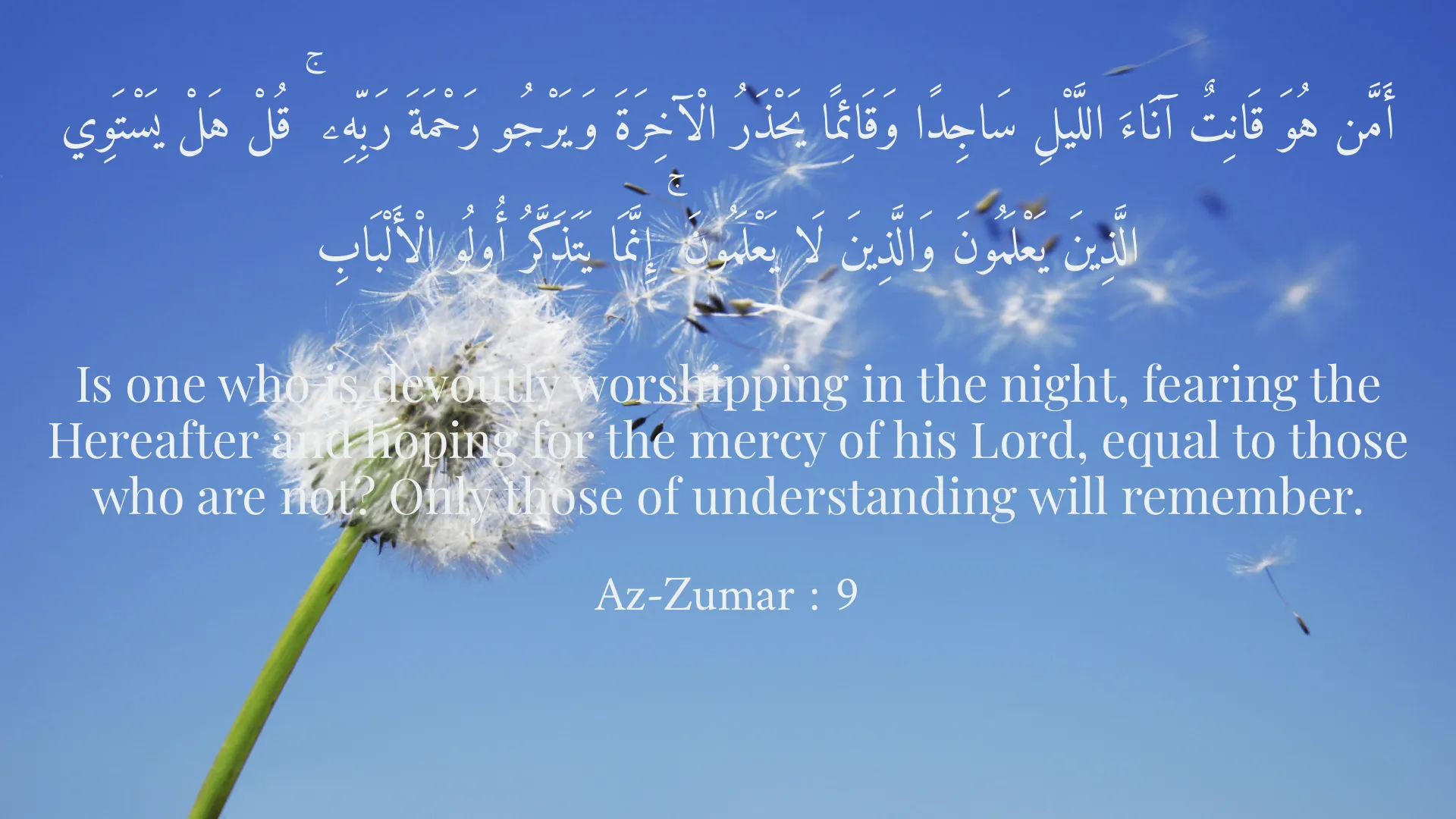
أَمَّن هُوَ قَانِتٌ آنَاءَ اللَّيْلِ سَاجِدًا وَقَائِمًا يَحْذَرُ الْآخِرَةَ وَيَرْجُو رَحْمَةَ رَبِّهِۦ ۚ قُلْ هَلْ يَسْتَوِي الَّذِينَ يَعْلَمُونَ وَالَّذِينَ لَا يَعْلَمُونَ ۚ إِنَّمَا يَتَذَكَّرُ أُولُو الْأَلْبَابِ
Is one who is devoutly worshipping in the night, fearing the Hereafter and hoping for the mercy of his Lord, equal to those who are not? Only those of understanding will remember.
Az-Zumar : 9
يَا أَيُّهَا الَّذِينَ آمَنُوا اتَّقُوا اللَّهَ وَابْتَغُوا إِلَيْهِ الْوَسِيلَةَ وَجَاهِدُوا فِي سَبِيلِهِ لَعَلَّكُمْ تُفْلِحُونَ
O you who have believed, fear Allah and seek the means of nearness to Him, and strive in His cause that you may succeed.
Al-Ma'idah : 35
أَلَمْ تَرَ إِلَى الَّذِينَ تَوَلَّوْا قَوْمًا غَضِبَ اللَّهُ عَلَيْهِمْ ۖ مَا هُمْ لَكُمْ مِنْ نَصْرٍ وَمَا أَنْتُمْ لَهُم مِنْ نَصْرٍ ۚ وَلَا تَجِدُ لِلَّهِ قَوْمًا يُعَذِّبُونَ
Have you not seen those who have taken a people of whom Allah is angry? They are not for you in help, nor are you for them in help. And never will you find for Allah a people whom He punishes.
Al-Imran : 15
Short Story
Ali was a young man who was always in search of meaning and purpose in his life. He sought to draw closer to God and knew that this path wouldn’t be easy. One day, after reading some verses from the Quran, he concluded that only through good deeds and sincerity in worship could he reach his goal. He decided to dedicate more time each day to prayer and to help those in need. By doing so, Ali found greater peace and became closer to a fulfilling life.