Quranic Answer
In the Holy Quran, the concept of repentance and the opportunity for human beings to return to God and seek purification is a fundamental theme that resonates throughout its verses. This profound message not only demonstrates the vastness of Allah's mercy but also serves as a source of hope and inspiration for believers. One of the most compelling verses highlighting this theme is found in Surah Az-Zumar, verse 53, where Allah says: 'O My servants who have believed, fear your Lord. For those who do good in this world is good, and the earth of Allah is spacious. Indeed, the patient will be given their reward without account.' This verse encapsulates a strong reminder that no matter the sins a person may have committed in the past, they can always turn back to Allah in repentance and seek forgiveness. The path back to purity is open, and the gates of mercy are wide, welcoming all who sincerely wish to reform. The essence of this verse speaks to the love and compassion that Allah holds for His creatures. It emphasizes the importance of having a vigilant heart that fears God and recognizes the difference between right and wrong. A significant aspect is the promise that those who engage in righteous deeds and demonstrate patience will not only find goodness in this world but will also be bestowed with rewards that are beyond measure. This assurance instills a sense of accountability and inspiration for believers, encouraging them to strive for constant improvement and adherence to their faith. Furthermore, Surah An-Nasr, verse 3 adds another dimension to this conversation about repentance: 'And glorify the praise of your Lord and ask for His forgiveness. Indeed, He is ever Accepting of Repentance.' This verse embodies the duality of glorification of God and seeking forgiveness as an integral part of worship. It invites individuals to engage in supplication and to remember that Allah is always open to accept the penitence of those who err. The nature of divine forgiveness in Islam is not merely transactional; it is imbued with a sense of relationship and connection between the believer and their Creator. The vastness of Allah's mercy is further illustrated in the stories of various prophets recounted in the Quran. These narratives serve to inspire individuals by demonstrating that even the most revered figures faced trials, committed sins, and ultimately repented. The story of Prophet Jonah (A) is particularly enlightening. Jonah, who initially strayed from his divine mission and found himself in the belly of a fish, turned back to Allah with repentance and supplication, expressing his sorrow for his disobedience. His return to God wasn't just a physical act, but a heartfelt emotional and spiritual awakening. The subsequent forgiveness he received illustrates the profound nature of Allah's mercy, showing that no one is beyond redemption, regardless of their past transgressions. The Quran's emphasis on repentance also serves as guidance for believers in how to navigate their own lives. It is a reminder that imperfection is indeed a part of the human experience, and that the act of seeking forgiveness and striving for a better state of being is a noble pursuit. The path of repentance is encouraged as an ongoing journey rather than a singular moment, enabling believers to maintain a continuous relationship with God, wherein they actively seek to redeem themselves after sins. In addition to individual stories and verses, the Quran also encourages communal responsibility in nurturing a culture of repentance and forgiveness. Muslims are reminded to not only seek forgiveness for themselves but also encourage those around them to embrace the mercy of Allah. This communal aspect fosters compassion, understanding, and a supportive environment, where the focus remains on building each other up rather than casting blame or judgment. Moreover, the crucial role of intention in Islam cannot be overlooked. The intentions behind actions are pivotal in Islam, and a sincere desire for repentance can often lead to profound transformation within an individual's heart. Allah's awareness of the internal struggles and desires of His servants further assures that genuine attempts to seek forgiveness are met with compassion. This intrinsic connection between intention and action reinforces the importance of a heart devoted to seeking truth and goodness. In conclusion, the Holy Quran serves as a guiding light for believers on the journey of repentance and purification. Verses like those found in Surah Az-Zumar and Surah An-Nasr are timeless reminders of the boundless mercy of Allah and the opportunity for renewal available to all. The stories of prophets add context and encouragement, offering real-life examples of repentance and divine forgiveness. The ultimate message is one of hope and possibility— no matter how far one may stray, the path back to God is always open, and He is always willing to forgive those who seek Him sincerely. The Quran not only illustrates the process of seeking purification but also emphasizes the collective responsibility of nurturing a forgiving and compassionate community. Thus, it creates a loving environment where individuals can strive together towards spiritual growth and enlightenment, fostering a deep-seated belief in the power of repentance and the infinite mercy of Allah.
Related Verses
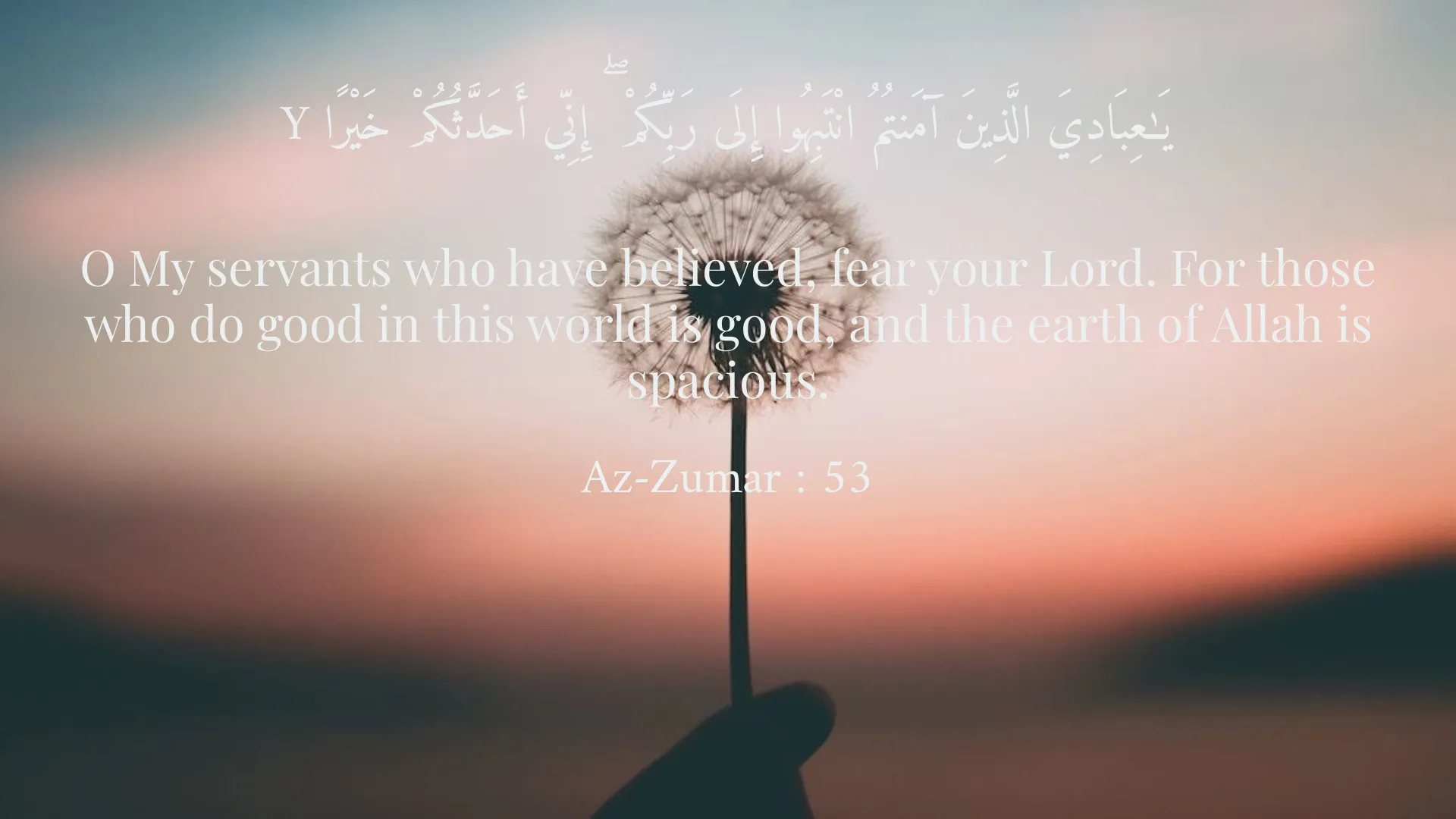
يَـٰعِبَادِيَ الَّذِينَ آمَنتُمُ انْتَبِهُوا إِلَى رَبِّكُمْ ۖ إِنِّي أَحَدَّثُكُمْ خَيْرًا Y
O My servants who have believed, fear your Lord. For those who do good in this world is good, and the earth of Allah is spacious.
Az-Zumar : 53
وَسَبِّحْ بِحَمْدِ رَبِّكَ وَاسْتَغْفِرْهُ إِنَّهُ كَانَ تَوَابًا.
And glorify the praise of your Lord and ask for His forgiveness. Indeed, He is ever Accepting of Repentance.
An-Nasr : 3
Short Story
Once, a man named Ali approached a sage with a question in his mind: "Can I be pure again?" The sage smiled and said, "Yes, every person can return to God with sincerity and repentance. Remember the story of Jonah (A); when he was in the belly of the fish, he repented to God, and Allah saved him." Ali returned home with hope and faith.