Quranic Answer
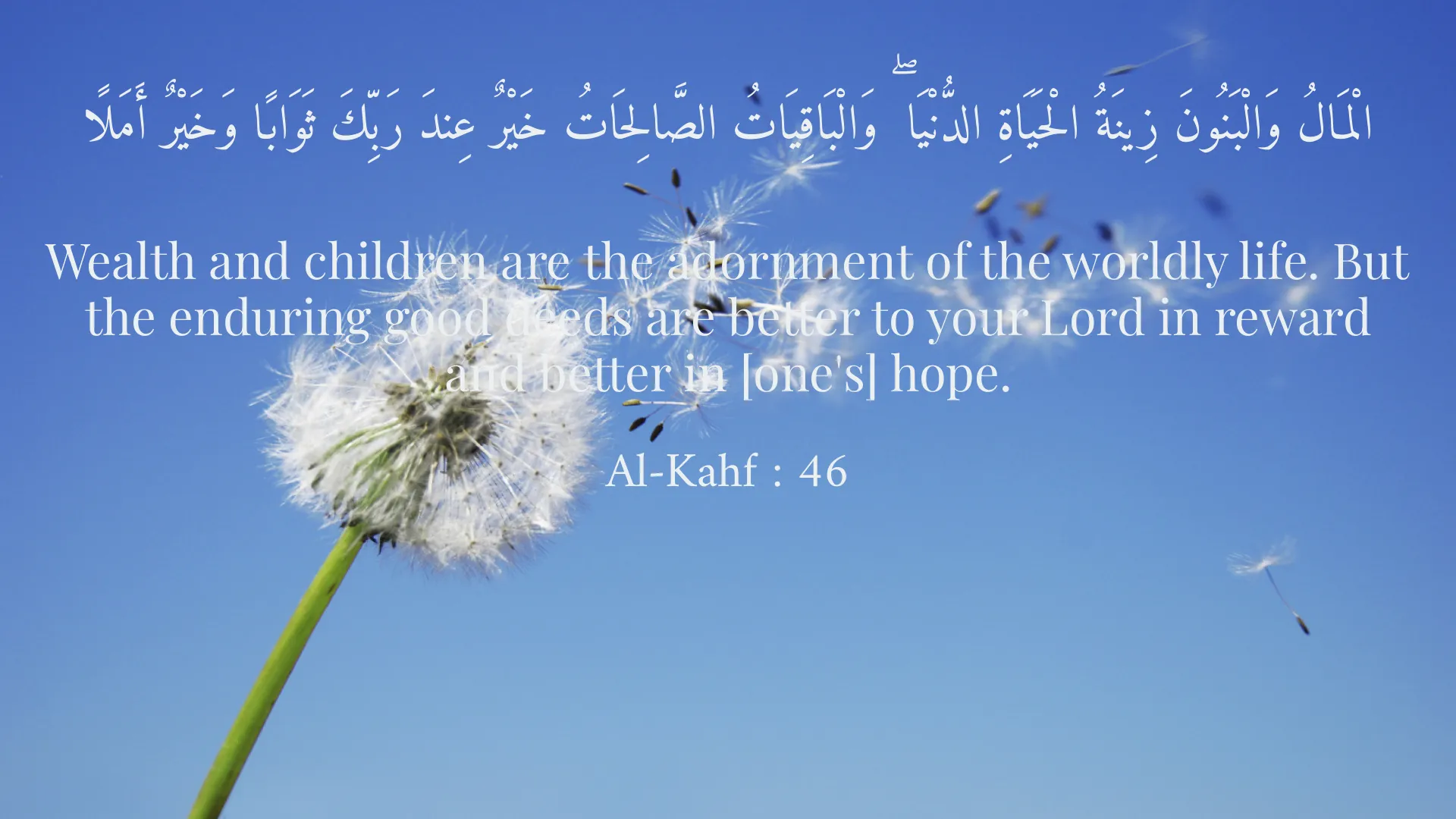
Career success, at first glance, might seem to be the ultimate key to happiness and contentment in life. Many of us in contemporary societies are driven by the pursuit of professional advancement, higher incomes, and attaining esteemed positions, all with the hope that these achievements will lead us to true felicity. But does the Holy Quran truly endorse this view? Is genuine happiness solely contingent upon worldly and career accomplishments? The Quran's answer to this question offers a much deeper and more comprehensive perspective than mere material achievements. The Quran explicitly states that the life of this world and its adornments are transient and deceptive in nature. In Surah Al-Kahf, verse 46, we read: “Wealth and children are the adornment of the worldly life. But the enduring good deeds are better to your Lord in reward and better in [one’s] hope.” This verse clearly indicates that wealth and career success (often associated with wealth and status) are merely "adornments" of worldly life; they are temporary and superficial. While these adornments might bring moments of pleasure and pride, they cannot be the source of lasting happiness and inner satisfaction. The Quran here emphasizes "al-baqiyat al-salihat" (enduring good deeds), which are those actions that remain and have true reward with one's Lord. This implies a reward that transcends worldly life and leads to eternal happiness in the Hereafter. This Quranic perspective teaches us that while striving for a better livelihood and career advancement is desirable and even necessary, it should not be considered the ultimate goal of life. Instead, it should be seen as a means to achieve higher objectives and to gain divine pleasure. This profound understanding guides believers to prioritize their spiritual well-being over fleeting material gains. Furthermore, in Surah Al-Hadid, verse 20, a very clear and thought-provoking image of the nature of worldly life is presented: “Know that the worldly life is only amusement and diversion and adornment and boasting among yourselves and competition in increase of wealth and children - like the example of a rain whose [resulting] plant growth pleases the disbelievers; then it dries and you see it turned yellow; then it becomes [scattered] debris. And in the Hereafter is severe punishment and forgiveness from Allah and approval. And what is the worldly life except the enjoyment of delusion.” This verse unequivocally places worldly successes, including career success, under the category of "boasting" and "competition in increase of wealth." It likens it to vegetation that, after flourishing, turns yellow and becomes debris, symbolizing the impermanence and perishability of all material achievements. Therefore, relying on career success as the sole source of happiness is building upon a mirage that will sooner or later disappear, leaving behind only a sense of emptiness and failure. This crucial lesson from the Quran warns us not to become attached to the transient glamour of this world and to always keep in mind the ultimate purpose of creation and life after death. The Quran identifies true happiness and inner peace as being intrinsically linked to one's connection with Allah and His remembrance. In Surah Ar-Ra’d, verse 28, it states: “Those who believe and whose hearts are assured by the remembrance of Allah. Unquestionably, by the remembrance of Allah hearts are assured.” This verse reveals a fundamental truth: genuine inner peace and felicity are spiritual states that originate from connecting with the absolute source of tranquility, which is Allah. Career success might bring external and temporary satisfactions, but it cannot fill the inner void or alleviate existential anxieties. Only the remembrance of Allah, faith in Him, and living according to divine teachings can bring about a tranquil heart and a peaceful soul. This inner peace sustains an individual even when facing career challenges or potential setbacks. This key point highlights that seeking happiness outside of oneself and without a connection to the Creator of the universe is a fruitless endeavor. True contentment comes from within, through spiritual nourishment. Of course, this does not mean that Islam rejects career success or considers it worthless. On the contrary, Islam places great emphasis on effort, hard work, and earning a lawful livelihood. The Prophet Muhammad (peace be upon him) said, "He who eats from the labor of his hands is a friend of Allah." Working and striving to earn a living and provide for oneself and one's family is not only permissible but considered an act of worship. A Muslim can and should be diligent and successful in their profession, but this success must be aligned with higher goals and serve as a means to achieve ultimate happiness in the Hereafter. Career success can provide opportunities to serve the community, perform good deeds, and assist those in need, and in this context, it can be considered a part of the path to happiness. Acquiring knowledge and skills in any profession and utilizing them for the benefit of society and the Islamic Ummah is not only not condemned but highly praised. Many Islamic jurists and scholars themselves had professions through which they earned a lawful livelihood. However, the main difference lies in the intention and purpose of these endeavors. If the primary and sole purpose of life becomes merely career success and accumulation of wealth, then one falls into the trap of a deceptive worldly life that promises happiness but ultimately leads to failure and emptiness. Thus, for a Muslim, true happiness lies in having a balanced perspective on life. This balance includes striving for success in this world (including career success) while maintaining a deep connection with the Creator, performing acts of worship, and adhering to Islamic ethics. Happiness is found not just in "having" but in "being" and "acting" in the right way. It is not in wealth and status, but in Allah's pleasure, inner peace, serving creation, and piety. If career success causes a person to forget Allah, to oppress others, or to lose sight of the primary purpose of their life, then it will not only fail to bring happiness but may lead to misery and wretchedness in this world and the Hereafter. The Quran teaches us that true felicity (falah) encompasses success in both this world and the Hereafter, and this salvation is achieved through faith and righteous deeds, not merely material accomplishments. Therefore, while career success can be a contributing and beneficial factor if pursued in the right way and with divine intention, it can never replace the true happiness that stems from profound faith and the remembrance of Allah, and it alone cannot guarantee lasting peace and satisfaction.
Related Verses
الْمَالُ وَالْبَنُونَ زِينَةُ الْحَيَاةِ الدُّنْيَا ۖ وَالْبَاقِيَاتُ الصَّالِحَاتُ خَيْرٌ عِندَ رَبِّكَ ثَوَابًا وَخَيْرٌ أَمَلًا
Wealth and children are the adornment of the worldly life. But the enduring good deeds are better to your Lord in reward and better in [one's] hope.
Al-Kahf : 46
اعْلَمُوا أَنَّمَا الْحَيَاةُ الدُّنْيَا لَعِبٌ وَلَهْوٌ وَزِينَةٌ وَتَفَاخُرٌ بَيْنَكُمْ وَتَكَاتُرٌ فِي الْأَمْوَالِ وَالْأَوْلَادِ ۖ كَمَثَلِ غَيْثٍ أَعْجَبَ الْكُفَّارَ نَبَاتُهُ ثُمَّ يَهِيجُ فَتَرَاهُ مُصْفَرًّا ثُمَّ يَكُونُ حُطَامًا ۖ وَفِي الْآخِرَةِ عَذَابٌ شَدِيدٌ وَمَغْفِرَةٌ مِّنَ اللَّهِ وَرِضْوَانٌ ۚ وَمَا الْحَيَاةُ الدُّنْيَا إِلَّا مَتَاعُ الْغُرُورِ
Know that the worldly life is only amusement and diversion and adornment and boasting among yourselves and competition in increase of wealth and children - like the example of a rain whose [resulting] plant growth pleases the disbelievers; then it dries and you see it turned yellow; then it becomes [scattered] debris. And in the Hereafter is severe punishment and forgiveness from Allah and approval. And what is the worldly life except the enjoyment of delusion.
Al-Hadid : 20
الَّذِينَ آمَنُوا وَتَطْمَئِنُّ قُلُوبُهُم بِذِكْرِ اللَّهِ ۗ أَلَا بِذِكْرِ اللَّهِ تَطْمَئِنُّ الْقُلُوبُ
Those who believe and whose hearts are assured by the remembrance of Allah. Unquestionably, by the remembrance of Allah hearts are assured.
Ar-Ra'd : 28
Short Story
It is narrated that there was once a great and powerful king who, despite all his wealth and status, was always immersed in sorrow and melancholy. One day, as he sat by a river, he saw a dervish singing joyfully, content with a few dry crumbs and a little water. The king was astonished by the dervish's cheerfulness and asked him, "You have nothing, yet you are so happy, while I possess everything and am drowned in grief. What is your secret?" The dervish replied with a warm smile, "Your sorrow stems from the fear of losing what you have and the greed to acquire more. My joy, however, comes from having nothing to lose and my desires being limited. I am content with Allah's provision, and that is sufficient for me." The king, enlightened by these wise words, realized that true happiness lies in contentment of the heart, not in accumulating wealth and status.