Quranic Answer
In addressing the profound and challenging question of whether an excessive focus on the outward appearance of religion can make faith superficial, the Holy Quran offers a comprehensive and balanced perspective. Islam, as a complete way of life, pays special attention to both the external dimension (actions, rituals, dress code) and the internal dimension (intention, sincerity, piety, knowledge). However, what the Quran repeatedly emphasizes is that the true value of deeds and rituals lies not in their mere outward form, but in the spirit and intention behind them. Without this spiritual essence and pure intention, mere externalism can transform faith into an empty shell or a hollow framework, and this is where the danger of faith becoming superficial emerges. The Quran explicitly warns against hypocrisy (Riya' – showing off good deeds to gain people's attention) and Nifaq (duplicity and feigning faith while being an unbeliever internally). In Surah Al-Ma'un, Allah the Almighty states: "So woe to those who pray, [but] who are heedless of their prayer – those who make show [of their deeds] and withhold [small] assistance" (Al-Ma'un, 107:4-7). These verses clearly warn that even prayer, the pillar of faith, if performed with negligence and for show, not only lacks value but brings woe upon such worshippers. This indicates that the outward act of prayer, without presence of heart and sincere intention for God, can easily become a tool for pretense and self-display, distancing the individual from the reality of servitude. Similarly, in Surah An-Nisa, verse 142, concerning the hypocrites, it is mentioned: "Indeed, the hypocrites [think to] deceive Allah, but He is deceiving them. And when they stand for prayer, they stand lazily, showing [themselves to] the people and not remembering Allah except a little." These examples vividly illustrate that emphasizing the outward without the inward not only fails to deepen faith but actually leads to its corruption. Conversely, the Quran places significant emphasis on the concept of "Ikhlas," or pure intention. In Surah Al-Bayyinah, verse 5, Allah says: "And they were not commanded except to worship Allah, [being] sincere to Him in religion, inclining to truth, and to establish prayer and to give zakah. And that is the correct religion." This verse clearly states that all divine commands are for humanity to worship God sincerely and without compromise. Establishing prayer and paying zakat, which are outward acts of religion, must also be accompanied by sincerity. In truth, every act of worship, from prayer and fasting to Hajj and charity, gains true value only when performed for the sake of Allah and without associating anyone else in the intention. If this sincerity in intention is absent, even the greatest deeds will be ineffective and merely transform into an empty shell devoid of meaning. Taqwa, one of the most crucial Quranic concepts, is closely related to this discussion. Taqwa, meaning God-consciousness and piety, is a state of the heart that keeps a person away from sins and directs them towards good deeds. The Quran frequently highlights the importance of Taqwa and makes it the criterion for human superiority. Taqwa is an internal state from which outward actions originate. If someone merely adheres to the external forms of religion and lacks the spirit of Taqwa, they might fall into the trap of self-conceit and arrogance, considering themselves superior to others, whereas true Taqwa leads to humility and modesty. The Quran also provides a comprehensive definition of "righteousness" (Birr) in Surah Al-Baqarah, verse 177, which extends beyond merely outward acts: "Righteousness is not that you turn your faces toward the east or the west, but [true] righteousness is [in] one who believes in Allah, the Last Day, the angels, the Book, and the prophets and gives wealth, in spite of love for it, to relatives, orphans, the needy, the traveler, those who ask [for help], and for the freeing of slaves; [and who] establishes prayer and gives zakah; and [who] fulfill their promise when they promise; and [who] are patient in poverty and hardship and during battle. Those are the ones who have been true, and it is those who are the righteous." This verse demonstrates that "righteousness" is not limited to facing the Qibla (an outward act) but includes belief in the principles of faith, charity to the needy, establishing prayer, paying zakat, fulfilling promises, and patience in adversity. This definition clearly shows that true religiosity is a combination of inner faith, good social deeds, and ritualistic worship, all of which must be balanced. Focusing only on one aspect and neglecting another can lead to a flaw in faith and its superficiality. In summary, the Holy Quran teaches us that both the outward and inward dimensions of religion are important, but the inward – namely, pure intention and sincere faith – is the foundation and spirit of religiosity. Outward actions without inward support are like a lifeless body that not only fails to deepen faith but may also entrap an individual in hypocrisy, self-deception, and pride. To achieve deep and lasting faith, we must always strive for our outward actions to be accompanied by pure intentions and an aware heart, and the ultimate goal of every act of worship must be to gain Allah's pleasure and draw closer to Him, not to seek people's praise. This delicate and vital balance is the key to spiritual growth and elevation on the divine path, and it prevents faith from becoming superficial. Although adherence to outward religious practices is necessary and emphasized, one must not overlook that these appearances are means to reach the inner essence and depth of faith, not an end in themselves. If there is no correct understanding of this reciprocal relationship, one can easily fall into the trap of superficiality and deviate from the truth of religion. Therefore, the answer is yes, if the focus on the outward appearance of religion becomes separated from its spirit and inner essence, and is considered the primary goal, it can indeed lead to faith becoming superficial. The ultimate goal is the growth and elevation of the soul and the attainment of true Taqwa, which manifests both in the heart and in action. This continuous connection between the outward and the inward is what deepens faith and protects it from any hypocrisy or pretense.
Related Verses
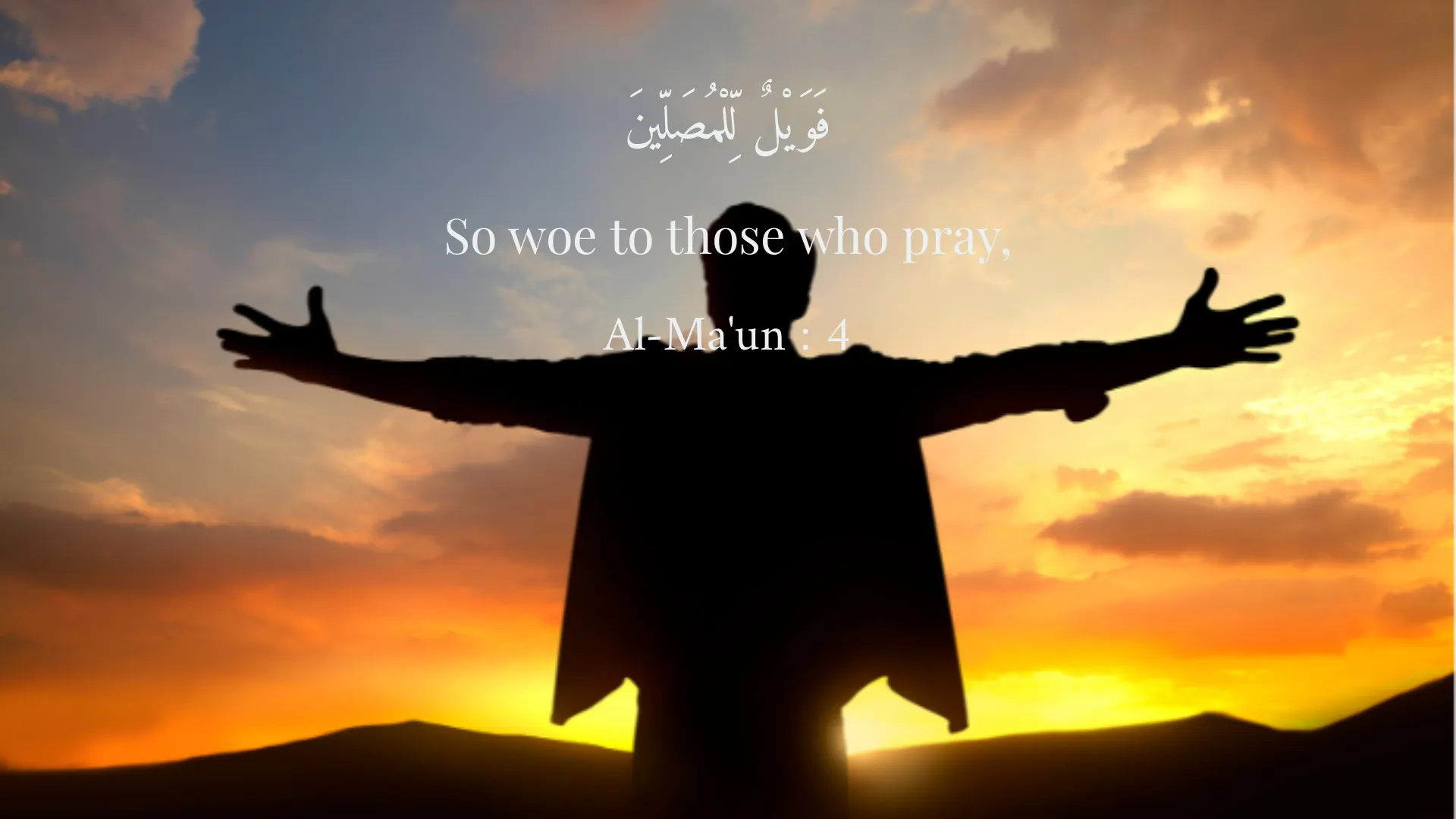
فَوَيْلٌ لِّلْمُصَلِّينَ
So woe to those who pray,
Al-Ma'un : 4
الَّذِينَ هُمْ عَن صَلَاتِهِمْ سَاهُونَ
[But] who are heedless of their prayer -
Al-Ma'un : 5
الَّذِينَ هُمْ يُرَاءُونَ
Those who make show [of their deeds]
Al-Ma'un : 6
وَمَا أُمِرُوا إِلَّا لِیَعْبُدُوا اللَّهَ مُخْلِصِینَ لَهُ الدِّینَ حُنَفَاءَ وَیُقِیمُوا الصَّلَاهَ وَیُؤْتُوا الزَّکَاهَ وَذَٰلِکَ دِینُ الْقَیِّمَهِ
And they were not commanded except to worship Allah, [being] sincere to Him in religion, inclining to truth, and to establish prayer and to give zakah. And that is the correct religion.
Al-Bayyinah : 5
لَّیْسَ الْبِرَّ أَن تُوَلُّوا وُجُوهَکُمْ قِبَلَ الْمَشْرِقِ وَالْمَغْرِبِ وَلَٰکِنَّ الْبِرَّ مَنْ آمَنَ بِاللَّهِ وَالْیَوْمِ الْآخِرِ وَالْمَلَائِکَهِ وَالْکِتَابِ وَالنَّبِیِّینَ وَآتَى الْمَالَ عَلَىٰ حُبِّهِ ذَوِی الْقُرْبَىٰ وَالْیَتَامَىٰ وَالْمَسَاکِینَ وَابْنَ السَّبِیلِ وَالسَّائِلِینَ وَفِی الرِّقَابِ وَأَقَامَ الصَّلَاهَ وَآتَى الزَّکَاهَ وَالْمُوفُونَ بِعَهْدِهِمْ إِذَا عَاهَدُوا وَالصَّابِرِینَ فِی الْبَأْسَاءِ وَالضَّرَّاءِ وَحِینَ الْبَأْسِ ۗ أُولَٰئِکَ الَّذِینَ صَدَقُوا ۖ وَأُولَٰئِکَ هُمُ الْمُتَّقُونَ
Righteousness is not that you turn your faces toward the east or the west, but [true] righteousness is [in] one who believes in Allah, the Last Day, the angels, the Book, and the prophets and gives wealth, in spite of love for it, to relatives, orphans, the needy, the traveler, those who ask [for help], and for the freeing of slaves; [and who] establishes prayer and gives zakah; and [who] fulfill their promise when they promise; and [who] are patient in poverty and hardship and during battle. Those are the ones who have been true, and it is those who are the righteous.
Al-Baqarah : 177
Short Story
It is narrated that in a certain city, there lived a man renowned for his asceticism and piety. He was constantly in the mosque, wore a fine robe, and never let his rosary fall from his hand. Wherever he sat, he would recite prayers loudly and with a feigned humility to gain people's admiration. But secretly, his heart was full of desire for people's praise and oblivious to the plight of orphans and the poor. One day, a wise sheikh passed by him and saw the man loudly chanting blessings, with people praising him. The sheikh smiled and said, "O friend, this loud voice and this outward display, if not accompanied by an enlightened heart and pure intention, its value is like a drawing on water. A beautiful vase, if it contains no flower, is but an empty vessel. The spirit of servitude lies within your inner self, not in the external show you present to people." The man pondered the sheikh's words and realized that the outward appearance of religion is like a garment: if its inner essence is devoid of the light of faith, it neither clothes the body nor brings peace to the soul. From then on, he paid less attention to the outward and more to his inner self, and eventually found true tranquility.