Quranic Answer
Hope is one of the most beautiful and essential states of the heart in a human being's journey of servitude and life. In Quranic teachings, hope in God's mercy and grace (Raja') is not only permissible but is a fundamental pillar of faith, fostering dynamism and action. The Holy Quran consistently prohibits believers from despair and emphasizes the vastness of Divine mercy. For instance, in Surah Az-Zumar, verse 53, it states: "Say, 'O My servants who have transgressed against themselves [by sinning], do not despair of the mercy of Allah. Indeed, Allah forgives all sins. Indeed, it is He who is the Forgiving, the Merciful.'" This verse clearly indicates that despairing of Allah's mercy is a great and reprehensible sin. It is hope in forgiveness, intercession, and Allah's help that motivates a person to resist hardships and step onto the path of perfection. This true hope is the main impetus for repentance, reformation, and continuous efforts, and it never leads to weakness or inaction. However, the question arises whether "excessive hope" can lead to weakness. In response, it must be said that the concept which might lead to weakness is not "true hope" in the Quranic sense (Raja'), but rather "idle wishes" and "false hopes," referred to in the Quran as "Amani" (أَمَانِيّ). This type of hope, without the backing of action and effort, or merely relying on Divine grace without Divine justice, or expecting without striving, can render a person lethargic and inactive. The Holy Quran emphasizes that no one reaches their destination solely by their wishes; rather, reward and recompense are based on deeds. In Surah An-Nisa, verse 123, it states: "It is not [obtained] by your wishful thinking nor by the wishful thinking of the People of the Scripture. Whoever does evil will be recompensed for it and will not find for himself besides Allah any protector or any helper." This verse clearly states that the recompense for human deeds is not based on mere wishes and assumptions, but on their actions. Therefore, if someone hopes to achieve success without effort and striving, or to be forgiven without refraining from sin, this hope is an idle and vain wish that ultimately leads to weakness and ruin. Islam emphasizes the balance between hope and fear (Khawf wa Raja'). Hope in Allah's mercy prevents despair, and fear of Divine punishment prevents boldness in sin and inaction. These two wings propel humanity forward on the straight path. Hope without fear can lead to arrogance, conceit, and a false sense of security, deterring individuals from effort and vigilance. Conversely, fear without hope can lead to absolute despair and abandonment of action. The balance between these two keeps a person in a state of continuous awareness and effort. This is why in many verses, alongside glad tidings, warnings are also given. Furthermore, the Holy Quran places great emphasis on "effort and striving" alongside "reliance on Allah (Tawakkul)." Tawakkul does not mean laziness or giving up work; rather, it means entrusting the outcome to Allah after putting forth all possible efforts. In Surah An-Najm, verses 39 and 40, it states: "And that there is not for man except that [good] for which he strives. And that his striving will soon be seen." These verses explicitly state that the path to achieving a goal is through effort and striving, and the result of every effort will ultimately become apparent to the person themselves. Therefore, true hope is that which propels a person towards action and effort, rather than leaving them in the bed of laziness and indifference. Excessive hope that leads to inaction and sole reliance on Divine will without fulfilling individual responsibilities is, in fact, a misunderstanding of the concepts of Tawakkul and Raja'. This state is a clear manifestation of weakness and lassitude, which not only brings no benefit to the individual but also prevents them from achieving their worldly and otherworldly goals. Thus, we conclude that true hope is the power that, alongside effort and reliance, gives a person the wings to fly, but false hope, based on groundless wishes, can cast them into the abyss of weakness and ruin.
Related Verses
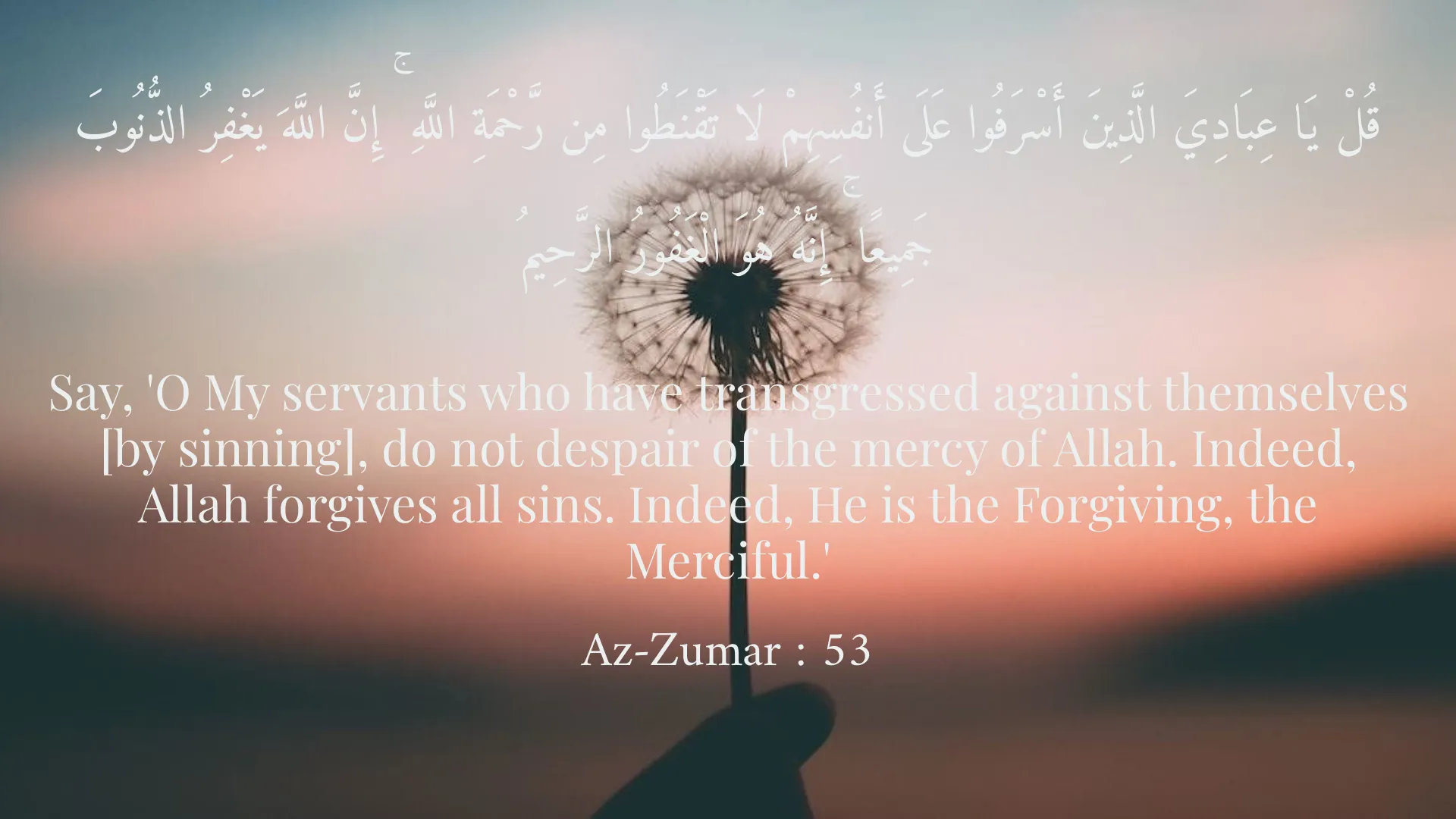
قُلْ يَا عِبَادِيَ الَّذِينَ أَسْرَفُوا عَلَى أَنفُسِهِمْ لَا تَقْنَطُوا مِن رَّحْمَةِ اللَّهِ ۚ إِنَّ اللَّهَ يَغْفِرُ الذُّنُوبَ جَمِيعًا ۚ إِنَّهُ هُوَ الْغَفُورُ الرَّحِيمُ
Say, 'O My servants who have transgressed against themselves [by sinning], do not despair of the mercy of Allah. Indeed, Allah forgives all sins. Indeed, He is the Forgiving, the Merciful.'
Az-Zumar : 53
لَّيْسَ بِأَمَانِيِّكُمْ وَلَا أَمَانِيِّ أَهْلِ الْكِتَابِ ۗ مَن يَعْمَلْ سُوءًا يُجْزَ بِهِ وَلَا يَجِدْ لَهُ مِن دُونِ اللَّهِ وَلِيًّا وَلَا نَصِيرًا
It is not [obtained] by your wishful thinking nor by the wishful thinking of the People of the Scripture. Whoever does evil will be recompensed for it and will not find for himself besides Allah any protector or any helper.
An-Nisa : 123
وَأَن لَّيْسَ لِلْإِنسَانِ إِلَّا مَا سَعَىٰ
And that there is not for man except that [good] for which he strives.
An-Najm : 39
وَأَنَّ سَعْيَهُ سَوْفَ يُرَىٰ
And that his striving will soon be seen.
An-Najm : 40
Short Story
It is narrated that in ancient times, in a city full of gardens and orchards, there lived a dervish who would sit every day by a fruitful tree and offer prayers. He would say, "God is the Sustainer, and I only need to pray and hope." He would wait under the beautiful trees for a fruit to fall into his lap by itself, or for someone to bring him food, without putting in any effort. One day, Sheikh Saadi was passing by. He saw the dervish, who despite his physical ability, had ceased all work and was waiting for sustenance without toil. Sheikh Saadi, with a kind smile, asked, "My friend, why are you just sitting and praying?" The dervish replied, "I have hope in God that He will provide for me even without effort." Sheikh Saadi said, "It is very good that you have hope in God, but have you not seen that even a bird leaves its nest to find grain, and a bee extracts nectar from flowers to make honey? Your hope should make you soar, not make you motionless. Hope in God's mercy should be a force for movement, not an excuse for weakness. He who only gives his heart to idle wishes and refrains from work will not only fail to achieve his desires but will also spend his days in regret and remorse." The dervish took heed of Sheikh Saadi's wise words, rose from his place, and with true reliance and genuine hope, embarked on the path of effort and striving. He never feared the hardship of work, for he understood that true hope, accompanied by action, bears fruit.