Quranic Answer
From the perspective of the Holy Quran and Islamic teachings, a complete and comprehensive understanding of truth, particularly regarding unseen realities, metaphysical truths, and the ultimate purpose of creation, is not possible without divine revelation. Although Allah has bestowed upon humanity the gift of intellect and the power of thought, this intellect, despite its profound importance and capabilities, has limitations that prevent it from grasping all dimensions of truth on its own. Human intellect can observe the material world, analyze phenomena, discover natural laws, and even deduce general moral principles. The Quran repeatedly invites humanity to reflect on the creation of the heavens and the earth, on the cosmic order, and on divine signs. These verses indicate that intellect is a powerful tool for attaining ontological and scientific truths and can even lead to the recognition of a wise and capable Creator. However, when it comes to matters beyond nature, the ultimate purpose of life, the details of worship, lawful and unlawful acts (halal and haram), and the fate after death, human intellect alone cannot provide definitive and complete answers. In these areas, intellect may fall into error, doubt, or even deviation. Cultural, social, and individual differences among human societies demonstrate that without a single, infallible source of guidance, definitions of 'truth' can be highly varied and even contradictory. This is where the irreplaceable role of divine revelation, as a light from the Lord, becomes evident. Revelation, like a radiant lamp, illuminates the path to absolute truth. The Holy Quran refers to itself as 'Hudā li'l-muttaqīn' (a guidance for the righteous) and 'Nūrun Mubīn' (a clear light). Revelation descends from Allah, who possesses absolute and infinite knowledge, and it reveals truths that are inaccessible to limited human intellect. These truths include the correct understanding of God and His attributes, how to connect with the Creator, the wisdom behind the creation of humanity and the universe, the details of the Hereafter and life after death, and comprehensive guidelines for worldly and otherworldly success. Numerous verses in the Quran emphasize the limitations of human knowledge and the necessity of sending prophets. For instance, in Surah Al-Isra, verse 85, it states: "And of knowledge, you have been given but little." This verse clearly indicates that humanity, despite all its scientific and intellectual advancements, is very insignificant compared to the boundless expanse of divine knowledge. Therefore, to fill this epistemological gap and reach the fundamental truths of existence, there is an urgent need for a source beyond one's own intellect. Furthermore, in Surah An-Nahl, verse 36, we read: "And We certainly sent into every nation a messenger, [saying], 'Worship Allah and avoid Taghut (false deities).'". This verse explicitly states that throughout history, Allah has sent messengers to guide humanity and reveal the truth. This itself is proof that humanity, without this divine guidance, cannot attain the straight path and ultimate truth. Moreover, revelation plays a corrective and complementary role to intellect. Throughout history, great philosophers and thinkers have striven to attain truth solely by relying on intellect. Although their efforts were valuable, many have reached impasses or contradictory conclusions in explaining fundamental existential questions, such as the nature of God, the purpose of life, and absolute justice. Revelation, by providing a comprehensive and stable framework, resolves these impasses and offers a unified and complete picture of existence and humanity's place within it. In conclusion, it can be said that intellect and revelation are complementary in Islam. Intellect is a tool for understanding revelation, reflecting on divine verses, and discovering the laws of the universe, but revelation is the primary and ultimate source of truths that intellect alone cannot comprehend. Ultimate truth and salvation depend on the synergy between reason and divine guidance. Therefore, humanity cannot grasp truth in its comprehensive and complete sense without revelation, because revelation is a lamp that illuminates the dark path of ignorance and paves the way to the source of absolute truth, which is Allah the Almighty.
Related Verses
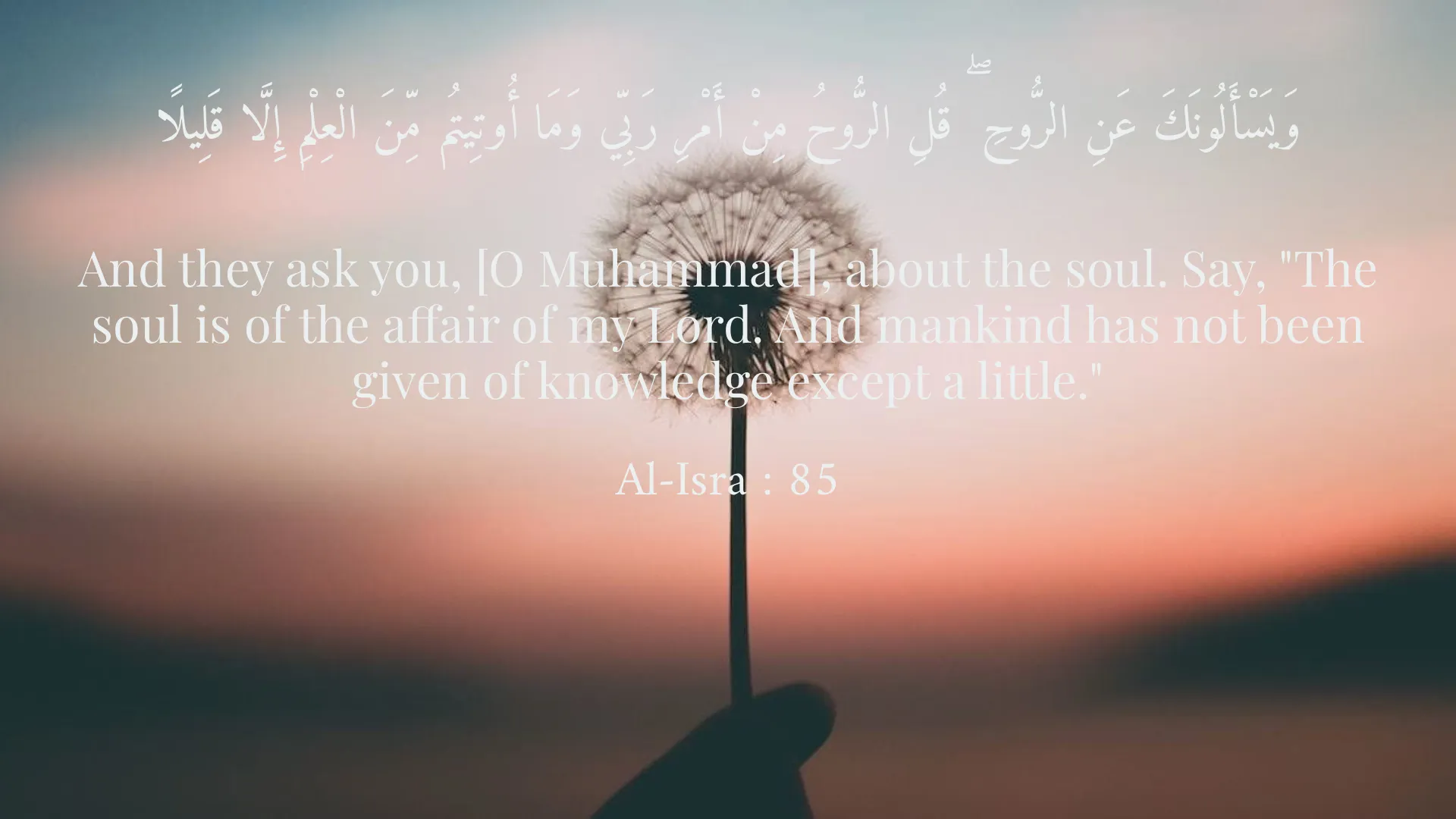
وَيَسْأَلُونَكَ عَنِ الرُّوحِ ۖ قُلِ الرُّوحُ مِنْ أَمْرِ رَبِّي وَمَا أُوتِيتُم مِّنَ الْعِلْمِ إِلَّا قَلِيلًا
And they ask you, [O Muhammad], about the soul. Say, "The soul is of the affair of my Lord. And mankind has not been given of knowledge except a little."
Al-Isra : 85
وَلَقَدْ بَعَثْنَا فِي كُلِّ أُمَّةٍ رَّسُولًا أَنِ اعْبُدُوا اللَّهَ وَاجْتَنِبُوا الطَّاغُوتَ ۖ فَمِنْهُم مَّنْ هَدَى اللَّهُ وَمِنْهُم مَّنْ حَقَّتْ عَلَيْهِ الضَّلَالَةُ ۚ فَسِيرُوا فِي الْأَرْضِ فَانظُرُوا كَيْفَ كَانَ عَاقِبَةُ الْمُكَذِّبِينَ
And We certainly sent into every nation a messenger, [saying], "Worship Allah and avoid Taghut." And among them were those whom Allah guided, and among them were those upon whom error was [justly] decreed. So travel through the earth and observe how was the end of the deniers.
An-Nahl : 36
عَالِمُ الْغَيْبِ فَلَا يُظْهِرُ عَلَىٰ غَيْبِهِ أَحَدًا
He [alone is] the Knower of the unseen, and He does not disclose His [knowledge of the] unseen to anyone
Al-Jinn : 26
إِلَّا مَنِ ارْتَضَىٰ مِن رَّسُولٍ فَإِنَّهُ يَسْلُكُ مِن بَيْنِ يَدَيْهِ وَمِنْ خَلْفِهِ رَصَدًا
Except whom He has approved of messengers, and indeed, He sends before each messenger and behind him observers
Al-Jinn : 27
Short Story
It is narrated in Sa'di's Gulistan that a wise king had a minister who believed that with his intellect and knowledge, he knew everything and needed no guidance. One day, the king tested him, saying: "O wise minister, if someone claims absolute knowledge and says he has found the straight path by himself, what would you say?" The minister arrogantly replied: "Such a person is nothing but ignorant, for human knowledge is limited, and presuming self-sufficiency from guidance is indeed a deviation." The king smiled and said: "Then you, who claim your intellect is sufficient, how are you exempt from this rule?" The minister fell into thought. The king continued: "O minister, our intellect is like a lamp in a dark night; it shows the way, but if there is no way itself, what is the use? Truth is like the shining sun; to see it, there is no need for a lamp, but it is the illuminator of the world itself. And divine revelation is that very sun of truth that lifts the veil from the unseen and illuminates hearts with the light of knowledge. Without its radiance falling upon the heart, no matter how much we search with intellect, we will only find a shadow of the truth." The minister, who learned a lesson from the king's words, bowed his head and said: "You spoke truly, O King, without the light of revelation, complete truth cannot be found." From then on, despite his knowledge, the minister constantly saw himself in need of divine guidance and practiced humility.