Quranic Answer
The question of prayer's influence on destiny is one of the most profound and challenging topics in Islamic theology, requiring a precise understanding of the concepts of 'Qada' and 'Qadar' (Divine Decree and Predestination) and the role of 'Dua' (supplication) within the cosmic order. From the perspective of the Holy Quran, Allah Almighty is the absolute Creator and Director of the universe, and nothing occurs without His knowledge and will. The belief that everything is predestined and recorded in the Preserved Tablet (Al-Lawh Al-Mahfuz) does not negate human effort and prayer; rather, each plays its role as part of the divine system. Understanding how prayer can affect destiny requires contemplating the different types of divine decree. Some Islamic scholars and exegetes divide destiny into two categories: 'Irrevocable Destiny' (Qadar Mubram) and 'Alterable Destiny' (Qadar Mu'allaq). Irrevocable destiny refers to matters that are unchangeable and bound to occur, whereas alterable destiny refers to matters whose realization is conditional upon certain factors, including prayer, charity (sadaqah), maintaining kinship ties, and good deeds. Within this framework, prayer can be effective in changing or modifying alterable destiny. The Holy Quran explicitly commands believers to supplicate to Allah and promises them a response. In Surah Ghafir, verse 60, Allah says: "And your Lord says, 'Call upon Me; I will respond to you.'" This verse clearly indicates that prayer is a divine command and its response is a divine promise. Furthermore, in Surah Al-Baqarah, verse 186, Allah states: "And when My servants ask you, [O Muhammad], concerning Me - indeed I am near. I respond to the invocation of the supplicant when he calls upon Me." These verses not only emphasize Allah's closeness to His servants but also assure that prayer does not go unanswered. This response might be in the exact form the supplicant wished, or in a better form consistent with divine wisdom, or by averting a future calamity, or even by storing its reward for the Hereafter. What is certain is that Allah's promise to respond is unfailing. The key to understanding the effect of prayer on destiny lies in Surah Ar-Ra'd, verse 39: "Allah eliminates what He wills or confirms [what He wills], and with Him is the Mother of the Book." This verse indicates that alongside the 'Mother of the Book' (Al-Lawh Al-Mahfuz, the original, unchangeable record), there is a form of 'erasure and confirmation' which implies the changeability of some decrees. Commentators have interpreted this 'erasure and confirmation' as referring to 'alterable destiny,' which can change through the deeds and prayers of His servants. In other words, prayer does not operate outside of divine will, but rather as an integral part of that very divine will and decree. Allah has known from eternity what prayers a servant would make and how He would respond to them. Therefore, the response to prayer and any changes in destiny are themselves part of Allah's eternal knowledge and decree, not something outside of it. Prayer, as an act of worship, is a means for the servant to connect with the Lord. This act signifies reliance, humility, hope, and an acknowledgment of Allah's absolute power. When a servant prays, they are essentially declaring their neediness and recognizing Allah's self-sufficiency and omnipotence. This spiritual and heartfelt state itself attracts divine mercy and brings about ease in affairs. Prayer also strengthens the human spirit of hope and resilience, preventing despair and hopelessness. Although we do not know the ultimate outcome of every prayer, we believe that Allah answers our prayers, and His response always encompasses what is good and beneficial for us. This means that prayer is not merely asking Allah for something; rather, it is a process that transforms the individual and leads them towards perfection and a deeper understanding of their place before the Creator of the universe. Prayer is the spiritual striving of a human being to align with the divine will and seek His grace and mercy, and it is this striving that can shape the course of life in the best possible way.
Related Verses
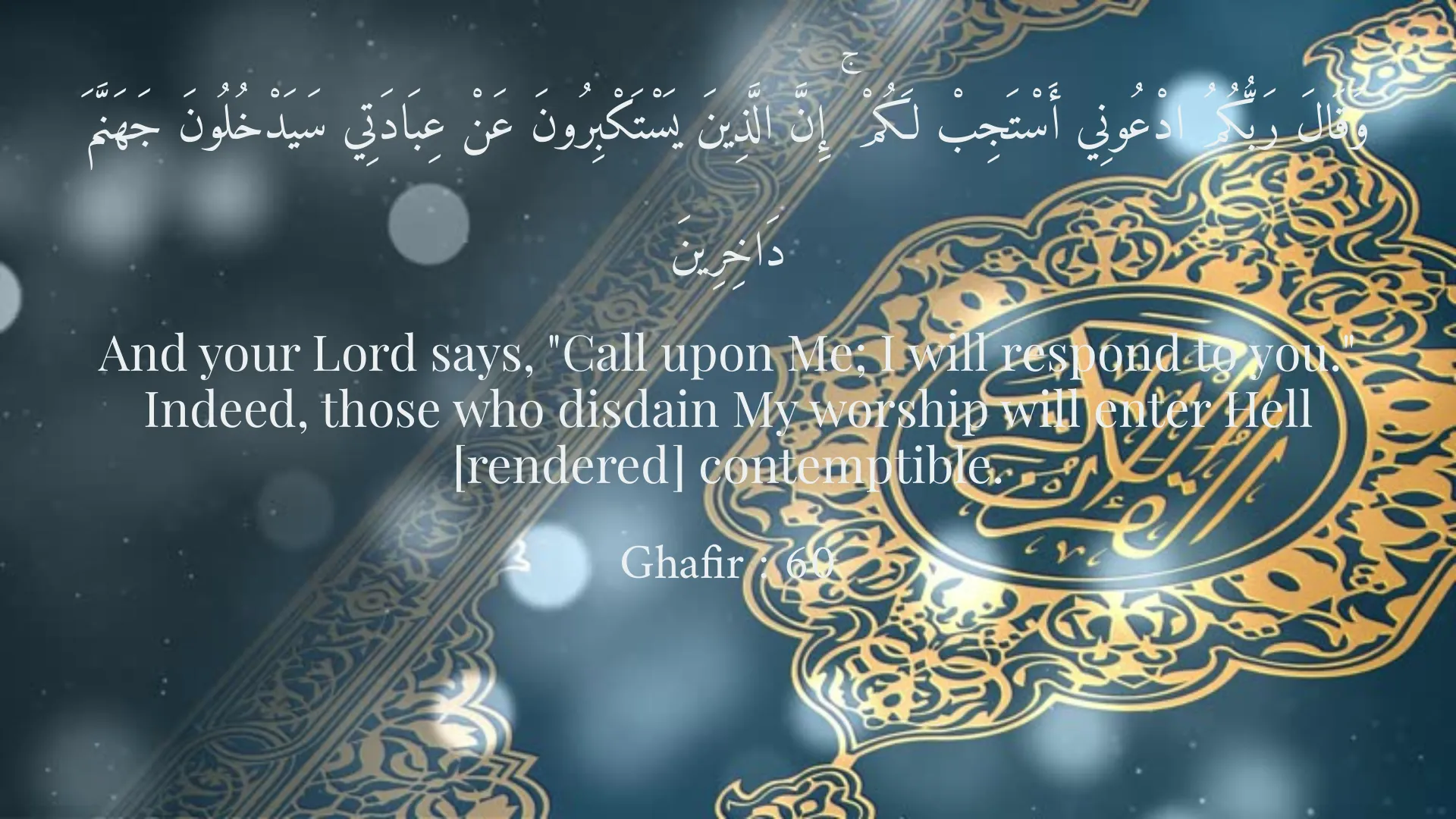
وَقَالَ رَبُّكُمُ ادْعُونِي أَسْتَجِبْ لَكُمْ ۚ إِنَّ الَّذِينَ يَسْتَكْبِرُونَ عَنْ عِبَادَتِي سَيَدْخُلُونَ جَهَنَّمَ دَاخِرِينَ
And your Lord says, "Call upon Me; I will respond to you." Indeed, those who disdain My worship will enter Hell [rendered] contemptible.
Ghafir : 60
وَإِذَا سَأَلَكَ عِبَادِي عَنِّي فَإِنِّي قَرِيبٌ ۖ أُجِيبُ دَعْوَةَ الدَّاعِ إِذَا دَعَانِ ۖ فَلْيَسْتَجِيبُوا لِي وَلْيُؤْمِنُوا بِي لَعَلَّهُمْ يَرْشُدُونَ
And when My servants ask you, [O Muhammad], concerning Me - indeed I am near. I respond to the invocation of the supplicant when he calls upon Me. So let them respond to Me [by obedience] and believe in Me that they may be [rightly] guided.
Al-Baqarah : 186
يَمْحُو اللَّهُ مَا يَشَاءُ وَيُثْبِتُ ۖ وَعِندَهُ أُمُّ الْكِتَابِ
Allah eliminates what He wills or confirms [what He wills], and with Him is the Mother of the Book.
Ar-Ra'd : 39
Short Story
It is said that in ancient times, there was a merchant who had lost his way in a vast desert. The scorching sun beat down on him, and thirst had brought him to his knees. No matter how much he searched, he found no sign of water and despaired of rescue. In that state of distress and helplessness, he turned his face to the sky and, with all his being, raised his hands in prayer, seeking help from the Merciful God. Tears streamed uncontrollably from his eyes, and with a broken heart, he saw only the Lord as his refuge. Suddenly, a cool breeze began to blow, and from a distance, he heard the sound of flowing water. With surprise and wonder, he went towards the sound and found a clear spring whose water was refreshing. He drank from the water, revived his spirit, and was saved from certain death. In his heart, he knew that this was not due to chance, but to the blessing of that sincere prayer he uttered in his moment of greatest need. Saadi says: "Whoever is granted the blessing of prayer, let him hope for its acceptance." This event showed how a servant, through sincere prayer, can open the doors of divine mercy and find unexpected relief even in the hardest of circumstances, for Allah answers the prayers of His servants, and His grace encompasses those who turn to Him with true intention. This story from olden times reminds us that the power of prayer and reliance on God can smooth rugged paths and make the impossible possible, for the key to all relief is in the hand of the Lord.