Quranic Answer
The question of whether all our feelings have value in the sight of God is a profound and meaningful one, delving into the human being's place in existence and their relationship with the Creator. From the perspective of the Holy Quran, Allah Almighty is the All-Knowing, and nothing, whether manifest or hidden, escapes His knowledge. This absolute knowledge encompasses all our thoughts, intentions, and especially all our heartfelt emotions. This is a fundamental truth repeatedly affirmed in numerous verses. For instance, in Surah Al-Baqarah, verse 284, Allah states: "To Allah belongs whatever is in the heavens and whatever is in the earth. And if you disclose what is in your souls or conceal it, Allah will bring you to account for it. Then He forgives whom He wills and punishes whom He wills. And Allah is over all things competent." This verse explicitly states that not only outward actions but also everything within us – including intentions and feelings – is not hidden from Allah and will be subject to account. This means that Allah is fully aware of all our emotions and perceives them. But does every feeling inherently possess "value"? "Value" in this context requires a nuanced understanding. On one hand, all our emotions, as an integral part of the human fitra (innate disposition) bestowed upon us by God, possess existence and validity. Allah created humans with diverse spiritual and emotional capacities; the ability to love, to be angry, to hope, to fear, to be joyful, and to be sorrowful are all signs of His creative power and divine wisdom. These emotions are tools Allah has placed within us to experience life, connect with others, and traverse the path of growth and perfection. Therefore, in this sense, the mere existence of these emotions carries an inherent value, for they are entrusted to us by a Wise Creator. On the other hand, the value of each emotion from a divine perspective is closely intertwined with its orientation, motivation, and consequences. The Holy Quran does not suggest that every emotion, regardless of its nature and impact, holds equal value. Instead, it instructs us on how to manage our emotions, which ones to cultivate, and which ones to control or rectify. Emotions such as love for Allah, His Prophets, believers, justice, and truth, feelings of hope in divine mercy, humility, gratitude, and compassion are highly praised in the Quran, and their cultivation is encouraged. These are emotions that purify the heart and lead to righteous deeds. Such feelings not only have value in the sight of Allah but also lead to a person's closeness to Him and the attainment of His pleasure. Conversely, emotions like arrogance, envy, malice, stinginess, despair of Allah's mercy, and uncontrolled anger that leads to enmity and oppression, although natural and part of human nature, do not hold spiritual value if left unchecked and lead to wrongful actions, or if they take root in the heart and make it sick. The Quran, in Surah Al-Imran, verse 134, describes the righteous believers: "...who spend in prosperity and adversity, and who restrain anger and pardon people. And Allah loves the doers of good." This verse shows that suppressing anger (controlling a negative emotion) and pardoning (a good deed stemming from a positive feeling) are beloved to Allah. This does not mean ignoring anger, but managing it and preventing its destructive consequences. Despair of Allah's mercy is explicitly condemned in Surah Yusuf, verse 87: "Indeed, no one despairs of the relief of Allah except the disbelieving people." This indicates that some emotions, though they may seem natural in the moment, if they reach the point of despairing of Allah, are not spiritually valuable and are even considered reprehensible. In essence, Allah is not only aware of all our emotions but also considers how we manage and direct them. Do these emotions lead us towards goodness, justice, kindness, gratitude, and humility, or towards pride, selfishness, envy, and injustice? The true value of emotions in Allah's sight lies in their potential for self-purification and drawing closer to Him. Any emotion that prompts a person to take a step closer to their Lord, purifies their heart, and guides them on the path of good and righteousness, undoubtedly holds a sublime and elevated value. Even feelings like grief and sorrow, if accompanied by patience and reliance on Allah, can transform into tools for spiritual growth and purification of the soul, thereby gaining value in the sight of Allah. Allah loves the patient and the grateful. Therefore, the answer is yes, Allah is aware of all your feelings. However, their "value" in the divine perspective depends on how you process these emotions, how you guide them on the path of divine pleasure, and whether they lead to good deeds or help you avoid evil. The human spiritual journey in Islam is, to a large extent, a journey of managing and purifying these inner emotions so that a sound and tranquil heart may be presented before Him.
Related Verses
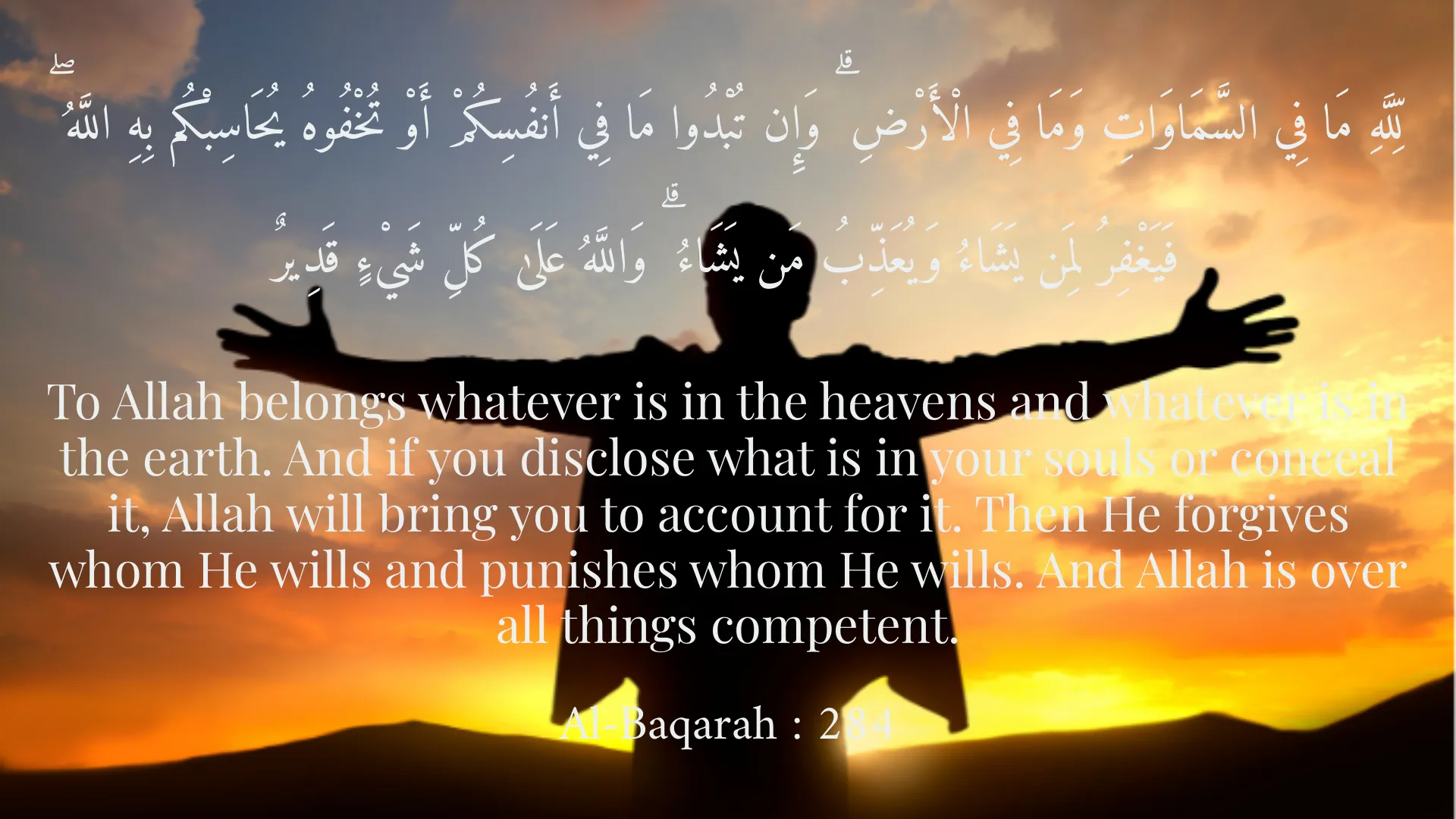
لِّلَّهِ مَا فِي السَّمَاوَاتِ وَمَا فِي الْأَرْضِ ۗ وَإِن تُبْدُوا مَا فِي أَنفُسِكُمْ أَوْ تُخْفُوهُ يُحَاسِبْكُم بِهِ اللَّهُ ۖ فَيَغْفِرُ لِمَن يَشَاءُ وَيُعَذِّبُ مَن يَشَاءُ ۗ وَاللَّهُ عَلَىٰ كُلِّ شَيْءٍ قَدِيرٌ
To Allah belongs whatever is in the heavens and whatever is in the earth. And if you disclose what is in your souls or conceal it, Allah will bring you to account for it. Then He forgives whom He wills and punishes whom He wills. And Allah is over all things competent.
Al-Baqarah : 284
قُلْ إِن تُخْفُوا مَا فِي صُدُورِكُمْ أَوْ تُبْدُوهُ يَعْلَمْهُ اللَّهُ ۗ وَيَعْلَمُ مَا فِي السَّمَاوَاتِ وَمَا فِي الْأَرْضِ ۗ وَاللَّهُ عَلَىٰ كُلِّ شَيْءٍ قَدِيرٌ
Say, "Whether you conceal what is in your breasts or reveal it, Allah knows it. And He knows what is in the heavens and what is on the earth. And Allah is over all things competent."
Al-Imran : 29
الَّذِينَ يُنفِقُونَ فِي السَّرَّاءِ وَالضَّرَّاءِ وَالْكَاظِمِينَ الْغَيْظَ وَالْعَافِينَ عَنِ النَّاسِ ۗ وَاللَّهُ يُحِبُّ الْمُحْسِنِينَ
Who spend in prosperity and adversity, and who restrain anger and pardon people. And Allah loves the doers of good.
Al-Imran : 134
Short Story
It is related that in ancient times, there was a king who ruled over vast dominions and became puffed up with his pomp and power. One day he said to his wise vizier, "In this world, no one possesses such power and glory as I!" The sagacious vizier, who had witnessed many ups and downs, gently replied, "O King, indeed your realm is grand, but consider the heart of a truly humble dervish, free from the desires of this world. His inner peace, though unseen, may be more enduring than all your visible might. For God looks not merely at the grandeur of deeds, but at the sincerity of the heart and the purity of intentions." The king, though initially vexed, pondered these words deeply and began to reflect on the inner state of his own heart, understanding that true value lies beyond outward show and that God values what transpires within the heart more than anything else.