Quranic Answer
In the rich teachings of the Holy Quran and Islamic tradition, the concept of prayer acceptance (Istijabah ad-Du'a) is founded on criteria that transcend mere 'feelings of unworthiness' or 'personal merit.' Allah Almighty, in His sacred book, introduces Himself as 'Al-Mujeeb' (The Responder) and invites His servants to supplicate Him, to ask Him for their needs. This invitation is universal and encompassing, extending to all humanity, regardless of the sins or perceived shortcomings they might feel within themselves. The Quran repeatedly emphasizes that the relationship between a servant and their Lord is built upon Allah’s vast mercy, His boundless grace, and the principles of repentance (Tawbah) and turning back to Him (Inabah), not upon human deservingness or perfections, which are often incomplete and limited. In fact, if this feeling of unworthiness is properly understood and managed, it is not an impediment at all; rather, it can open a door to deeper humility and greater sincerity in prayer, which themselves are catalysts for closeness to Allah and for the acceptance of supplications. One of the pivotal verses directly addressing this matter is Surah Al-Baqarah, verse 186, which states: "And when My servants ask you, [O Muhammad], concerning Me - indeed I am near. I respond to the invocation of the supplicant when he calls upon Me. So let them respond to Me [by obedience] and believe in Me that they may be guided." This verse unequivocally demonstrates Allah's closeness and His readiness to answer the prayers of any supplicant. There is no condition mentioned here about being flawless, perfect, or having a complete sense of personal worthiness. Instead, the emphasis is on the act of 'calling upon' and 'believing' in Allah. This divine promise highlights that Allah's mercy precedes all human limitations and self-perceived flaws. The essence of this verse encourages an open, trusting relationship where a servant feels free to turn to their Creator at any time, under any circumstance, without the burden of self-judgment hindering their connection. It paints a picture of a God who is ever-present, ever-listening, and eagerly awaiting His servants to turn to Him, no matter their state. Furthermore, in Surah Ghafir, verse 60, Allah says: "And your Lord says, 'Call upon Me; I will respond to you.' Indeed, those who disdain My worship will enter Hell in humiliation." In this verse, the command to supplicate is paired with a definite promise of 'response.' The only impediment mentioned here is 'arrogance' (Takabbur) in worship, not 'feelings of unworthiness.' In fact, if feelings of unworthiness lead to humility (Khushu') and submissiveness before Allah's grandeur, they can actually facilitate the acceptance of prayer. This is because Allah dislikes the arrogant and bestows His mercy upon those who are humble and modest. This verse reminds us that the primary barrier to connecting with Allah is pride and self-importance, not a sense of weakness or imperfection. A heart that recognizes its own shortcomings and yet turns to Allah with hope and humility is often more receptive to divine grace than one filled with self-righteousness. Feelings of unworthiness often stem from an individual's awareness of their sins and shortcomings. However, the Quran repeatedly stresses the vastness of Divine mercy and forgiveness. In Surah Az-Zumar, verse 53, we read: "Say, 'O My servants who have transgressed against themselves [by sinning], do not despair of the mercy of Allah. Indeed, Allah forgives all sins. Indeed, it is He who is the Forgiving, the Merciful.'" This verse is a powerful call to those who have 'transgressed against themselves' (indicating extensive sinfulness) not to despair of Allah's mercy. A feeling of guilt should lead to repentance and turning back to Allah, not to despair from prayer and disconnect from Him. The door of Allah's mercy is always open, and the only condition for entering it is a sincere and pure turning towards Him. This verse unequivocally lights a beacon of hope in the heart of every sinner, calling them to return and repent, for Allah is infinitely forgiving and merciful, and no sin is too great for Him to forgive, provided there is sincere repentance. Therefore, a feeling of unworthiness, in itself, does not prevent the acceptance of prayer. Rather, it is how a person deals with this feeling that is crucial. If this feeling leads an individual to despair and to cut off their connection with Allah, it will certainly not yield positive results. However, if this very feeling leads a person towards humility, repentance, acknowledgment of their deficiencies before Divine Majesty, and then to supplicate with hope and reliance on Allah, it not only ceases to be an impediment but can become a catalyst for openness and acceptance. Allah looks more at our sincere intention, humility, remorse for sins, and our trust in His infinite generosity, rather than our intrinsic merit. He is the Giver who loves to give and to hear the prayers of the needy, even if they deem themselves unworthy. This belief in the vastness of Allah's mercy is one of the most vital pillars of faith, granting humanity peace and hope, and encouraging continuous prayer and connection with the Lord. This relationship is built on love, hope, and mutual trust, not fear of being unworthy. For this reason, negative thoughts and self-condemnation should never be allowed to deprive us of the greatest source of strength and tranquility: prayer and connection with Allah. Ultimately, what matters in prayer is the humility of the heart, presence of mind, certainty of acceptance, and persistence in asking. A feeling of unworthiness should not be interpreted as self-deprivation from this great divine blessing. Allah is 'Arham ur-Rahimeen' (The Most Merciful of those who show mercy), and He never turns away any servant from His door, unless that servant turns away themselves and ceases to ask. No matter how sinful we may be, we are still children of Adam, and Allah calls us back to Him, opening the doors of His mercy to all. The important thing is to return to Him with all our being, with a broken heart and a needy tongue, and to have faith that He is the Hearer and the Responder. This is the 'thread of hope' that should never be relinquished, for despairing of Allah's mercy is a greater sin in itself. Allah is always ready to accept the repentance and answer the prayers of servants who come to Him with a broken and sincere heart, even if they consider themselves unworthy. In conclusion, it becomes clear that a feeling of unworthiness is not a barrier to the acceptance of prayer. Instead, it can become a means for greater closeness to Allah, provided that it transforms from despair into repentance, turning back to Him, and increased hope in His boundless mercy. The Lord who calls Himself Al-Ghaffar (The Ever-Forgiving) and Ar-Rahim (The Most Merciful) will never turn away a servant who calls upon Him with all their heart and with a true sense of need. The crucial point is not to deprive ourselves and to seek refuge in His self-sufficient Presence with certainty and hope, understanding that even if we deem ourselves unworthy, His grace and favor surpass all our imaginations.
Related Verses
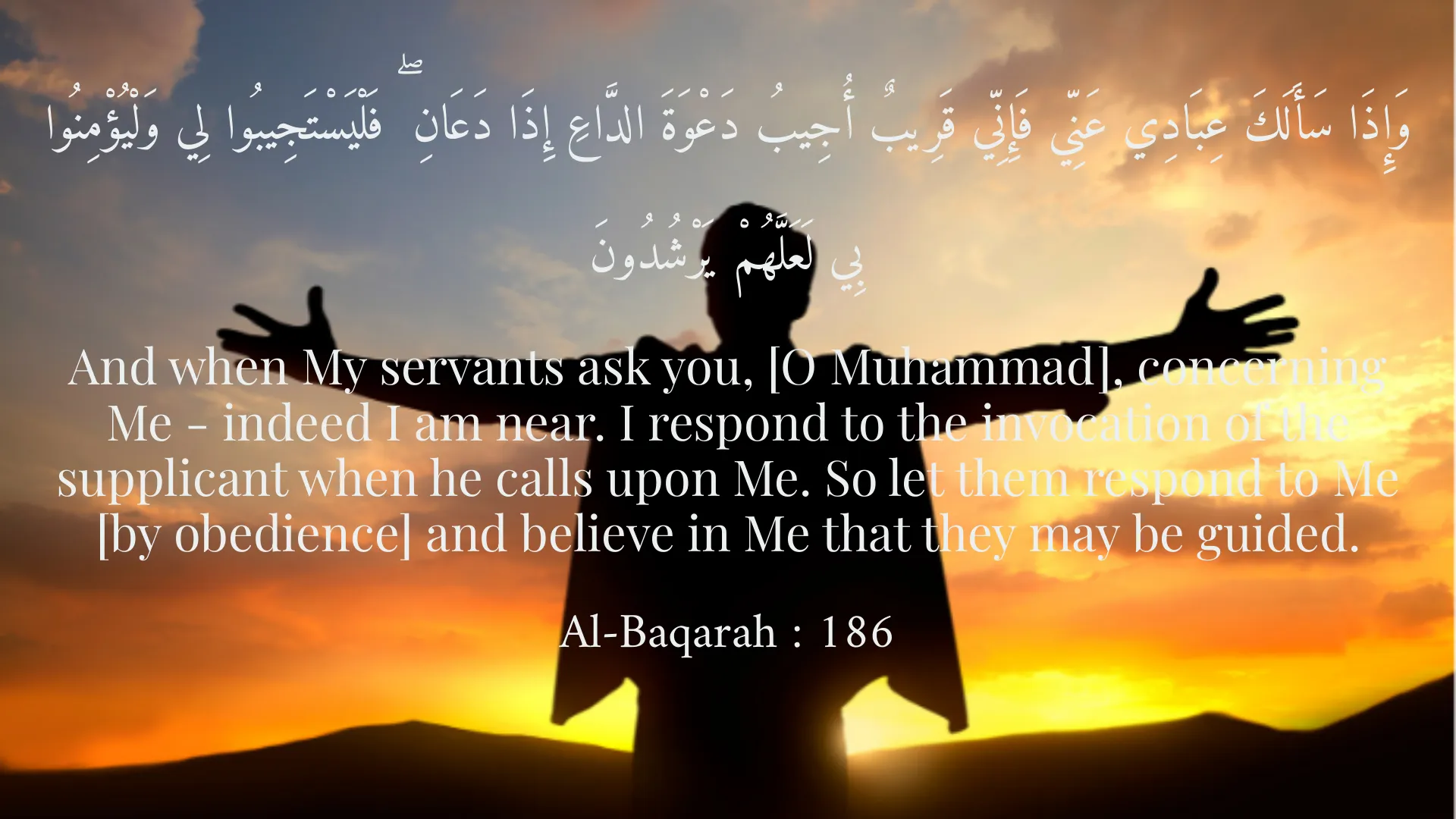
وَإِذَا سَأَلَكَ عِبَادِي عَنِّي فَإِنِّي قَرِيبٌ أُجِيبُ دَعْوَةَ الدَّاعِ إِذَا دَعَانِ ۖ فَلْيَسْتَجِيبُوا لِي وَلْيُؤْمِنُوا بِي لَعَلَّهُمْ يَرْشُدُونَ
And when My servants ask you, [O Muhammad], concerning Me - indeed I am near. I respond to the invocation of the supplicant when he calls upon Me. So let them respond to Me [by obedience] and believe in Me that they may be guided.
Al-Baqarah : 186
وَقَالَ رَبُّكُمُ ادْعُونِي أَسْتَجِبْ لَكُمْ ۚ إِنَّ الَّذِينَ يَسْتَكْبِرُونَ عَنْ عِبَادَتِي سَيَدْخُلُونَ جَهَنَّمَ دَاخِرِينَ
And your Lord says, 'Call upon Me; I will respond to you.' Indeed, those who disdain My worship will enter Hell in humiliation.
Ghafir : 60
قُلْ يَا عِبَادِيَ الَّذِينَ أَسْرَفُوا عَلَىٰ أَنفُسِهِمْ لَا تَقْنَطُوا مِن رَّحْمَةِ اللَّهِ ۚ إِنَّ اللَّهَ يَغْفِرُ الذُّنُوبَ جَمِيعًا ۚ إِنَّهُ هُوَ الْغَفُورُ الرَّحِيمُ
Say, 'O My servants who have transgressed against themselves [by sinning], do not despair of the mercy of Allah. Indeed, Allah forgives all sins. Indeed, it is He who is the Forgiving, the Merciful.'
Az-Zumar : 53
Short Story
Once upon a time, in days of old, there lived an ascetic who was exceedingly proud of his piety, constantly boasting of his worship. In the same city, there was a sinner who, tormented by remorse for his deeds, deemed himself unworthy of any good. Whenever this sinner wished to raise his hands in prayer, he would sigh from the depths of his soul and say to himself: "My Lord, I am so unworthy and drowned in sin that I am ashamed even to call upon You. But O Merciful Lord, I know that the ocean of Your mercy is boundless, and You look more at our repentance and broken hearts than at our deeds. So, though I am unworthy, I have no one but You to ask." With this very humility and admission of shortcomings, he would pray with tearful eyes. In contrast, the ascetic, filled with pride and self-admiration, would murmur his prayers, believing in his heart that he was far more beloved to God. But what a misconception! Allah Almighty favored and answered the prayer of that ashamed and remorseful sinner, who had turned to Him with a broken heart and sincere hope, far more than the prayers of the proud ascetic. This story teaches us that in the Divine presence, the sincerity and humility of the heart are far more valuable than outward appearances or false assumptions about one's own merit. Divine mercy is so vast that even the shame of sin can become a bridge to acceptance, if accompanied by hope and repentance.