Quranic Answer
The concept of intention (niyyah) and action (amal) is a fundamental tenet in the teachings of Islam, especially as presented in the Holy Quran. As believers navigate their spiritual journeys, they encounter multiple references emphasizing the importance of intention and action in their lives. This notion is more than a theoretical concept; it is a guiding principle that shapes the moral compass of a Muslim. In this article, we will delve deeper into the significance of intention and action as articulated in the Quran, exploring various verses to underscore their importance in a believer's life. The Quran is the holy scripture of Islam, revered by Muslims as the word of God (Allah) revealed to the Prophet Muhammad. It offers guidance on various aspects of life, and its verses address the principles that influence both the thoughts and deeds of individuals. Central to these teachings is the interplay between intention and action, which sets the foundation for ethical conduct in the lives of believers. ### The Importance of Good Intention In Surah Al-Baqarah, verse 225, Allah states: "Allah does not burden a soul beyond that it can bear." This verse is significant as it reminds believers that they are not held accountable for actions they are not capable of fulfilling. It underlines the idea of good intention as a motivating force: the intention behind one's actions is integral to their spiritual fulfillment. When a believer strives to perform good deeds with sincere intention, they are recognized and rewarded by Allah, even if circumstances prevent the actualization of that action. The concept of good intention is built upon the understanding that what truly matters is the purity of purpose behind one's actions. If a person intends to do good but faces obstacles, that noble objective is still considered valuable in the eyes of God. This nurturing of a positive intention symbolizes the innate desire for goodness and righteousness that exists in every human being. ### Actions Validate Intentions While having good intentions is essential, it is equally important that these intentions manifest into concrete actions. Surah At-Tawbah, verse 72, emphasizes that Allah promises great rewards for those believers who not only harbor good intentions but also act upon them. The verse states, "And Allah has promised the believers, men and women, gardens in which rivers flow, abiding therein eternally, and pleasant dwellings in gardens of eternity. And approval from Allah is greater. That is the great attainment." This verse reveals a profound truth: the combining of both intention and action is crucial. It is not enough for a believer to merely wish for goodness; they must also translate that desire into tangible deeds. Allah’s rewards, as stated in the verses, are contingent upon the believers taking initiative and carrying out the righteous actions aligned with their good intentions. This dual requirement calls for a commitment to ethical and moral behavior within a broader Islamic framework. ### Accountability for Deeds In further clarification of this principle, Surah Al-Ma'idah, verse 32, states, "And whoever kills a soul unless for a soul or for corruption [done] in the land—it is as if he had slain mankind entirely. And whoever saves one—it is as if he had saved mankind entirely." This poignant verse outlines the significance of actions and the weight they carry in societal context. Each action contributes to the wider community, emphasizing that individuals must be conscientious in their dealings with others. Good intentions must lead to good actions; otherwise, negating consequences arise. Believers are reminded that their actions ultimately define their standing before Allah. Each soul will be rewarded based on its deeds—a clear indication that, while intention forms the core of one's character, it is through action that one reaps outcomes. Thus, it is insufficient to harbor noble desires without striving toward their enactment. This mirrors the essential teachings of Islam: to be impactful, one must blend heartfelt intention with proactive efforts. ### Intention and Action in Everyday Life In practical terms, the lessons of intention and action can be applied in various aspects of a believer’s daily life. For instance, a Muslim intending to donate to charity must follow through with that intention by actually providing assistance. If a person intends to attend prayers but does not take the steps to do so, the positive intention alone does not suffice in earning spiritual merit. ### The Unity of Intention and Action The synthesis of intention and action thus culminates in a well-rounded approach to Islamic identity. The deeds performed should reflect the purity of the intention held in the heart. The greater the alignment between the two, the more profound the spiritual reward an individual can garner. The Quran consistently reinforces that a believer is accountable not only for their actions but also for the motivations behind them. ### Conclusion In summary, the principles laid out in the Quran concerning intention and action converge to create a moral framework for believers. Good intentions are pivotal as they inspire believers to act, yet they gain legitimacy and value only when those intentions are translated into righteous actions. As articulated in several Quranic verses, the paramount significance lies in the union of pure intention and purposeful action. Successful fulfillment of these ideals leads to living a life that is pleasing to Allah and enriched with His blessings. Thus, it is through this combined approach of intention and action that believers can strive towards spiritual success and divine favor. The ultimate takeaway is a reminder that while having good intentions is a noble pursuit, the act of translating those intentions into meaningful actions is what truly defines a believer’s journey towards righteousness.
Related Verses
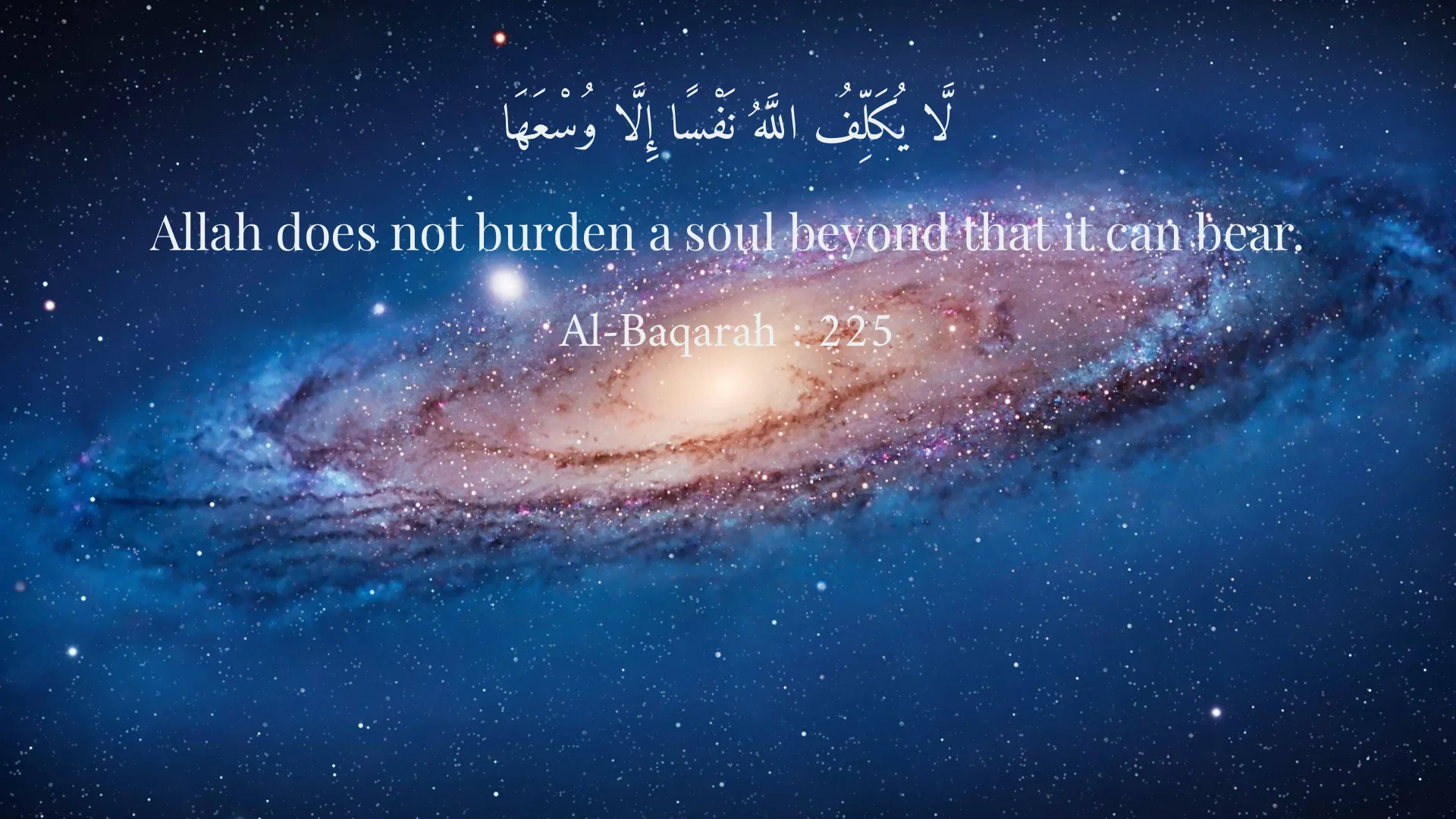
لَّا يُكَلِّفُ اللَّهُ نَفْسًا إِلَّا وُسْعَهَا
Allah does not burden a soul beyond that it can bear.
Al-Baqarah : 225
وَمَغْفِرَةً مِّنْهُ وَأَجْرًا عَظِيمًا
And forgiveness from Him and a great reward.
At-Tawbah : 72
مَن قَتَلَ نَفْسًا فَكأنَّمَا قَتَلَ النَّاسَ جَمِيعًا
Whoever kills a soul unless for a soul or for corruption done in the land – it is as if he had slain mankind entirely.
Al-Ma'idah : 32
Short Story
Once upon a time in a small village, there was a man named Hassan who had numerous good intentions. He always wanted to help those in need, but due to his busy life and lack of time, he never managed to take any action. One day, Hassan thought to himself that he couldn't just intend good in his heart without doing anything. So he decided to dedicate some time each day to help others. He assisted orphans and needy people in the village and brought joy to them with his kind actions. Hassan realized that his good intentions became rewarding only when accompanied by actions, and his life became filled with happiness and peace.