Quranic Answer
In the Holy Quran, the concept of detachment from the world often raises questions about its meaning and implications for practicing Muslims. At first glance, one might interpret detachment as a call for isolation or withdrawal from society, advocating for a life immersed only in spirituality and prayer. However, such an interpretation is far from what the Quran intends. The message conveyed throughout various verses emphasizes a balanced approach to life that promotes active engagement in worldly affairs while keeping one’s focus directed towards the afterlife. This nuanced perspective encourages Muslims to navigate through the complexities of the world, performing good deeds and fulfilling their obligations without losing sight of their spiritual goals. The verse from Surah Al-Qasas (28:77) serves as a pivotal point in understanding this balance: "And do good with what Allah has given you, seeking the Hereafter and do not forget your share of the world." Here, Allah advises believers to utilize the blessings bestowed upon them for the benefit of others and themselves, emphasizing a dual focus on both this life and the hereafter. The term "do good" reflects the Quran’s intent to inspire active participation in the world. It indicates that Muslims are not meant to retreat into themselves or their spiritual bubbles, but to engage with society in a meaningful way. Fraternity, charity, and social justice are critical tenets in Islam, urging Muslims to contribute positively to their communities. Taking initiatives that enhance the lives of others, whether through acts of kindness, social support, or charity, aligns with the core values of Islam and expresses gratitude towards Allah for the resources one has at one’s disposal. Moreover, the latter part of the verse, "do not forget your share of the world," further amplifies this theme. It suggests the importance of attaining a healthy engagement with worldly affairs without becoming overly attached to them. The balance is key; being conscious of one’s responsibilities in the material world while not allowing those responsibilities to overshadow the spiritual goals set for the afterlife. This reflects the Quranic view that the material world is not inherently negative but, conversely, can serve as a means to achieve greater spiritual awareness when approached correctly. In Surah Aal-Imran (3:185), this concept of balance is reinforced: "Every soul will taste death, and you will only be given your full compensation on the Day of Resurrection." This verse serves as a reminder of the temporary nature of worldly life and the inevitability of death. It emphasizes the significance of preparing for the afterlife through one's actions in the present. The implication here is clear: every action we undertake in this world, whether in pursuit of spiritual or material goals, contributes to our standing in the hereafter. To achieve this balance, one must practice a form of ‘detachment’ that is not synonymous with abandonment or neglect of worldly duties. Instead, it encourages mindfulness, awareness, and deliberate engagement with the world, ensuring that one’s insights and intentions are aligned with divine commandments. The world is seen in Islam as a place of testing, and Muslims are called to navigate it with wisdom and an intention to do right by others while also caring for their own spiritual health. This navigational exercise can often be likened to walking a tightrope where one must balance between two poles—the material and the spiritual. Excessive attachment to material possessions or worldly aspirations can lead one astray and dull the sense of purpose in this life. Likewise, complete neglect of worldly duties in favor of spiritual pursuits can lead to imbalance and hardship. Through engaging actively in the world while keeping the longing for the afterlife in perspective, Muslims can lead lives that are both fulfilling and in alignment with their faith. This active participation in worldly life extends not just to personal gains but also encompasses societal contributions and working towards the common good. There exists a beautiful synergy between the two facets of existence; material pursuits can be elevated to acts of worship when carried out with proper intention and perspective. Acts of kindness, business dealings grounded in ethics, family responsibilities, and community outreach all are avenues through which one can strive for both worldly success and spiritual gains. The continuous narration of stories of the Prophets and righteous individuals throughout the Quran provides examples of how they maintained this balance. From Prophet Muhammad’s work as a trader to his leading of the community, these figures exemplified how one can engage thoroughly with worldly life while maintaining a steadfast commitment to spiritual ideals. Their lives serve as templates for modern Muslims to emulate, showcasing that achieving success in one’s personal and professional life can coexist with fulfilling spiritual obligations. Overall, the Quran offers a profound insight into the concept of detachment from the world that is rooted not in isolation but in a conscious, engaged existence. By embracing the duality of worldly involvement and spiritual devotion, followers of Islam can navigate their lives purposefully. With every act of goodness performed in the interests of benefitting others, one builds up not only a present legacy but fosters their standing in the hereafter. Thus, the concept of detachment is fundamentally about maintaining a clear focus—acknowledging the temporary nature of life while passionately striving to make a positive impact in the world, thereby serving a dual purpose of fulfilling divine commands and enriching one’s life on both spiritual and worldly levels.
Related Verses
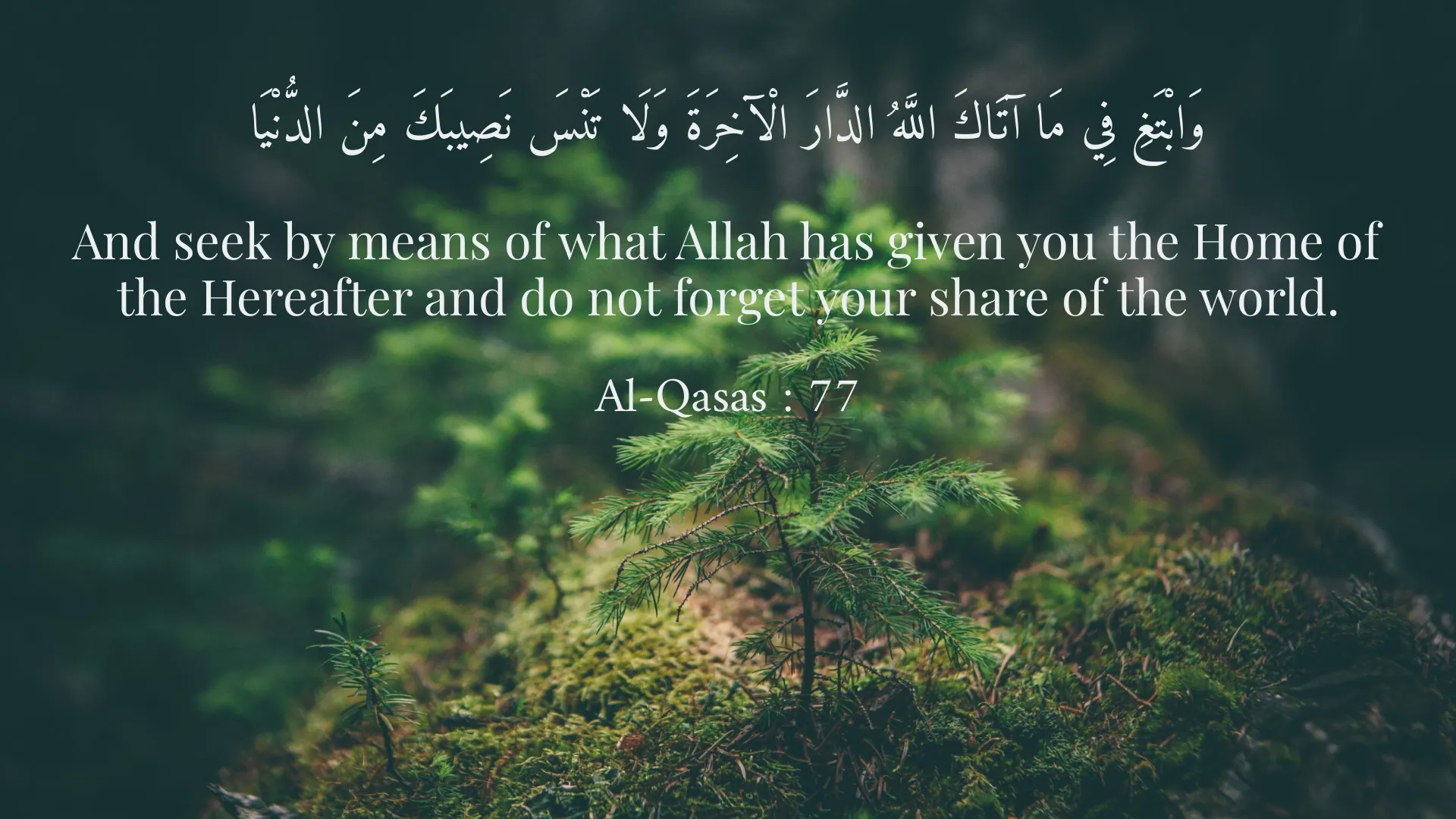
وَابْتَغِ فِي مَا آتَاكَ اللَّهُ الدَّارَ الْآخِرَةَ وَلَا تَنْسَ نَصِيبَكَ مِنَ الدُّنْيَا
And seek by means of what Allah has given you the Home of the Hereafter and do not forget your share of the world.
Al-Qasas : 77
كُلُّ نَفْسٍ ذَائِقَةُ الْمَوْتِ ۖ وَإِنَّمَا تُوَفَّوْنَ أُجُورَكُمْ يَوْمَ الْقِيَامَةِ
Every soul will taste death, and you will only be given your full compensation on the Day of Resurrection.
Aal-Imran : 185
Short Story
One day, a group of friends decided to go hiking. On the way, one of them said to the others: 'Why do we separate from our worldly lives when we climb the mountain?' The others replied, 'We come here to establish a closer connection with nature and God, and this does not mean distancing from the world, but rather gaining a better understanding of life.' In the end, they returned home with a deeper understanding of their world.