Quranic Answer
The question of whether faith means never experiencing sadness or grief is a common misconception about belief and the life of a true believer. The unequivocal answer, from the perspective of the Holy Quran and the Sunnah of the Prophet Muhammad (peace be upon him), is that no, faith by no means implies complete immunity from sadness, sorrow, grief, or any other negative human emotion. Rather, faith is a powerful tool for confronting, understanding, and navigating these feelings; a tool that helps the believer find a deep and lasting tranquility even amidst life's storms. Sadness is a natural part of the human condition, placed within our creation by Allah Almighty. Even prophets and righteous individuals, the epitome of faith, experienced sadness and grief. For example, the Quran recounts how Prophet Yaqub (Jacob) (peace be upon him) was overcome with sorrow to the point of losing his eyesight due to the loss of his son Yusuf (Joseph) (peace be upon him). This demonstrates that grief and sorrow are natural and human phenomena, even for those at the highest echelons of faith. The Prophet Muhammad (PBUH) himself shed tears upon the death of his son Ibrahim and said: 'The eyes shed tears and the heart grieves, but we do not say except what pleases our Lord.' This prophetic statement clearly illustrates the acceptance of human emotions while maintaining submission and contentment with Allah's decree. The Holy Quran teaches us that this worldly life is a realm of trials and tests. Allah Almighty states in numerous verses that believers will be tested with various hardships, fear, hunger, and deficits in wealth, lives, and fruits. These trials sometimes bring with them sadness, heartbreak, and suffering. The purpose of these tests is not to weaken the believers' faith, but rather to refine the soul, strengthen resolve, elevate their ranks, and distinguish the truthful from the insincere. In such circumstances, faith acts as a guide and a refuge. Faith teaches the believer that every hardship that arises is from Allah Almighty, and there is wisdom embedded within it. This perspective not only prevents succumbing to despair but also transforms sadness into an opportunity for reflection, supplication, and drawing closer to the Creator. One of the most important Quranic concepts in this regard is 'Sabr' (patience). Patience does not mean suppressing emotions, but rather steadfastness and perseverance in the face of problems and difficulties. The Holy Quran states: 'O you who have believed, seek help through patience and prayer. Indeed, Allah is with the patient.' (Al-Baqarah, 2:153). Patience is the backbone of faith when confronting sadness. A patient believer is not someone who does not grieve, but rather someone who, despite grieving, does not deviate from the path of truth, does not cease praying, and does not lose their reliance on Allah. Similarly, the concept of 'Tawakkul,' or reliance on Allah, helps the believer to entrust the heavy burden of grief and sadness to the Almighty and find inner peace. Knowing that all matters are in Allah's hands and that He is the best Disposer of affairs provides solace to worried hearts. Belief in the afterlife and its rewards provides the believer with a broad perspective. When a believer understands that this world is temporary and perishable, and that eternal life and endless rewards await them in the Hereafter, worldly hardships and sorrows become insignificant and bearable in comparison. This hope in the Hereafter is an immense power for overcoming difficult moments and maintaining inner tranquility. The Holy Quran states: 'For indeed, with hardship [will be] ease. Indeed, with hardship [will be] ease.' (Al-Inshirah, 94:5-6). These verses promise the believer that no sadness or difficulty is eternal, and after every storm, calm and ease will follow. Therefore, faith is by no means a denial or negation of sadness. Rather, faith enhances the believer's capacity to understand, endure, and even transform sadness into a source of spiritual growth and proximity to Allah. The believer becomes sad, but does not drown in sadness; sheds tears, but does not lose hope; suffers, but remains grateful. This is the beauty of faith, which, even in the darkest moments, ignites a light of hope and submission in the believer's heart, guiding them towards true tranquility. Faith teaches them how to manage these emotions through prayer, remembrance (dhikr), recitation of the Quran, and seeking refuge in Allah, utilizing them to strengthen their relationship with the Creator. Ultimately, faith does not save us from sadness, but rather gives us the ability to face it with a heart full of serenity, contentment, and hope in divine grace. This acceptance of human reality, coupled with reliance on the Creator, is the true essence of faith that brings lasting peace.
Related Verses
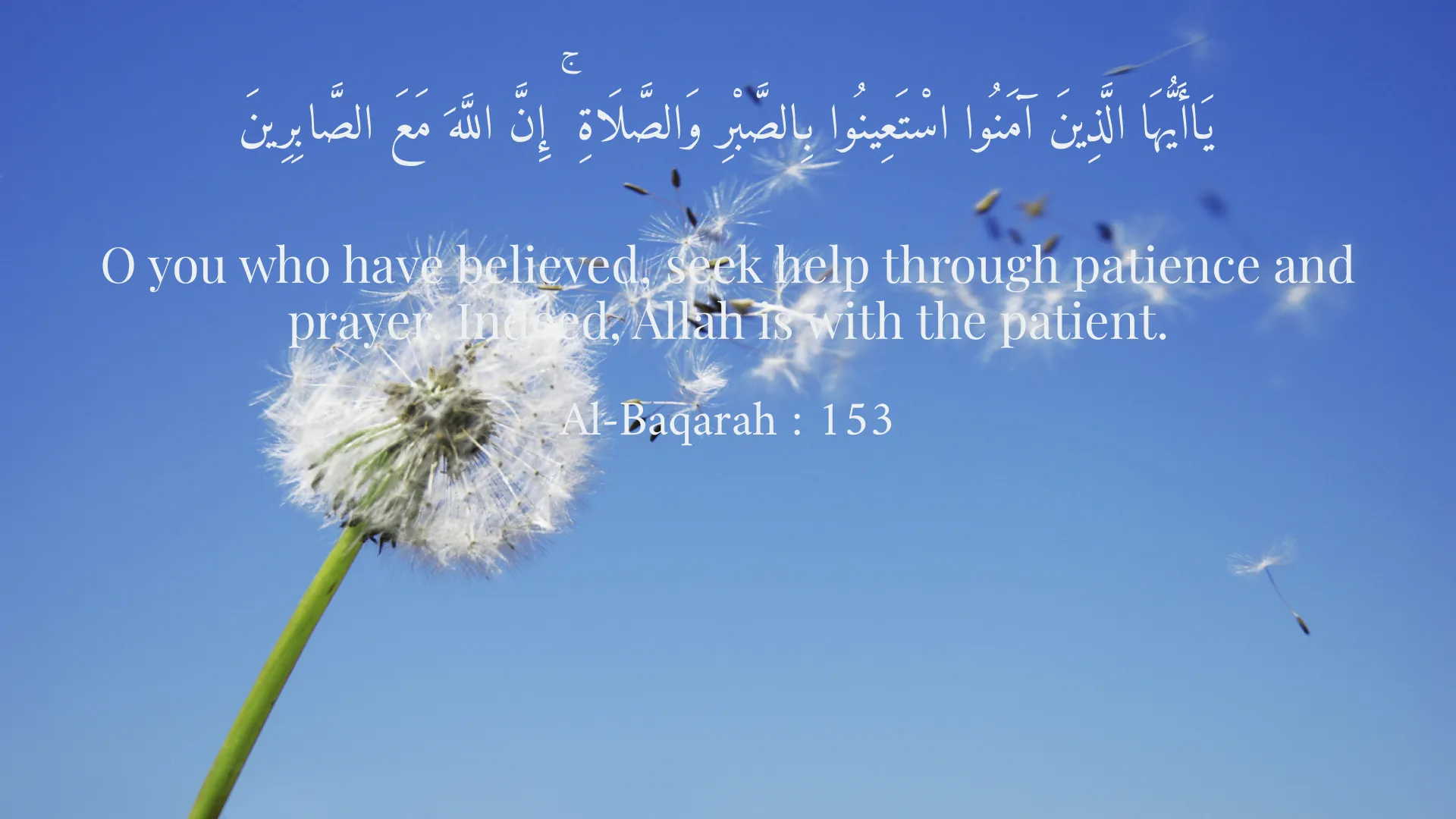
يَاأَيُّهَا الَّذِينَ آمَنُوا اسْتَعِينُوا بِالصَّبْرِ وَالصَّلَاةِ ۚ إِنَّ اللَّهَ مَعَ الصَّابِرِينَ
O you who have believed, seek help through patience and prayer. Indeed, Allah is with the patient.
Al-Baqarah : 153
وَلَنَبْلُوَنَّكُم بِشَيْءٍ مِّنَ الْخَوْفِ وَالْجُوعِ وَنَقْصٍ مِّنَ الْأَمْوَالِ وَالْأَنفُسِ وَالثَّمَرَاتِ ۗ وَبَشِّرِ الصَّابِرِينَ
And We will surely test you with something of fear and hunger and a loss of wealth and lives and fruits, but give good tidings to the patient.
Al-Baqarah : 155
إِلَّا تَنصُرُوهُ فَقَدْ نَصَرَهُ اللَّهُ إِذْ أَخْرَجَهُ الَّذِينَ كَفَرُوا ثَانِيَ اثْنَيْنِ إِذْ هُمَا فِي الْغَارِ إِذْ يَقُولُ لِصَاحِبِهِ لَا تَحْزَنْ إِنَّ اللَّهَ مَعَنَا ۖ فَأَنزَلَ اللَّهُ سَكِينَتَهُ عَلَيْهِ وَأَيَّدَهُ بِجُنُودٍ لَّمْ تَرَوْهَا وَجَعَلَ كَلِمَةَ الَّذِينَ كَفَرُوا السُّفْلَىٰ وَكَلِمَةُ اللَّهِ هِيَ الْعُلْيَا ۗ وَاللَّهُ عَزِيزٌ حَكِيمٌ
If you do not aid him - Allah has already aided him when those who disbelieved expelled him, he being the second of two, when they were in the cave and he [Muhammad] said to his companion, 'Do not grieve; indeed Allah is with us.' And Allah sent down His tranquility upon him and supported him with armies you did not see and made the word of those who disbelieved the lowest, while the word of Allah - that is the highest. And Allah is Exalted in Might and Wise.
At-Tawbah : 40
Short Story
Once upon a time, there was a dervish among the people who, despite his poverty and the hardships of life, always wore a smile and had tranquility in his eyes. People asked him, 'O man of God, how is it that we, with all our possessions, are often distressed and anxious, while you, with all your poverty, are joyful and at ease?' The dervish, with a gaze full of wisdom, replied: 'My dear ones, the human heart is a garden, and its flowers are either joy or sorrow. If I mourn what was never truly mine and never will be, I merely cultivate thorns. But if I keep the memory of the Generous Lord in my heart, even in scarcity, my soul overflows with abundance. Indeed, worry has never filled an empty purse, nor has sadness mended a broken jar. So, I entrust my affairs to the Divine Weaver, for I know that even in the most tangled threads of life, there is a pattern of beauty and wisdom hidden, which only patience and trust can reveal.'