Quranic Answer
In the profound and comprehensive teachings of the Holy Quran, a unique emphasis is consistently placed on the inseparable link between faith (Iman) and righteous deeds (Amal Saleh). These two are like two sides of the same coin, complementing each other and being indivisible. If someone merely claims faith with their tongue, but in practice, no sign of that faith is evident in their behavior, speech, and decisions, they are, in reality, deceiving themselves. This self-deception not only leads to the loss of opportunities for spiritual growth and ultimate salvation but also deprives them of the blessings and fruits of true faith in this worldly life. Time and again, the Quran explicitly attributes salvation and success to "those who have believed and done righteous deeds" (Alladhina Amanu wa 'Amilu al-Salihat). This phrase is repeated in over fifty verses of the Quran, which in itself is conclusive evidence of the vital importance of action alongside faith. Inner faith, although the most fundamental pillar, must manifest itself in action to gain true meaning and realization. Faith without righteous deeds is like a barren tree that bears no fruit, or a seed sown in salty soil that never sprouts. Such faith, even if it exists in the individual's mind and heart, will not have the power to transform their life or their surroundings. The self-deception lies in the human tendency to assume that mere belief in the existence of God, prophets, divine books, and the Day of Judgment is sufficient, and there is no need to endure the hardships of worship, observe the rights of others, abstain from sins, or perform good deeds. This perspective is a dangerous illusion that prevents individuals from moving towards perfection. Someone living with this illusion might succumb to carnal and satanic temptations, because faith that is not strengthened by action easily falters. They might tell themselves, "I believe in God, so my sins will be forgiven," or "inner faith is what matters, not outward appearances"; however, these outward appearances are merely the manifestation of that inner state, and these actions are the signs of that very faith. Righteous deeds are the manifestation and proof of faith. Prayer (Salat), fasting (Sawm), charity (Zakat), pilgrimage (Hajj), and all ethical and social injunctions of Islam are, in fact, actions that embed faith within a person and strengthen it. When an individual, because of their faith, stands against injustice, helps the needy, speaks the truth, fulfills trusts, and refrains from backbiting and lying, they are, in essence, actualizing their faith and giving it concrete form. These actions are not only beneficial for society but also lead to self-purification, spiritual tranquility, and closeness to God for the individual themselves. The Holy Quran contrasts faith without action with hypocrisy (Nifaq). A hypocrite is someone who declares faith with their tongue but is a disbeliever at heart, and their actions contradict true faith. Although faith without action may not be as severe as outright hypocrisy, it can pave the way for it, as the inconsistency between words and deeds gradually leads the heart away from the truth of faith. In Surah Al-Asr, Allah clearly states that all humanity is in loss, except for those who have believed and done righteous deeds and enjoined one another to truth and patience. This verse alone is sufficient to demonstrate the profound connection between faith and action. True faith is that which motivates a person to move, strive, and fulfill their duties, never leaving them in a state of indifference and inaction. Consequently, it can be said that faith without action is, in reality, an incomplete, weak, and fruitless faith that is not only un-salvific but can also be a cause for deception and self-deception. This self-deception deprives a person of understanding the reality of faith and the true joys of servitude, immersing them in a false illusion of well-being. Only when faith manifests in action can one hope for liberation and salvation in this world and the hereafter. Righteous deeds are a mirror in which the truth of one's faith is reflected. The clearer and more luminous this mirror, the stronger and more authentic the faith. Therefore, it is vital for every believer to constantly nourish their faith with good and righteous deeds and not allow it to wither in the desert of self-deception.
Related Verses
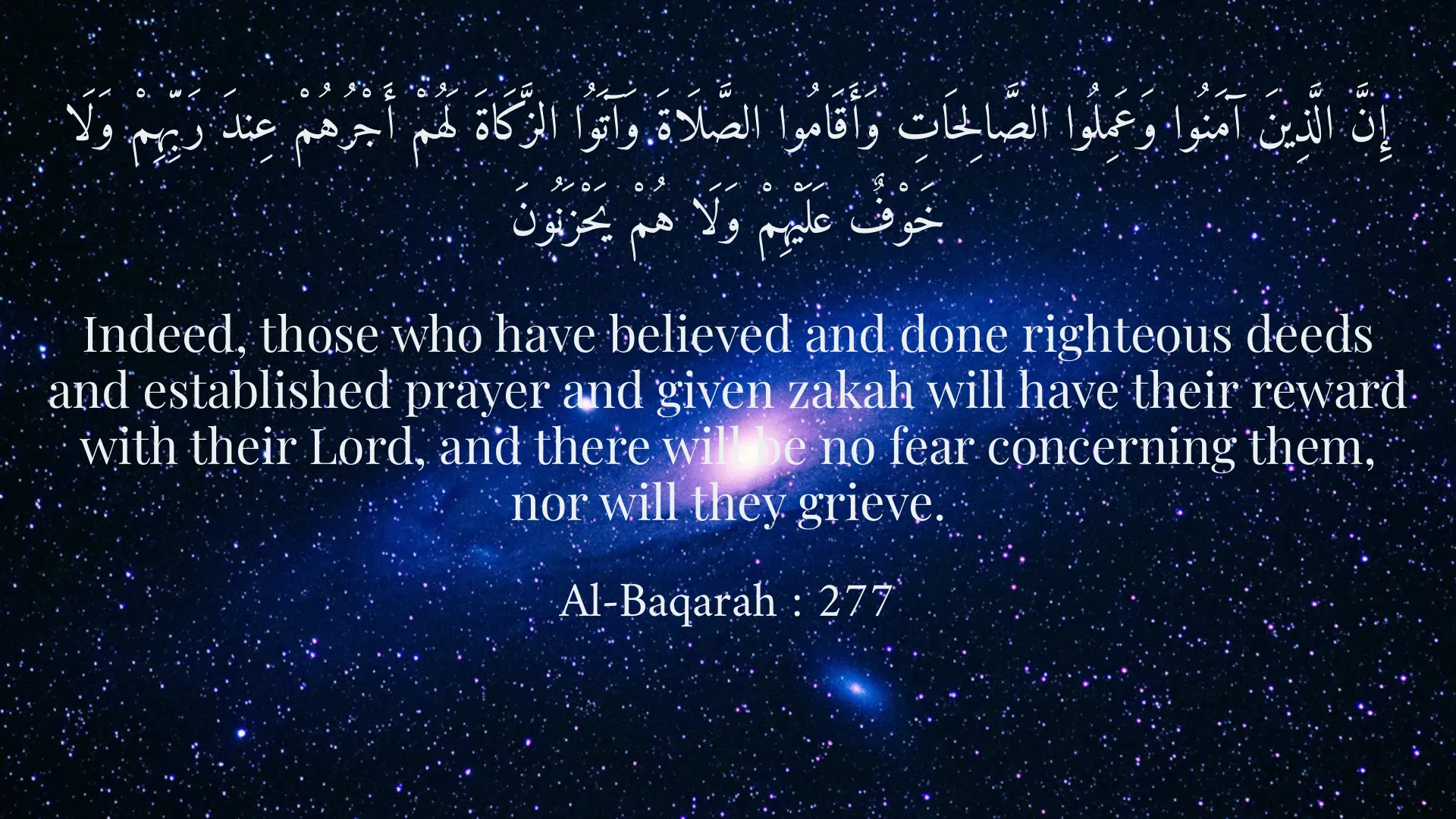
إِنَّ الَّذِينَ آمَنُوا وَعَمِلُوا الصَّالِحَاتِ وَأَقَامُوا الصَّلَاةَ وَآتَوُا الزَّكَاةَ لَهُمْ أَجْرُهُمْ عِندَ رَبِّهِمْ وَلَا خَوْفٌ عَلَيْهِمْ وَلَا هُمْ يَحْزَنُونَ
Indeed, those who have believed and done righteous deeds and established prayer and given zakah will have their reward with their Lord, and there will be no fear concerning them, nor will they grieve.
Al-Baqarah : 277
وَالْعَصْرِ
By time,
Al-Asr : 1
إِنَّ الْإِنسَانَ لَفِي خُسْرٍ
Indeed, mankind is in loss,
Al-Asr : 2
إِلَّا الَّذِينَ آمَنُوا وَعَمِلُوا الصَّالِحَاتِ وَتَوَاصَوْا بِالْحَقِّ وَتَوَاصَوْا بِالصَّبْرِ
Except for those who have believed and done righteous deeds and advised each other to truth and advised each other to patience.
Al-Asr : 3
Short Story
Once upon a time, there was an ascetic who would spend hours in the city mosque speaking about the virtues of faith and the stations of the pious. He spoke with such eloquence and rhetoric about monotheism and the afterlife that it seemed as if he himself was at the pinnacle of these stations. People greatly praised him and envied his apparent knowledge and piety. However, in the same city lived a simple, unlettered farmer who never gave sermons. He simply went to his farm every day before sunrise, worked diligently, and whatever he earned, he gave a portion to the poor, helped his neighbors, and never uttered a lie. One day, the ascetic fell ill and asked people for help. Many who had enjoyed his sermons visited him and praised him, but did nothing practical. It was this farmer, without any pretense, who nursed him day and night and spared no effort until the ascetic recovered. Upon witnessing this truth, the ascetic realized that true faith resides in a heart that not only believes in truths but also demonstrates it through actions and service to God's creation. He understood that for years he had deceived himself with words without deeds, and that the simple farmer, despite his simplicity, possessed a stronger and more sincere faith. Saadi's stories remind us that "words must be accompanied by deeds, not just speech."