Quranic Answer
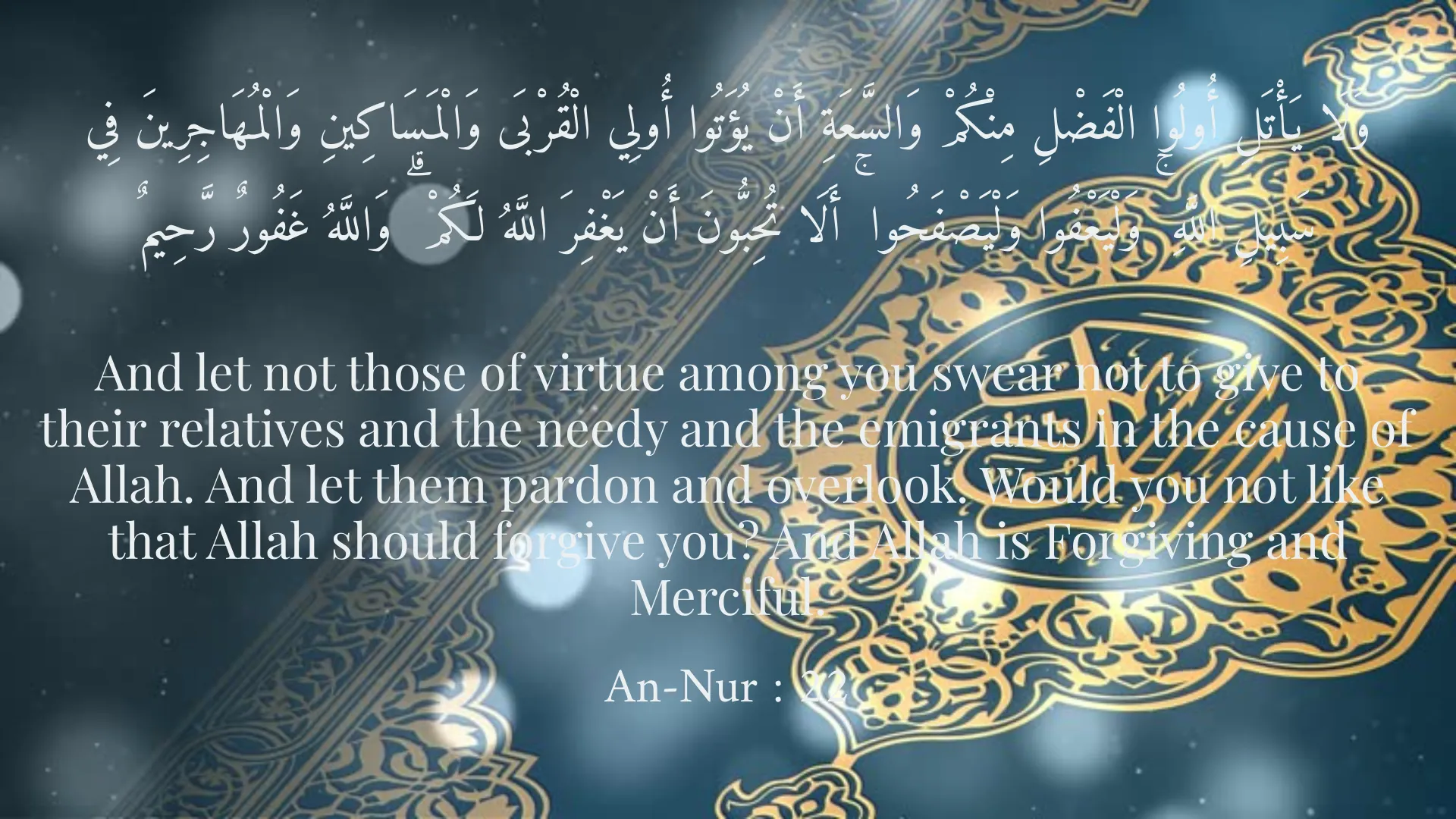
Forgiveness is a profound and transformative concept, deeply woven into the fabric of religious teachings across cultures. Notably, the Quran, the holy book of Islam, addresses the significance of forgiving others and emphasizes its essential role in achieving inner peace and tranquility. In the vast discourse presented in the Quran, forgiveness is not merely a passive act but rather an active and empowering choice that liberates the heart from the shackles of negativity and resentment. This article will explore the various dimensions of forgiveness as portrayed in the Quran and its psychological benefits, ultimately leading to a more harmonious life brimming with peace and understanding. ### The Quranic Perspective on Forgiveness The Quran presents forgiveness as a virtue that believers are encouraged to practice. Surah An-Nur, verse 22, underscores this theme by urging the believers to adopt a stance of generosity and forgiveness, especially in the face of adversity and wrongdoings inflicted by others. The verse reads: "And let not those of virtue among you swear not to give to the near relatives and the orphans and the needy and the travelers, and let them pardon and overlook. Would you not like that Allah should forgive you? And Allah is Forgiving and Merciful." This verse encapsulates a profound truth: by extending forgiveness to others, individuals not only embody a divine attribute but also open pathways to their own healing and growth. The encouragement to forgive is not merely about overlooking offenses; it is about elevating one’s character to a higher standard. Holding onto anger and resentment often burdens the spirit and creates a toxic emotional environment. In giving forgiveness, individuals liberate themselves from these emotional chains, fostering an inner peace that is essential for personal well-being and societal harmony. ### Emotional Liberation Through Forgiveness The act of forgiving others can be likened to an emotional cleanse. Surah Al-Imran, verse 134, advances this concept by stating, "And be patient, and endure, and be steadfast against the oppressors who harbor animosity toward you." Here, Allah emphasizes that forgiveness is intertwined with patience and steadfastness. When individuals choose to forgive, they engage in an active process that alleviates the heavy burdens of grudges and animosity that can weigh heavily on the heart. Psychologically, forgiveness is linked to numerous positive outcomes. Research in fields such as psychology highlights that forgiving others can lead to reductions in anxiety, depression, and stress. When individuals let go of their grudges, they often experience a sense of relief and emotional freedom, which can translate into improved mental health. Moreover, forgiveness nurtures emotional stability, allowing individuals to cope with life’s challenges with grace and resilience. ### The Power of Empathy in Forgiveness A further exploration of forgiveness in the Quran reveals the role of empathy. In Surah An-Nahl, verse 90, Allah advocates for kindness and forgiveness towards those who err: "Indeed, Allah commands you to render trusts to whom they are due and when you judge between people to judge with justice. Excellent is that which Allah instructs you. Indeed, Allah is ever Hearing and Seeing." This verse reminds believers not only to forgive but also to empathize with the flaws and shortcomings of others. Empathy, the ability to understand and share the feelings of another, plays a crucial role in the process of forgiveness. When one is able to see the humanity in others, even those who have caused hurt, the path to forgiveness becomes clearer. It fosters a deeper understanding and creates an environment where compassion can thrive. By recognizing that everyone is imperfect and that mistakes are part of the human experience, individuals can approach forgiveness with a more open heart. ### Forgiveness as an Essential Aspect of Righteousness Forgiveness is also closely aligned with the practice of righteousness and compassion, values that are fundamental in Islamic teachings. By forgiving others, believers not only reflect their commitment to these values but also contribute to the establishment of a more peaceful society. They become agents of change, encouraging a culture that promotes understanding and reconciliation over conflict and division. This idea is especially pertinent in today's world, where anger and resentment often seem to thrive. The Quran's message of forgiveness serves as a guiding principle for individuals seeking to navigate the complexities of relationships and societal interactions. In a time when polarization and hostility seem rampant, the act of forgiving can serve as a powerful antidote, fostering unity and understanding. ### Practical Steps to Cultivate Forgiveness For many, the process of forgiveness may not come easily. It often requires deep reflection and internal work. Here are some practical steps that can be taken to help cultivate a forgiving heart: 1. Self-Reflection: Take time to reflect on the feelings of hurt and anger. Understanding the emotions involved is the first step towards healing. 2. Empathize with Others: Try to see the situation from the other person's perspective. What experiences may have led to their actions? 3. Communicate: If possible, express your feelings to the person involved. Honest communication can help clarify misunderstandings and pave the way for reconciliation. 4. Practice Patience: Forgiveness is a process that may take time. Be patient with yourself as you work through your feelings. 5. Seek Support: Sometimes, discussing feelings with trusted friends, family, or even a professional can help facilitate the journey toward forgiveness. ### Conclusion In conclusion, the concept of forgiveness as depicted in the Quran provides profound insights that transcend cultural and religious boundaries. It emphasizes the importance of letting go of resentment and anger as a means to achieve inner peace. Through embracing forgiveness, individuals can free themselves from emotional burdens, practice empathy, and embody righteousness and compassion. Forgiveness paves the way for personal transformation, leading to healthier relationships and a more peaceful society. As believers navigate the complexities of human interactions, the Quran's guidance on forgiveness serves as a beacon of hope, illuminating paths toward understanding, reconciliation, and emotional stability in a tumultuous world.
Related Verses
وَلَا يَأْتَلِ أُولُوا الْفَضْلِ مِنْكُمْ وَالسَّعَةِ أَنْ يُؤَتُوا أُولِي الْقُرْبَى وَالْمَسَاكِينِ وَالْمُهَاجِرِينَ فِي سَبِيلِ اللَّهِ ۚ وَلْيَعْفُوا وَلْيَصْفَحُوا ۚ أَلَا تُحِبُّونَ أَنْ يَغْفِرَ اللَّهُ لَكُمْ ۗ وَاللَّهُ غَفُورٌ رَّحِيمٌ
And let not those of virtue among you swear not to give to their relatives and the needy and the emigrants in the cause of Allah. And let them pardon and overlook. Would you not like that Allah should forgive you? And Allah is Forgiving and Merciful.
An-Nur : 22
الَّذِينَ يُنفِقُونَ فِي السَّرَّاء وَالضَّرَّاء وَالْكَاظِمِينَ الْغَيْظَ وَالْعَافِينَ عَنِ النَّاسِ ۗ وَاللَّهُ يُحِبُّ الْمُحْسِنِينَ
Who spend in the cause of Allah during ease and hardship and who restrain anger and who pardon the people. And Allah loves the doers of good.
Al-Imran : 134
إِنَّ اللَّهَ يَأْمُرُكُمْ أَنْ تُؤَدُّوا الأَمَانَاتِ إِلَى أَهْلِهَا وَإِذَا حَكَمْتُمْ بَيْنَ النَّاسِ أَن تَحْكُمُوا بِالْعَدْلِ ۚ إِنَّ اللَّهَ نِعِمَّا يَعِظُكُمْ بِهِۦ ۚ إِنَّ اللَّهَ كَانَ سَمِيعًا بَصِيرًا
Indeed, Allah commands you to render trusts to whom they are due and when you judge between people to judge with justice. Excellent is that which Allah instructs you. Indeed, Allah is ever Hearing and Seeing.
An-Nahl : 90
Short Story
One day, a man named Amin was harboring anger towards one of his friends. He promised himself for several days to forgive that friend but couldn't. One day, while reflecting on the Quran and its verses, he realized that forgiveness was not only beneficial for him but also for the friend who had upset him. He then decided to put aside his resentment and tell the friend that he forgave him. This act brought him a profound peace and happiness.