Quranic Answer
This profound and compassionate question delves into one of the most fundamental aspects of the human-divine relationship. The answer, illuminated by the teachings of the Holy Quran, reveals the boundless expanse of Divine mercy and love. In short, yes, Allah loves sinful human beings, but this love is nuanced and accompanied by conditions that require careful examination. To fully comprehend this, it is essential to explore the Quranic concepts of divine mercy, repentance (Tawbah), and justice. The Quran introduces Allah with numerous attributes, foremost among them being "Ar-Rahman" (The Most Gracious) and "Ar-Rahim" (The Most Merciful). These two attributes are central to understanding Allah's relationship with all His creations, including humanity. The opening of almost every Surah in the Quran (with the exception of Surah At-Tawbah) with "Bismillahir Rahmanir Rahim" (In the Name of Allah, the Most Gracious, the Most Merciful) testifies that Divine mercy is the foundation of every action. Allah states in the Quran, "And your Lord is the Forgiving, full of mercy" (Quran 18:58). This indicates that forgiveness and mercy are intrinsic and eternal attributes of Allah. Allah's love for humanity, even for sinful individuals, has deep roots in creation itself. Allah created humanity in the best of forms (Quran 95:4) and bestowed upon them dignity, making them the most honored of His creatures (Quran 17:70). This inherent dignity is not entirely eradicated by sin. Sin is like a veil that covers the pure human nature (fitra) and deviates a person from the right path, but Allah never loses hope in humanity's potential to return to perfection. He does not abandon His creation but always leaves the door of return and repentance open. Allah Almighty continuously grants His servants successive opportunities for return and reform, for He desires that they embark on the path of salvation and be rescued from the pit of misguidance. This continuous offering of chances and the opening of doors of mercy are clear testaments to His universal love, which encompasses all servants, even those who have committed errors. It is crucial to differentiate between "sin" and "sinner." Allah does not love sin or disobedience because sin is an injustice to oneself and disrupts the order of justice and well-being in the universe. He does not love the transgressors, the oppressors, the arrogant, and those who persistently indulge in sin without any remorse, as stated in numerous verses: "Indeed, Allah does not love the corruptors" (Quran 5:64), "Indeed, Allah does not love the unjust" (Quran 3:57). However, this does not mean a lack of love for the person who sins, but rather displeasure with the sinful act and the state of persistent sin. Allah grants the sinful individual opportunities for repentance and return, and these very opportunities are signs of His love and mercy. He constantly guides humanity towards truth and righteousness by sending prophets, revealing divine books, and inspiring conscience. This continuous guidance is a symbol of Allah's unparalleled grace and love, which extends even to sinners, so that they might find a way back and set forth towards the light of guidance. Allah's universal call to repentance is one of the clearest indications of His love for sinners. In Surah Az-Zumar, verse 53, He states: "Say, 'O My servants who have transgressed against themselves [by committing sins], do not despair of the mercy of Allah. Indeed, Allah forgives all sins. Indeed, it is He who is the Forgiving, the Merciful.'" This verse is not only a general invitation to all sinners but also emphasizes that even the greatest sins are forgivable with sincere (Nasuh) repentance. How could such an invitation come from one who has no love for these servants? This is the pinnacle of compassion and love, keeping alive the hope of return and forgiveness even after committing major sins. This verse clearly shows that the gates of Allah's mercy are never closed to those who repent, and Allah awaits the return of His sinful servants with open arms. Furthermore, Allah has a special love for those who repent. In Surah Al-Baqarah, verse 222, we read: "Indeed, Allah loves those who turn to Him in repentance and loves those who purify themselves." This verse explicitly states that Allah not only forgives sinners but also loves those who regret their sins and return to Him. This love is a result of remorse, the will to change, and the effort to purify the soul. In other words, a sinner, as long as they persist in sin and are not remorseful, is not subject to Allah's special pleasure and love, but upon turning to repentance, they once again become recipients of this special affection. This return to Allah is itself a sign of the pure human nature (fitra) that does not fade, even under layers of sin. There are many Quranic examples of the forgiveness of major sins, demonstrating the vastness of Allah's mercy. The story of Prophet Adam (peace be upon him), who repented after disobedience and Allah accepted his repentance, or the story of the repentance of Pharaoh's magicians who instantly converted from disbelief to faith and Allah forgave their past sins – all are examples of this truth. Allah even granted Pharaoh, one of the most stubborn tyrants, a reprieve and sent Moses and Aaron to him to invite him to the right path. This too is a sign of Allah's love for the guidance of all humanity, even the most obstinate among them. These stories are not only hopeful but also remind us that as long as there is breath and an opportunity for change, the door to Allah's mercy is always open. Allah's mercy and love are all-encompassing. In Surah Al-A'raf, verse 156, He states: "And My mercy encompasses all things." This comprehensiveness means that no creature, not even a sinful human being, is outside the sphere of Allah's general mercy. Allah provides sustenance for everyone, even for disbelievers and sinners. He grants everyone the opportunity to live, think, and choose. These opportunities are manifestations of His mercy and love. If He did not love sinful human beings, He would never grant them respite, never open the door of repentance, and never send prophets and divine books for their guidance. This love is not exclusively for the righteous; rather, it extends to all servants, with all their shortcomings and sins, in the hope that one day they will return to Him. In conclusion, Allah, as the Creator and Cherisher, has an inherent love for all His creatures, including humanity. This love extends to sinners, but not in the sense of condoning their sins. Rather, it means perpetually opening the doors of repentance and return, inviting them to reform, and offering endless forgiveness to those who regret their actions and sincerely turn back to Him. In essence, His love for the sinful human being is a love that grants them the opportunity to change, grow, and purify themselves. This love signifies Allah's unending hope for His servants' return to the path of success and salvation. Whenever a sinner turns away from sin and returns to their Lord with sincere intention, they are not only forgiven but also become beloved to Him, and this is the highest degree of divine grace and mercy.
Related Verses
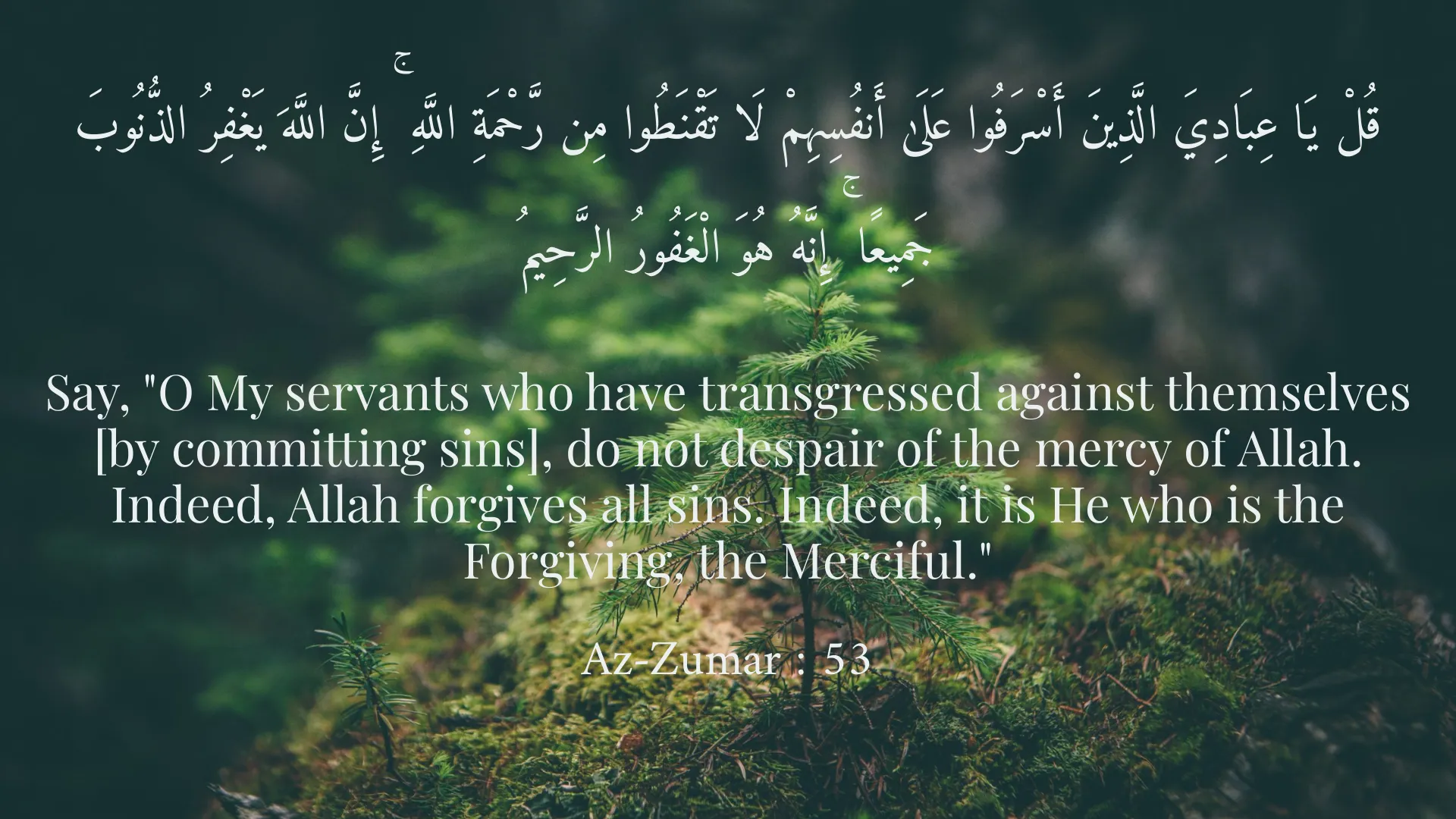
قُلْ يَا عِبَادِيَ الَّذِينَ أَسْرَفُوا عَلَىٰ أَنفُسِهِمْ لَا تَقْنَطُوا مِن رَّحْمَةِ اللَّهِ ۚ إِنَّ اللَّهَ يَغْفِرُ الذُّنُوبَ جَمِيعًا ۚ إِنَّهُ هُوَ الْغَفُورُ الرَّحِيمُ
Say, "O My servants who have transgressed against themselves [by committing sins], do not despair of the mercy of Allah. Indeed, Allah forgives all sins. Indeed, it is He who is the Forgiving, the Merciful."
Az-Zumar : 53
إِنَّ اللَّهَ يُحِبُّ التَّوَّابِينَ وَيُحِبُّ الْمُتَطَهِّرِينَ
Indeed, Allah loves those who turn to Him in repentance and loves those who purify themselves.
Al-Baqarah : 222
وَرَحْمَتِي وَسِعَتْ كُلَّ شَيْءٍ ۚ
and My mercy encompasses all things.
Al-A'raf : 156
قُل لِّمَن مَّا فِي السَّمَاوَاتِ وَالْأَرْضِ ۖ قُل لِّلَّهِ ۚ كَتَبَ عَلَىٰ نَفْسِهِ الرَّحْمَةَ ۚ لَيَجْمَعَنَّكُمْ إِلَىٰ يَوْمِ الْقِيَامَةِ لَا رَيْبَ فِيهِ ۚ الَّذِينَ خَسِرُوا أَنفُسَهُمْ فَهُمْ لَا يُؤْمِنُونَ
Say, "To whom belongs what is in the heavens and earth?" Say, "To Allah." He has decreed upon Himself mercy. He will surely assemble you on the Day of Resurrection, about which there is no doubt. Those who will lose themselves will not believe.
Al-An'am : 12
Short Story
It is narrated that a certain king had a disobedient servant who was constantly committing sins. The king, with great patience, repeatedly forgave him, hoping he would change. One day, the servant committed a grave error, and everyone expected severe punishment. The king summoned him, and the servant, trembling, prepared for his fate. But instead of punishing him, the king said, "I have forgiven you so many times, yet you persist in your disobedience. I am ashamed that my patience has not led you to reform. Go, and I pray that God's boundless mercy, which is far greater than mine, will eventually guide you." The servant, struck by this unexpected kindness and the king's continued hope for his betterment, was utterly transformed. He repented sincerely, recognizing that even when he was at his worst, the king had not abandoned hope for his reform. This is but a small glimmer of God's infinite mercy upon His creation, always inviting His servants back, even when they have strayed.