Quranic Answer
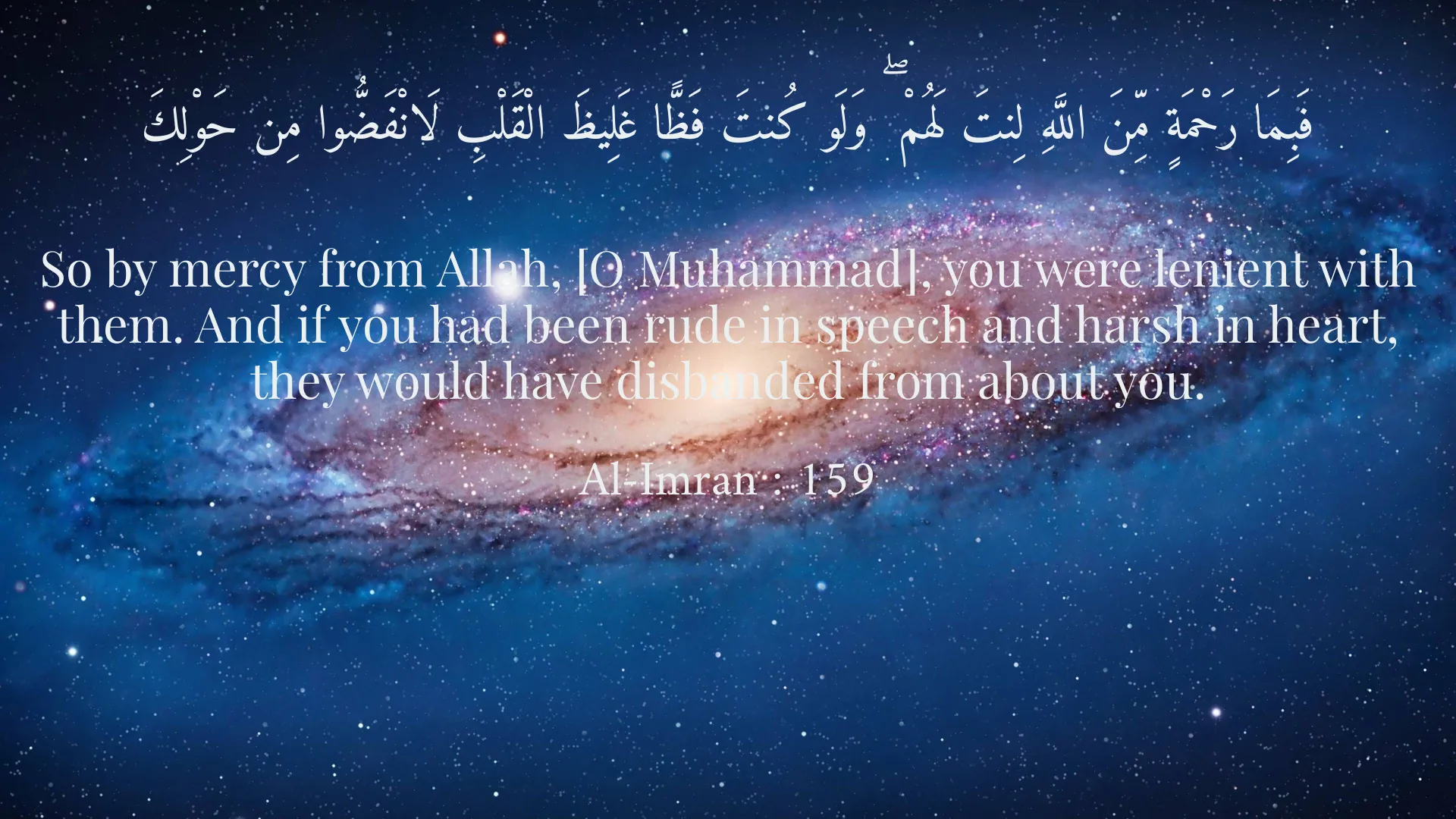
In the Holy Quran, Allah explicitly states that He is aware of the feelings and states of His servants. This profound understanding of human emotion is not only a fundamental attribute of Allah but also serves as a source of comfort and hope for believers worldwide. In a world that often feels chaotic and overwhelming, the assurance that Allah sees, knows, and understands the hearts of His servants is both reassuring and life-affirming. This belief manifests in numerous verses throughout the Quran, reaffirming the intimate connection that exists between Allah and humanity. The concept of Allah’s awareness of human emotions goes beyond mere observation; it underscores a divine compassion and mercy that is central to the Islamic faith. In Surah Al-Imran, verse 159, Allah mentions, 'So by mercy from Allah, [O Muhammad], you were lenient with them. And if you had been rude in speech and harsh in heart, they would have disbanded from about you.' Here, Allah reflects on the nature of Prophet Muhammad (peace be upon him) as a paragon of kindness and empathy. The mercy that Allah bestows is not just reserved for His prophets, but it is a quality that permeates the relationship between Allah and all His servants. The verse emphasizes that the demeanor we adopt in our interactions has a profound effect on others, and Allah’s mercy teaches us the importance of being gentle in our dealings with one another. The kindness shown by Prophet Muhammad is a reflection of Allah’s mercy, which is extended to every individual, allowing us to understand that our emotions—be it joy, sorrow, or pain—are entirely valid and recognized by Allah. Such divine understanding encourages believers to cultivate their emotional intelligence and to engage with each other in compassionate ways. Furthermore, in Surah Al-Mu'minun, verse 14, Allah expresses His support and compassion toward His servants: 'Then We created him from a sperm-drop, distinctly poured.' This profound acknowledgment of human creation is a poignant reminder that Allah has been aware of humanity from the very beginning. Every stage of life, from the most humble beginnings to the complex experiences of adulthood, is enveloped in the divine awareness and care of Allah. The significance of this verse lies in its implication—that Allah is present in our lives, observing our struggles and our joys intimately, and offers support as we navigate the complexities of the human experience. In moments of despair and heartache, the Quran provides not only guidance but also solace. Surah Yusuf, verse 86 captures the essence of this divine relationship when Jacob mourned the loss of his son Joseph. Here, he states: 'I only complain of my suffering and my grief to Allah.' The narrative illustrates profound grief, yet it also reveals the depth of reliance on Allah in times of sorrow. Jacob's utterance signifies a vital principle in Islam: when faced with adversity, believers are encouraged to turn to Allah not merely in prayer, but in actual expression of their feelings. It is a reminder that Allah is the ultimate listener, the one who comprehends our suffering, and the one who can genuinely provide relief. The mention of tears in the Quran also holds significance, as it symbolizes the rawness and authenticity of human emotion. When we shed tears, whether in sorrow or in joy, Allah sees it. In various verses, He positions those tears as not just mere drops of water but as representations of heartfelt wounds and genuine feelings. Every tear that falls is acknowledged by Allah, and this understanding inspires believers to recognize the power of their vulnerability. This divine acknowledgment fosters a sense of belonging, allowing individuals to feel that they are not alone in their pain or happiness. Moreover, the Quran emphasizes a balance between Allah’s mercy and justice. While He is compassionate and attentive to our hearts and emotions, He is also the ultimate judge of our actions. The duality of these traits—mercy and justice—reveals the holistic nature of Allah's relationship with His servants. It instills a sense of responsibility, encouraging believers to align their actions with their emotions, ensuring that both are in harmony with the divine teachings of Islam. In doing so, Allah's awareness extends to not just the heart's feelings but also the accountability of those feelings expressed through actions. It is crucial to recognize that this relationship with Allah transcends mere belief; it cultivates a way of living that invites profound introspection. Understanding that our feelings are known and seen by Allah urges us to examine our motives, beliefs, and emotions. It creates an atmosphere where self-reflection can thrive, prompting us to seek personal growth and development through faith. In conclusion, Allah's awareness of the feelings and states of His servants remains a cornerstone of understanding within Islamic teachings. The verses highlighted from the Quran serve as reminders of the divine mercy, awareness, and compassion that envelop believers throughout their lives. By recognizing that every emotion, whether it be a tear of sorrow or a moment of joy, is seen and known by Allah, believers are encouraged to embrace their emotional experiences, express their vulnerabilities, and deepen their connection with their Creator. This acknowledgment of Allah's intimate awareness fosters a relationship built on honesty, vulnerability, and trust, paving the way for a more profound and meaningful life anchored in faith.
Related Verses
فَبِمَا رَحْمَةٍ مِّنَ اللَّهِ لِنتَ لَهُمْ ۖ وَلَو كُنتَ فَظًّا غَلِيظَ الْقَلْبِ لَانْفَضُّوا مِن حَوْلِكَ
So by mercy from Allah, [O Muhammad], you were lenient with them. And if you had been rude in speech and harsh in heart, they would have disbanded from about you.
Al-Imran : 159
فَخَلَقْنَاهُ مِن مَّاءٍ دَافِقٍ
Then We created him from a sperm-drop, distinctly poured.
Al-Mu'minun : 14
قَالَ إِنَّمَا أَشْكُوا بَثِّي وَحُزْنِي إِلَى اللَّهِ
He said, 'I only complain of my suffering and my grief to Allah.'
Yusuf : 86
Short Story
Once upon a time, a man named Ahmad was sitting in a corner of the city, lost in thought. Every day, he faced so much pain and suffering that he felt like no one heard him. One day, he decided to take a moment to himself, and in that moment, a tear rolled down his cheek. He remembered the Quran and realized that God was always watching and aware. With a gentle and sincere voice, he began to pray, feeling that Allah understood all his pains and sorrows. From that day on, Ahmad would think of God in every hardship and regain his confidence.