Quranic Answer
The question of whether habituating to sin extinguishes faith is one of the most profound and vital inquiries in understanding one's religious journey and spiritual well-being. From the perspective of the Holy Quran, faith (Iman) is not a static or fixed state; rather, it is a dynamic and living force, akin to a plant that requires continuous nourishment and care to grow and bear fruit. Sins, especially when they become habitual, not only halt this growth but gradually weaken the very roots of faith, dimming its light within the human heart. The Quran clearly indicates that sin acts as a veil over the heart and the inner eye, depriving an individual of perceiving divine truths and receiving the light of guidance. In numerous verses, the Quran addresses the profound impact of sin on the heart. For instance, in Surah Al-Mutaffifin (The Defrauders), verse 14, Allah states: “No! Rather, that which they used to earn has covered their hearts.” This verse vividly illustrates how sins, much like rust accumulating on a mirror, settle upon the heart, preventing it from reflecting the light of truth and divine revelation. This 'rust' signifies the darkening and corruption that diminish one's sense of right and wrong, gradually eroding the perceived ugliness of sin. When an individual habituates to sin, these layers of 'rust' accumulate, eventually covering the heart entirely and 'sealing' it. The Quran refers to this state in verses such as Surah Al-Baqarah (The Cow), verse 7: “Allah has set a seal upon their hearts and upon their hearing, and over their vision is a veil. And for them is a great punishment.” This 'sealing' does not imply a complete removal of free will, but rather it is the natural consequence of persistent sin and deliberate turning away from truth, which gradually strips the heart of its capacity to understand and accept guidance. Habituating to sin drastically reduces a person's spiritual and moral sensitivity. Initially, committing a sin might be accompanied by remorse and guilt, but with repetition, this remorse fades and eventually disappears. This spiritual numbness is the most perilous stage, as the individual no longer feels the need for repentance and returning to Allah. True faith thrives when a person is sensitive to divine commands, refrains from sins, and, if a mistake occurs, immediately turns back to Allah in repentance. However, someone accustomed to sin not only finds pleasure in it but may even persist in it and rationalize their actions. This condition is like a disease that corrodes the body from within; although the person might appear alive, they lack genuine health and vitality. In such a state, even if faith is not entirely 'extinguished,' its light and effectiveness are lost, transforming into a weak and ineffective belief that cannot guide or save the individual. Nevertheless, the Holy Quran consistently keeps the doors of Allah's mercy and forgiveness open for His servants. Even for those accustomed to sin, as long as life persists and the opportunity for repentance remains, there is hope for return and revival of faith. Surah Az-Zumar (The Troops), verse 53, declares: “Say, 'O My servants who have transgressed against themselves [by sinning], do not despair of the mercy of Allah. Indeed, Allah forgives all sins. Indeed, it is He who is the Forgiving, the Merciful.'” This verse unequivocally shows that even persistence in sin and 'transgressing against oneself' do not preclude divine forgiveness, provided that sincere repentance and a genuine return occur. However, it is crucial to understand that this opportunity for repentance should not be used as an excuse to continue sinning. True repentance involves remorse for the past, abstaining from sin in the present, and resolving not to return to it in the future. In summary, habituating to sin does not directly extinguish faith in the sense that one immediately becomes a disbeliever, unless the sin itself involves denying a fundamental principle of Islam (like polytheism or denying prophethood). What happens, however, is a severe weakening, dimming, and rendering ineffective of the light of faith. This 'rust' of sin gradually deprives the heart of its capacity to receive guidance and may ultimately lead the individual towards practical disbelief or hypocrisy, where the name of faith remains, but its essence is hollowed out. To preserve and strengthen faith, a person must continuously guard their heart, abstain from sins, and, if a mistake is made, return to Allah without delay with sincere repentance. It is this constant vigilance and struggle that keeps the light of faith bright and steadfast in the heart, enabling one to remain firm on the path of truth.
Related Verses
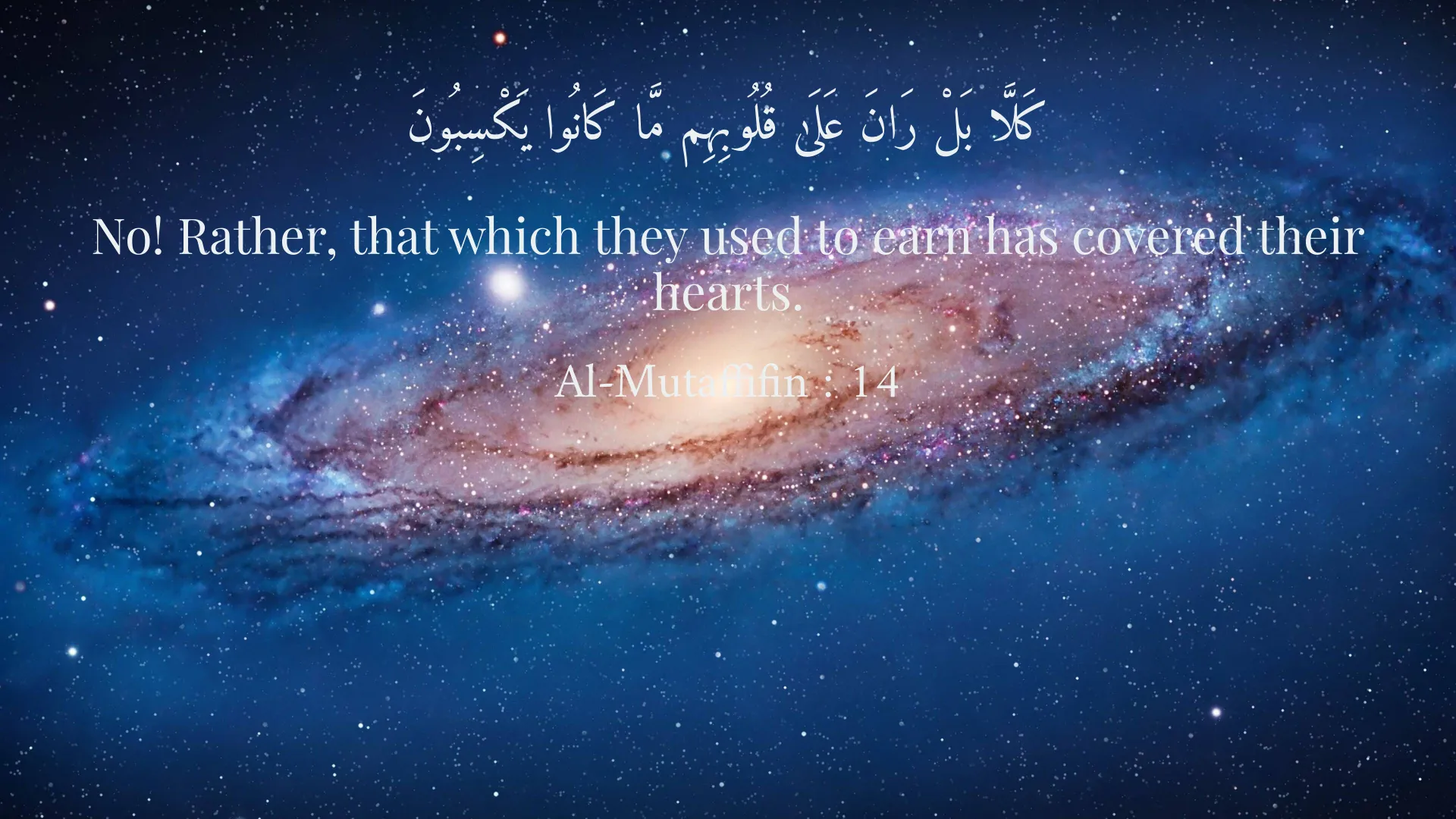
كَلَّا بَلْ رَانَ عَلَىٰ قُلُوبِهِم مَّا كَانُوا يَكْسِبُونَ
No! Rather, that which they used to earn has covered their hearts.
Al-Mutaffifin : 14
خَتَمَ اللَّهُ عَلَىٰ قُلُوبِهِمْ وَعَلَىٰ سَمْعِهِمْ ۖ وَعَلَىٰ أَبْصَارِهِمْ غِشَاوَةٌ ۖ وَلَهُمْ عَذَابٌ عَظِيمٌ
Allah has set a seal upon their hearts and upon their hearing, and over their vision is a veil. And for them is a great punishment.
Al-Baqarah : 7
قُلْ يَا عِبَادِيَ الَّذِينَ أَسْرَفُوا عَلَىٰ أَنفُسِهِمْ لَا تَقْنَطُوا مِن رَّحْمَةِ اللَّهِ ۚ إِنَّ اللَّهَ يَغْفِرُ الذُّنُوبَ جَمِيعًا ۚ إِنَّهُ هُوَ الْغَفُورُ الرَّحِيمُ
Say, 'O My servants who have transgressed against themselves [by sinning], do not despair of the mercy of Allah. Indeed, Allah forgives all sins. Indeed, it is He who is the Forgiving, the Merciful.'
Az-Zumar : 53
Short Story
In Sa'di's Gulistan, it is narrated that a just king would send bread and dates to a dervish every night. Another dervish, astonished by the king's generosity, once asked the dervish, "What have you done to receive such favor from the king?" The dervish replied, "I always adhere to one principle: whenever I commit a mistake, I immediately turn to repentance and cleanse my heart from its defilement, lest a small sin settles in my heart and leads me astray. The rust of sins, however small, if it settles on the mirror of the heart, gradually covers the light of faith and darkens the heart. The benevolent king has seen this purity and radiance in me." This tale from Sa'di reminds us that even the smallest sin, if habitual, can diminish the heart's luminosity and faith, and that vigilance in repentance and purity of heart is the way to preserve that divine glow.