Quranic Answer
In the teachings of the Holy Quran, the emotion of 'regret' (hasrat) in itself is not presented as something that inherently weakens faith. Rather, it is how an individual manages this feeling and its subsequent implications that can either fortify or diminish their faith. The Quran does not explicitly state that regret about the past weakens faith, but it addresses related concepts that clarify the roots of such a state. Regret and remorse over the past, if approached constructively and oriented towards repentance (Tawbah), self-correction, and learning, will not only fail to weaken faith but can indeed strengthen it significantly. However, if this regret leads to despair, hopelessness, paralysis from action, and a lack of reliance on Allah, then it can undoubtedly inflict damage upon the very core of one's faith, gradually eroding it. The Holy Quran repeatedly warns believers against despair (ya's). Despair of Allah's mercy is considered one of the major sins and is a clear sign of weakened faith. Allah Almighty states in Surah Az-Zumar, verse 53: "Say, 'O My servants who have transgressed against themselves [by sinning], do not despair of the mercy of Allah. Indeed, Allah forgives all sins. Indeed, it is He who is the Forgiving, the Merciful.'" This verse is a direct invitation to hope and a return to Allah, even for those who have committed grave sins. If regret over the past leads an individual to feel that they will never be forgiven, and that there is no path back, it inevitably descends into despair, which inherently weakens faith. Strong faith is characterized by an unwavering certainty in the vastness of Allah's mercy and forgiveness, and it never ceases to correct its path and seek repentance. Conversely, constructive regret is that which prompts an individual to learn from their past mistakes. The Quran frequently narrates the stories of past nations as lessons for reflection and contemplation, not so that people become consumed by their past and endlessly blame themselves. The purpose of recounting these narratives is to prevent the repetition of errors and to encourage moving forward on the correct path. A true believer utilizes their past experiences, both successful and erroneous, as stepping stones for spiritual growth and rectifying their actions. This type of regret, when accompanied by sincere repentance and seeking forgiveness, not only does not weaken faith but contributes to the purification of the soul and deepens the human connection with their Creator. Tawakkul (reliance on God) is one of the fundamental pillars of faith. An individual who excessively grieves over their past and becomes overwhelmed by it may, in fact, be experiencing a weakness in their tawakkul. They might develop the perception that past outcomes are unchangeable and that their destiny is irrevocably bound by that past, whereas true faith implies that Allah is capable of all things and can alter paths, bringing forth good even from the midst of difficulties. Surah At-Talaq, verse 3, states: "And whoever relies upon Allah - then He is sufficient for him. Indeed, Allah will accomplish His purpose. Allah has already set for everything a [decreed] extent." This verse indicates that trusting in Divine power and planning liberates an individual from sinking into fruitless regrets, enabling them to look towards the future with courage and hope, and to walk steadfastly on the path of Allah's pleasure. Furthermore, the concept of patience (sabr) is emphasized repeatedly in the Quran. Patience in the face of calamities, patience in refraining from sin, and patience in performing acts of obedience. Regret over the past, especially concerning misfortunes and failures, sometimes stems from a lack of patience. If an individual looks upon what has transpired with patience and acceptance, understanding that every event holds a wisdom, this perspective will pull them out of the whirlpool of regret. Surah Al-Baqarah, verse 153, states: "O you who have believed, seek help through patience and prayer. Indeed, Allah is with the patient." This verse teaches believers to seek refuge in patience and prayer when confronted with challenges and distress, which includes distress arising from past events. Succumbing to past regrets and abandoning oneself to despair contradicts the very spirit of patience and tawakkul. Ultimately, the Quran’s focus is on righteous action in the present moment and preparation for the future (the Hereafter). Strong faith is that which propels an individual towards action and construction, rather than towards stagnation and depression stemming from the past. Every moment presents a new opportunity to draw closer to Allah and perform good deeds. Excessive attachment to what has passed and cannot be changed prevents one from leveraging current moments to build a better future, both in this world and the hereafter. The message of the Quran is consistently one of hope, movement, and return to Allah. Regret about the past is only detrimental when it robs an individual of this positive and constructive spirit. Therefore, from a Quranic perspective, regret accompanied by despair and a lack of reliance on Allah weakens faith, but regret that leads to repentance, correction, and hope, not only does not weaken faith but contributes to its maturity and strength. The criterion is the way the believer's heart and mind react to this feeling, and not merely the existence of the feeling itself.
Related Verses
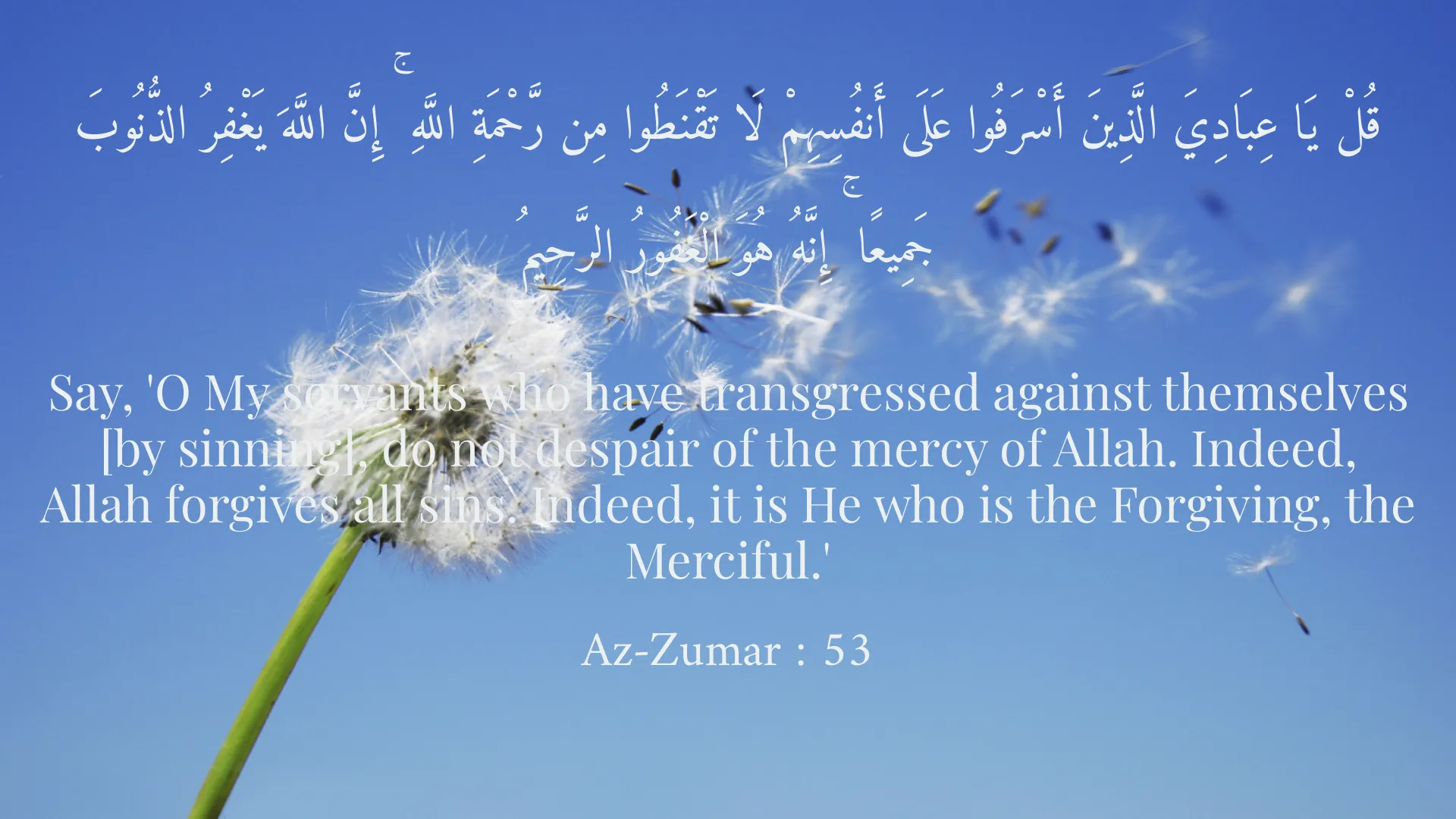
قُلْ يَا عِبَادِيَ الَّذِينَ أَسْرَفُوا عَلَى أَنفُسِهِمْ لَا تَقْنَطُوا مِن رَّحْمَةِ اللَّهِ ۚ إِنَّ اللَّهَ يَغْفِرُ الذُّنُوبَ جَمِيعًا ۚ إِنَّهُ هُوَ الْغَفُورُ الرَّحِيمُ
Say, 'O My servants who have transgressed against themselves [by sinning], do not despair of the mercy of Allah. Indeed, Allah forgives all sins. Indeed, it is He who is the Forgiving, the Merciful.'
Az-Zumar : 53
يَا أَيُّهَا الَّذِينَ آمَنُوا اسْتَعِينُوا بِالصَّبْرِ وَالصَّلَاةِ ۚ إِنَّ اللَّهَ مَعَ الصَّابِرِينَ
O you who have believed, seek help through patience and prayer. Indeed, Allah is with the patient.
Al-Baqarah : 153
وَمَن يَتَوَكَّلْ عَلَى اللَّهِ فَهُوَ حَسْبُهُ ۚ إِنَّ اللَّهَ بَالِغُ أَمْرِهِ ۚ قَدْ جَعَلَ اللَّهُ لِكُلِّ شَيْءٍ قَدْرًا
And whoever relies upon Allah - then He is sufficient for him. Indeed, Allah will accomplish His purpose. Allah has already set for everything a [decreed] extent.
At-Talaq : 3
Short Story
Once upon a time, there was a merchant named Fereydoun who, due to a misguided business decision, lost all his wealth. A great sorrow settled in his heart, and he spent days and nights regretting the past he had lost. His friends tried to comfort him, saying: 'O Fereydoun, what has passed, has passed. Grieving over it is like drinking salty water that only increases thirst. Rise up and start anew, for God is the Opener of all ways.' Fereydoun initially paid no heed, but one day, he sat in a garden, gazing at the blossom of a tree that had seemed dry in winter. He said to himself: 'If this tree had grieved for spring every year after losing its leaves, it would never have blossomed or borne fruit.' From that moment, Fereydoun decided that instead of drowning in the past, he would learn from his mistakes and strive again with reliance on God. He started with a small capital, worked with patience and perseverance, and soon not only recovered his lost fortune but also found a peace in his heart he had never experienced before. This peace was the fruit of his reliance, for he understood that whatever the past held, it was a staircase to a bright present and future, if one learns from it and trusts in God.