Quranic Answer
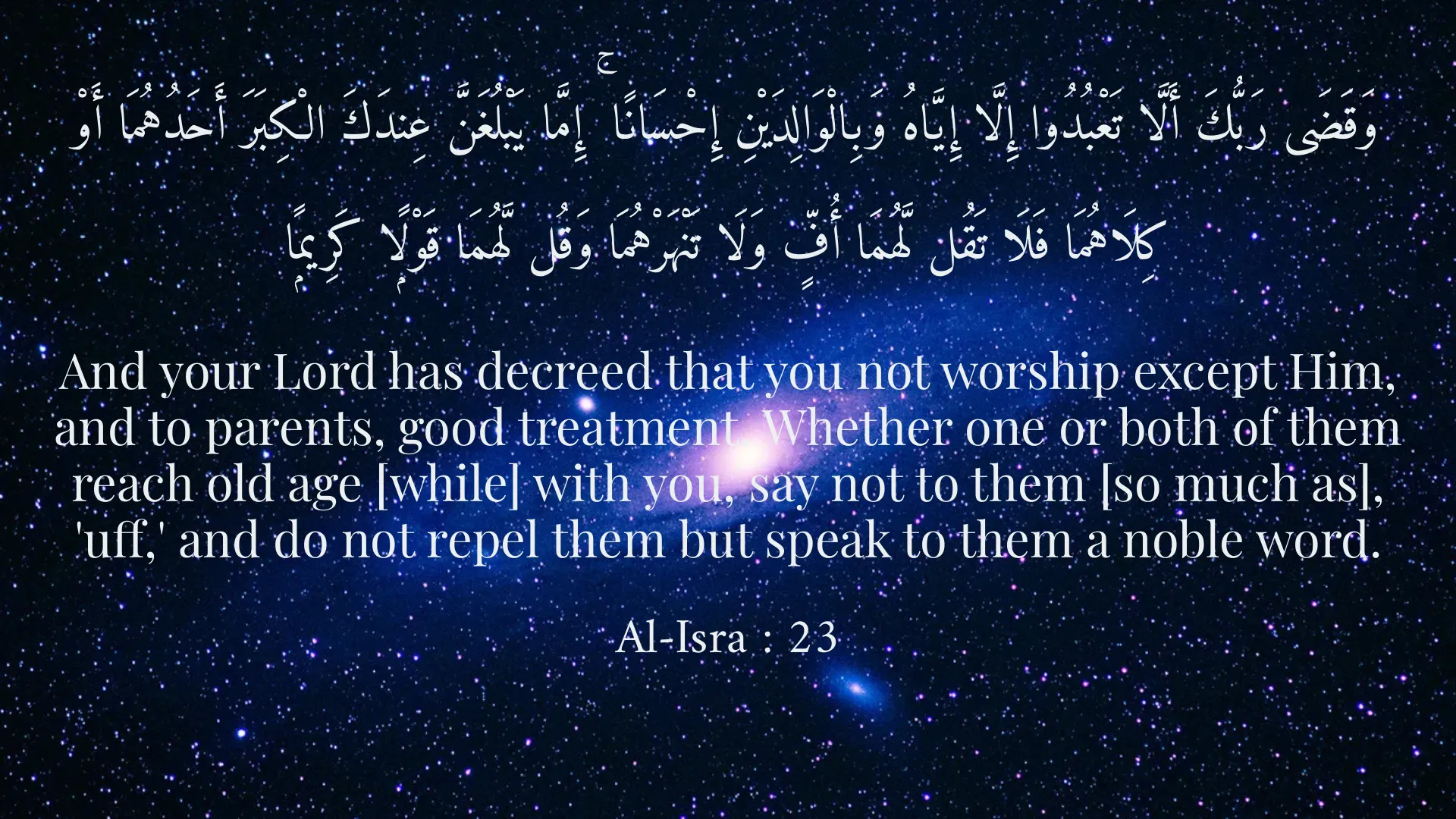
In the Holy Quran, the significance of serving parents and treating them with kindness is profoundly emphasized, revealing the depth of social and moral values embedded within Islamic teachings. The relationship between parents and children is portrayed not only as a natural bond but also as a core tenet of faith that shapes individual character and societal harmony. This article delves into the scriptural foundations from the Quran, highlights the implications of serving parents, and sheds light on the broader impact such actions have on society and spirituality. The Quran, regarded as the sacred text of Islam, offers a robust directive regarding the treatment of parents. In Surah Al-Isra, verse 23, Allah states: 'And your Lord has decreed that you not worship except Him, and to parents, good treatment...' This verse establishes an essential principle, underscoring that good treatment of parents is intrinsically tied to one’s worship of Allah. Here, the act of worship is not limited to ritualistic practices but extends to our conduct towards family members, particularly parents. This connection signifies that the essence of faith is reflected in our behavior, and kindness towards parents is not merely preferred, but an essential expectation of believers. Throughout the Quran, there are multiple reiterations of this directive, emphasizing its importance in various contexts. In Surah Luqman, verses 14 and 15, Allah further elaborates on the parental relationship by addressing the challenges that may arise. The verses elucidate that even if parents urge their children towards disbelief, starkly contrasting with the tenets of Islam, children are still obliged to treat them with respect and kindness. This instruction fosters a culture of compassion and respect, which transcends personal disagreements and reinforces the notion that familial bonds should be preserved despite ideological differences. Parents invest significantly in their children’s well-being, often sacrificing their own comfort for the sake of their offspring. This inherent dedication merits recognition and respect from children, especially as parents advance in age. The Quran prompts believers to honor their parents, reminding us to approach them with humility and compassion. As they grow older, hitting the vulnerable stages of life, it becomes increasingly crucial for children to demonstrate care, patience, and understanding. This stage of life can be particularly challenging for parents, as they may face health issues, cognitive decline, or emotional struggles. Thus, the Quranic guidance serves as a reminder of our responsibilities towards our parents during their times of need. Moreover, the significance of treating parents with kindness reverberates beyond individual families; it plays a pivotal role in fostering a harmonious society. When individuals conduct themselves with respect toward their parents, it cultivates a culture of empathy and altruism that extends into the community. This ripple effect can lead to stronger family structures, relational trust, and a collective spirit of cooperation. The practice of serving parents becomes an intrinsic part of societal norms, promoting not only familial love but also communal peace and stability. The act of serving one’s parents is further emphasized in the context of reward and spiritual elevation. In Islamic belief, good deeds, including dutifulness to parents, are seen as acts that yield immense rewards in both this world and the Hereafter. Serving parents is celebrated as one of the most virtuous acts a person can perform, with countless hadiths (sayings of the Prophet Muhammad, peace be upon him) reinforcing the significance of showing them gratitude and affection. As such, the notion that kindness to parents not only benefits their well-being but also accumulates divine rewards establishes a strong incentive for believers to engage in this pivotal act. In summary, the Quran unmistakably articulates the profound importance of serving parents and treating them kindly. Verses such as those found in Surah Al-Isra and Surah Luqman emphasize that kindness to one’s parents is a fundamental aspect of Islamic teachings that intertwines with the essence of faith. This moral directive extends beyond the realm of personal relationships, influencing societal structures by nurturing compassion and respect within communities. The rewards associated with serving parents further affirm this action as a noble pursuit, underscoring its significance in achieving moral integrity and spiritual upliftment. In conclusion, serving parents is not only a due obligation but also a cherished virtue in Islam that brings forth blessings in this life and the Hereafter. It encapsulates a holistic approach to living a righteous life, wherein the bonds of love and honor within families serve as bricks for a stable and thriving society.
Related Verses
وَقَضَى رَبُّكَ أَلَّا تَعْبُدُوا إِلَّا إِيَّاهُ وَبِالْوَالِدَيْنِ إِحْسَانًا ۚ إِمَّا يَبْلُغَنَّ عِندَكَ الْكِبَرَ أَحَدُهُمَا أَوْ كِلَاهُمَا فَلَا تَقُل لَّهُمَا أُفٍّ وَلَا تَنْهَرْهُمَا وَقُل لَّهُمَا قَوْلًۭا كَرِيمًۭا
And your Lord has decreed that you not worship except Him, and to parents, good treatment. Whether one or both of them reach old age [while] with you, say not to them [so much as], 'uff,' and do not repel them but speak to them a noble word.
Al-Isra : 23
وَوَصَّيْنَا الْإِنْسَانَ بِوَالِدَيْهِ ۖ إِنْ شَكَرْتَ لِي وَلِوَالِدَيْكَ فَإِنَّمَا تَشْكُرُ لِنَفْسِكَ ۖ وَإِنْ كَانَتَا تَشْتَهِيَانِكَ عَلَى أَنْ تُشْرِكَ بِي مَا لَيْسَ لَكَ بِهِ عِلْمٌ فَلَا تُطِعْهُمَا ۖ إِلَيْنَا مَرْجِعُكُمْ فَنُنَبِّئُكُمْ بِمَا كُنتُمْ تَعْمَلُونَ
And We have enjoined upon man, [care] for his parents. But if they endeavor to make you associate with Me that of which you have no knowledge, do not obey them. To Me is your return, and I will inform you about what you used to do.
Luqman : 14
Short Story
Once there was a man named Ahmad who realized that his parents needed care. He decided to visit them every day and fulfill their needs. Over time, Ahmad noticed that his love and kindness towards his parents filled his life with blessings and peace. He understood that serving his parents was not just a religious duty but a rich source of joy and contentment in life.