Quranic Answer
To answer the question of whether the feeling of worthlessness contradicts faith, one can confidently state from the perspective of the Holy Quran that yes, these two concepts are in clear and deep contradiction. True faith in Almighty Allah and a correct understanding of humanity's place in existence are not compatible with feelings of worthlessness. In fact, faith is a powerful tool to overcome such feelings. The Holy Quran repeatedly emphasizes the dignity and greatness of humanity, and these emphases provide the fundamental basis for combating any sense of self-deprecation or worthlessness. The first and most prominent reason for this contradiction is the exalted position that Almighty Allah has bestowed upon humanity in creation. In Surah At-Tin, verse 4, Allah states: "لَقَدْ خَلَقْنَا الْإِنْسَانَ فِي أَحْسَنِ تَقْوِيمٍ" (Indeed, We created man in the best of stature). This verse clearly indicates that the creation of human beings is the pinnacle of perfection and beauty. Allah has created humans with unparalleled capabilities such as intellect, will, freedom of choice, and the potential for growth and transcendence. How can a being whom the Creator of the universe has called "the best of stature" consider themselves worthless and without value? This acknowledgment of worthlessness is, in a way, an oversight of this infinite divine grace and wisdom, and it is incompatible with gratitude and appreciation for divine blessings, which are pillars of faith. Furthermore, in Surah Al-Isra, verse 70, the Quran emphasizes the honoring of the Children of Adam: "وَلَقَدْ كَرَّمْنَا بَنِي آدَمَ وَحَمَلْنَاهُمْ فِي الْبَرِّ وَالْبَحْرِ وَرَزَقْنَاهُمْ مِنَ الطَّيِّبَاتِ وَفَضَّلْنَاهُمْ عَلَىٰ كَثِيرٍ مِمَّنْ خَلَقْنَا تَفْضِيلًا" (And We have certainly honored the children of Adam and carried them on the land and sea and provided for them of the good things and preferred them over much of what We have created, with [definite] preference). This verse not only affirms the inherent dignity of human beings but also states that humans have been given superiority over many other creations. This superiority also comes with responsibilities, including the responsibility to know oneself and appreciate this lofty status. A feeling of worthlessness not only negates this dignity but also prevents a person from fulfilling the duties and responsibilities that come with this position. Another reason for the contradiction between worthlessness and faith is the Quran's strong prohibition against despairing of Allah's mercy. In Surah Az-Zumar, verse 53, Allah says: "قُلْ يَا عِبَادِيَ الَّذِينَ أَسْرَفُوا عَلَىٰ أَنْفُسِهِمْ لَا تَقْنَطُوا مِنْ رَحْمَةِ اللَّهِ ۚ إِنَّ اللَّهَ يَغْفِرُ الذُّنُوبَ جَمِيعًا ۚ إِنَّهُ هُوَ الْغَفُورُ الرَّحِيمُ" (Say, 'O My servants who have transgressed against themselves [by sinning], do not despair of the mercy of Allah. Indeed, Allah forgives all sins. Indeed, it is He who is the Forgiving, the Merciful'). Feelings of worthlessness often stem from past mistakes, failures, or inaccurate perceptions of personal abilities, and can lead to deep despair. However, the Quran, even for those who have committed great sins and wronged themselves, keeps the door of divine mercy open and forbids them from despair. If divine mercy extends to sinners, how could someone who is inherently endowed with divine dignity consider themselves worthless? Faith in Allah's boundless forgiveness and mercy removes any feeling of worthlessness arising from mistakes or shortcomings. Faith in Allah necessitates reliance upon Him and belief in divine decree and wisdom. When a person considers themselves worthless, they are in a way doubting the wisdom of their Creator and failing to believe that Allah created them with a lofty purpose. This doubt and skepticism contradict the profound concept of faith, which is full of assurance and peace. The believer knows that every individual, even with apparent weaknesses and deficiencies, has the potential for growth and perfection, and Allah has placed unique abilities within them. The duty of the believer is to discover and develop these potentials on the path to drawing closer to Allah. Furthermore, one of the primary goals of sending prophets and revealing divine books is the 'purification' (Tazkiyah) and 'instruction' (Ta'leem) of humanity. Tazkiyah means purifying the soul from vices and cultivating moral virtues. If a person considers themselves worthless, how can they find motivation for purification and growth? This feeling of worthlessness becomes an obstacle to spiritual elevation and progress, and it contradicts the main purpose of religion, which is to perfect humanity. Faith gives a person hope and motivation to strive for higher divine goals and to be the best version of themselves. Ultimately, although one might occasionally experience temporary feelings of worthlessness due to failures, unfair judgments from others, or unfavorable circumstances, this feeling should not become a permanent state. True faith in Allah helps a person understand that their worth comes from their Creator, not from the imperfect judgments of humans or worldly successes and failures. Believing in the truth that Allah never abandons His servants and always provides a path for return and rectification is the strongest antidote to feelings of worthlessness and despair. Therefore, it can be stated with certainty that the feeling of worthlessness not only contradicts faith but that faith itself is the cure and means of overcoming this destructive feeling, leading humanity towards self-worth, hope, and a purposeful life.
Related Verses
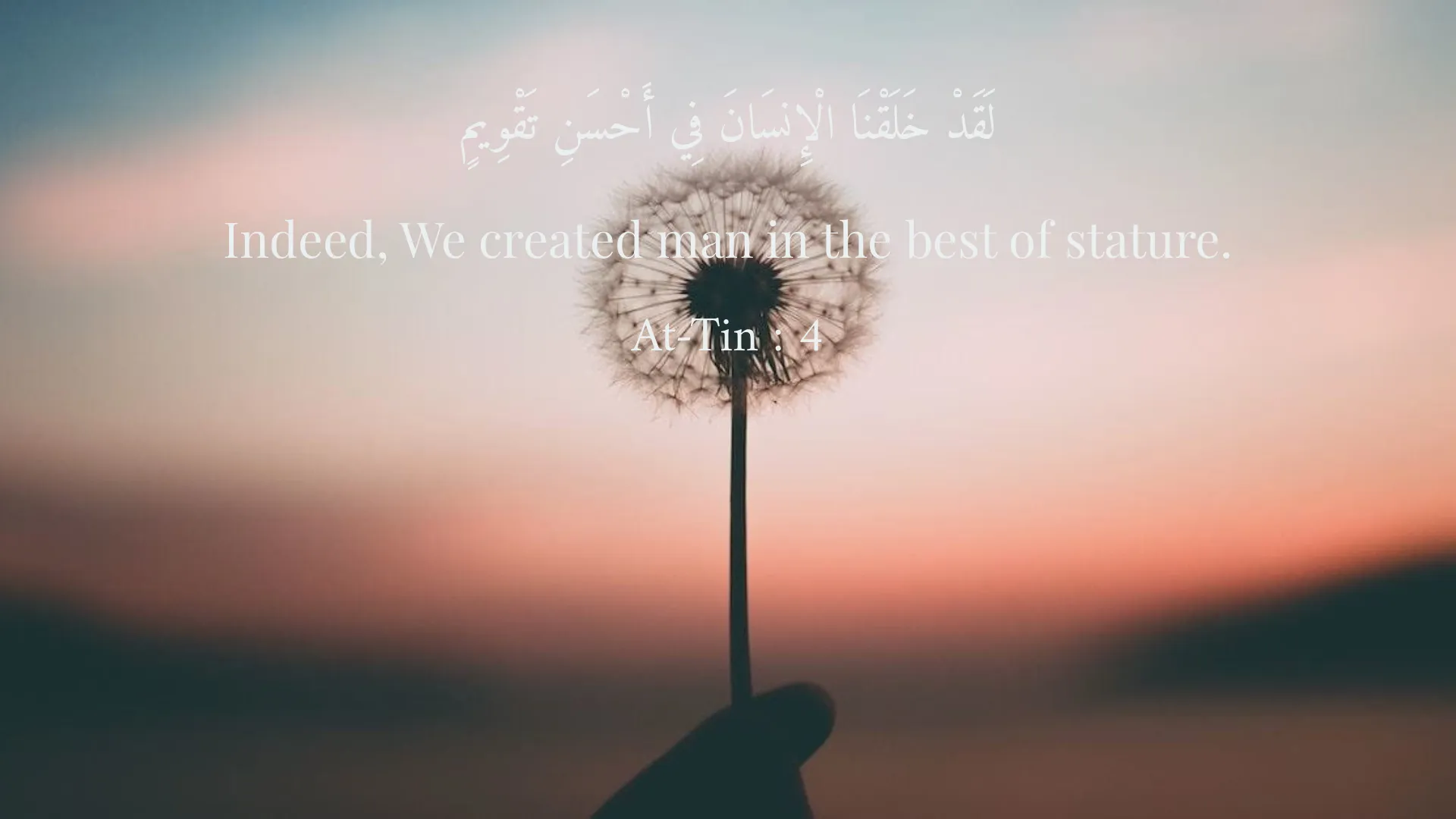
لَقَدْ خَلَقْنَا الْإِنسَانَ فِي أَحْسَنِ تَقْوِيمٍ
Indeed, We created man in the best of stature.
At-Tin : 4
وَلَقَدْ كَرَّمْنَا بَنِي آدَمَ وَحَمَلْنَاهُمْ فِي الْبَرِّ وَالْبَحْرِ وَرَزَقْنَاهُمْ مِنَ الطَّيِّبَاتِ وَفَضَّلْنَاهُمْ عَلَىٰ كَثِيرٍ مِمَّنْ خَلَقْنَا تَفْضِيلًا
And We have certainly honored the children of Adam and carried them on the land and sea and provided for them of the good things and preferred them over much of what We have created, with [definite] preference.
Al-Isra : 70
قُلْ يَا عِبَادِيَ الَّذِينَ أَسْرَفُوا عَلَىٰ أَنْفُسِهِمْ لَا تَقْنَطُوا مِنْ رَحْمَةِ اللَّهِ ۚ إِنَّ اللَّهَ يَغْفِرُ الذُّنُوبَ جَمِيعًا ۚ إِنَّهُ هُوَ الْغَفُورُ الرَّحِيمُ
Say, 'O My servants who have transgressed against themselves [by sinning], do not despair of the mercy of Allah. Indeed, Allah forgives all sins. Indeed, it is He who is the Forgiving, the Merciful.'
Az-Zumar : 53
Short Story
One day, a weary and forlorn dervish, in a dry and barren desert, overcome by exhaustion and despair, sat down and mused to himself: "What am I in this vast universe? Am I not less than an insignificant speck?" Just then, a wise old man passed by. He heard the dervish's lament and kindly asked, "Young man, what sorrow do you bear that makes you so heartbroken?" The dervish replied with regret: "O venerable one, I find myself worthless and without value, as if my existence makes no difference." The old man smiled and said: "My son, know that every particle in this creation has a place and a wisdom. Have you not seen how God creates a small leaf with an exquisite design, and provides for a tiny ant with astonishing foresight? Your worth is not in the size of your body, but in the divine spirit breathed into you, in the heart that can remember God, and in the power with which you can do good. So do not measure yourself by worldly scales, but by the scale of His infinite mercy and wisdom, who created you with a lofty purpose. You are His honored creation and hold a high status with Him." Upon hearing these words, the dervish seemed to come back to life. A breeze of hope blew through his heart, and he understood that his true worth lay not in the eyes of creation, but in the gaze of the Creator, and a deep sense of peace enveloped him.