Quranic Answer
Yes, upon reflecting on the Quranic teachings, it becomes clear that the Holy Quran regards humans as beings with an inherent, innate inclination towards truth and monotheism. This truth-seeking is not merely an acquired characteristic but a deeply rooted dimension of human creation. The Quran not only affirms this trait but repeatedly calls upon humans to utilize this inner potential, encouraging them to think, reason, ponder, and observe the divine signs in the universe and within themselves. This emphasis on contemplation itself is a clear indication that humanity possesses the capacity and desire to discover truth within its very essence. One of the most significant Quranic concepts that emphasizes this innate dimension is the concept of "Fitra." In Surah Ar-Rum, verse 30, it states: "So direct your face toward the religion, inclining to truth. [Adhere to] the fitrah of Allah upon which He has created [all] mankind. No change should there be in the creation of Allah. That is the correct religion, but most of the people do not know." This verse explicitly states that humans are created with an intrinsic inclination towards the true religion and monotheism. This fitra is a pristine, original state that naturally guides humanity towards accepting the One God and divine truths, unless external factors and incorrect upbringing divert it. This fitra is precisely the internal driving force behind the quest for truth. Furthermore, the Quran, in numerous verses, emphasizes the importance of intellect and contemplation. More than 700 times, the Quran uses terms such as "aql" (intellect), "fikr" (thought), "tadabbur" (pondering), "tadhakkur" (remembrance/reflection), and their derivatives. This extensive repetition signifies the high value placed on thinking and rationality in the Quranic perspective. Humans are invited to observe their surroundings, the creation of the heavens and the earth, natural phenomena like rain, winds, ships in the sea, and even their own creation, with careful attention. They are encouraged to use these as "ayat" (signs) to arrive at the truth. For instance, in Surah Al-Baqarah, verse 164, it states: "Indeed, in the creation of the heavens and the earth, and the alternation of night and day, and the [sailing of] ships through the sea with that which benefits humanity, and what Allah has sent down from the sky of rain, giving life thereby to the earth after its lifelessness and dispersing therein all [kinds of] moving creatures, and the [direction of] the winds and the clouds controlled between the heaven and the earth – are signs for a people who use reason." This verse explicitly states that these phenomena do not merely exist; rather, for those who reason, they contain signs that guide them towards truth. In addition, the Quran repeatedly calls upon humans to reflect on their own existence. In Surah Adh-Dhariyat, verses 20 and 21, it declares: "And on the earth are signs for those who are certain [in faith], and in yourselves. Then will you not see?" This invitation to introspection and to discover the wonders of one's own being is a profound form of truth-seeking. Self-knowledge is the key to knowing the Lord, and this path originates from humanity's truth-seeking fitra. Conversely, the Quran often admonishes those who fail to use their intellect or deliberately ignore the truth. They are described as being "deaf, dumb, and blind," and the Quran states that they are unable to comprehend truths because they do not utilize their perceptive and rational faculties. This admonition itself underscores that humans are equipped with the necessary tools and capacity to grasp truth, and the failure to use them is a choice that leads to misguidance. Therefore, from a Quranic perspective, humans are created with an internal yearning to find meaning, purpose, and the truth of creation. Divine revelation is also sent to complement and guide this innate truth-seeking, paving the way for humanity to achieve true understanding and knowledge of God. This is a continuous and dynamic journey that spans human life, commencing from the very moment of creation. In conclusion, the Holy Quran not only considers humans as inherently truth-seeking beings but regards this characteristic as an integral part of their creation. This innate desire for knowledge, coupled with the faculty of reason bestowed upon them by God, enables humans to embark on the path of discovering truth and to move towards a deeper understanding of their Creator and the ultimate purpose of their lives. This perspective also places a significant responsibility on humanity: the responsibility to utilize these divine gifts to attain genuine insight and true faith.
Related Verses
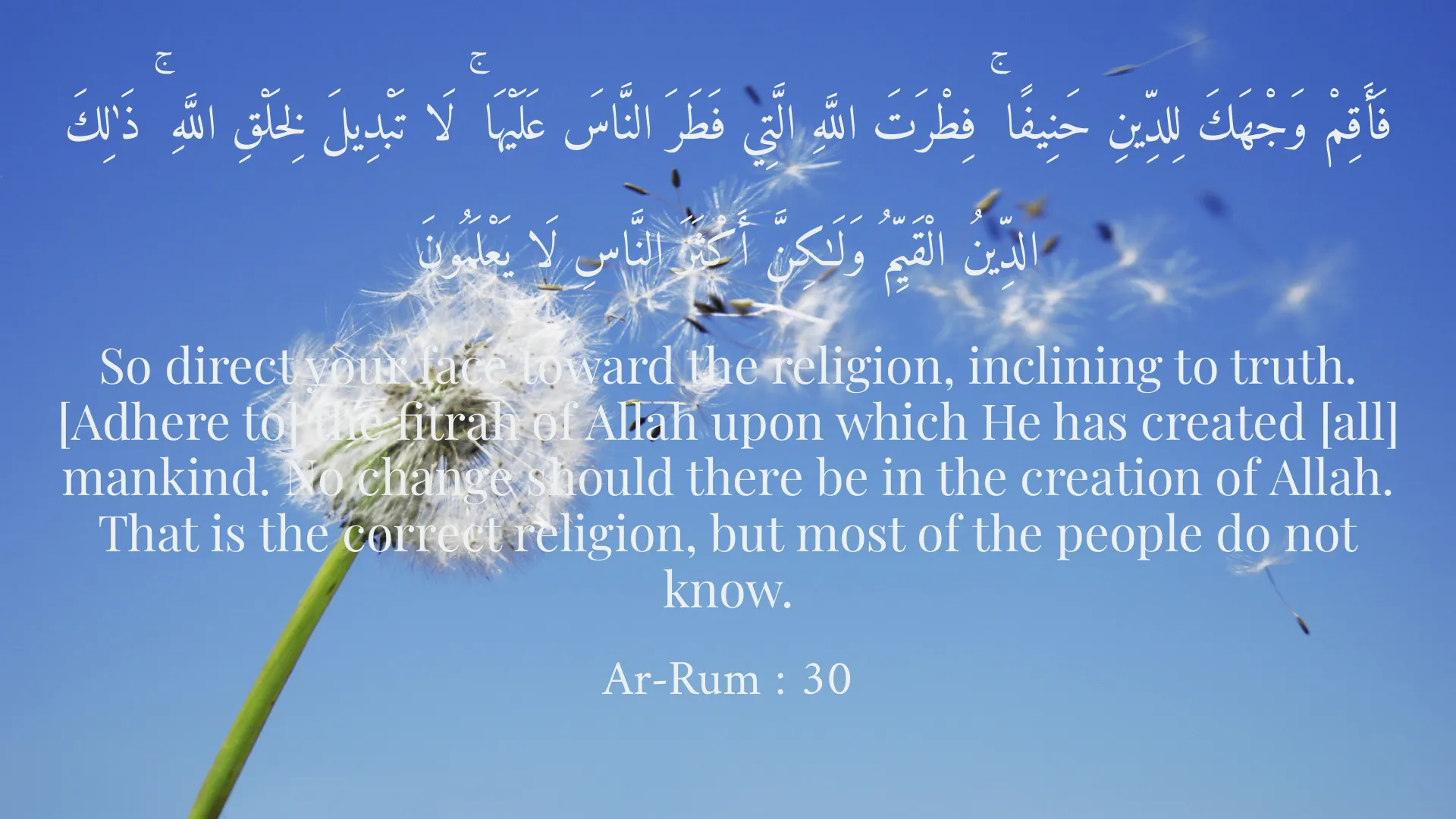
فَأَقِمْ وَجْهَكَ لِلدِّينِ حَنِيفًا ۚ فِطْرَتَ اللَّهِ الَّتِي فَطَرَ النَّاسَ عَلَيْهَا ۚ لَا تَبْدِيلَ لِخَلْقِ اللَّهِ ۚ ذَٰلِكَ الدِّينُ الْقَيِّمُ وَلَٰكِنَّ أَكْثَرَ النَّاسِ لَا يَعْلَمُونَ
So direct your face toward the religion, inclining to truth. [Adhere to] the fitrah of Allah upon which He has created [all] mankind. No change should there be in the creation of Allah. That is the correct religion, but most of the people do not know.
Ar-Rum : 30
إِنَّ فِي خَلْقِ السَّمَاوَاتِ وَالْأَرْضِ وَاخْتِلَافِ اللَّيْلِ وَالنَّهَارِ وَالْفُلْكِ الَّتِي تَجْرِي فِي الْبَحْرِ بِمَا يَنفَعُ النَّاسَ وَمَا أَنزَلَ اللَّهُ مِنَ السَّمَاءِ مِن مَّاءٍ فَأَحْيَا بِهِ الْأَرْضَ بَعْدَ مَوْتِهَا وَبَثَّ فِيهَا مِن كُلِّ دَابَّةٍ وَتَصْرِيفِ الرِّيَاحِ وَالسَّحَابِ الْمُسَخَّرِ بَيْنَ السَّمَاءِ وَالْأَرْضِ لَآيَاتٍ لِّقَوْمٍ يَعْقِلُونَ
Indeed, in the creation of the heavens and the earth, and the alternation of night and day, and the [sailing of] ships through the sea with that which benefits humanity, and what Allah has sent down from the sky of rain, giving life thereby to the earth after its lifelessness and dispersing therein all [kinds of] moving creatures, and the [direction of] the winds and the clouds controlled between the heaven and the earth – are signs for a people who use reason.
Al-Baqarah : 164
وَفِي الْأَرْضِ آيَاتٌ لِّلْمُوقِنِينَ
And on the earth are signs for those who are certain [in faith],
Adh-Dhariyat : 20
وَفِي أَنفُسِكُمْ ۚ أَفَلَا تُبْصِرُونَ
and in yourselves. Then will you not see?
Adh-Dhariyat : 21
Short Story
It is narrated that one day, a wise man was strolling in a garden, much like those described in Saadi's Bustan, observing every leaf and branch with keen attention. A student accompanying him asked, "Master, what do you seek in these simple trees?" The wise man smiled and replied, "My child, everything in the world is a sign for awakened hearts. In the falling leaves, in the blooming buds, in the flight of birds, all wisdom is hidden for one who has a discerning eye and a truth-seeking heart. One who does not seek truth within themselves and their surroundings will never attain it, even if they read all the books in the world." Upon hearing this, the student fell into deep thought and understood that the quest for truth is a journey that begins within oneself and extends in every direction, and its key lies in curiosity and contemplation.