Quranic Answer
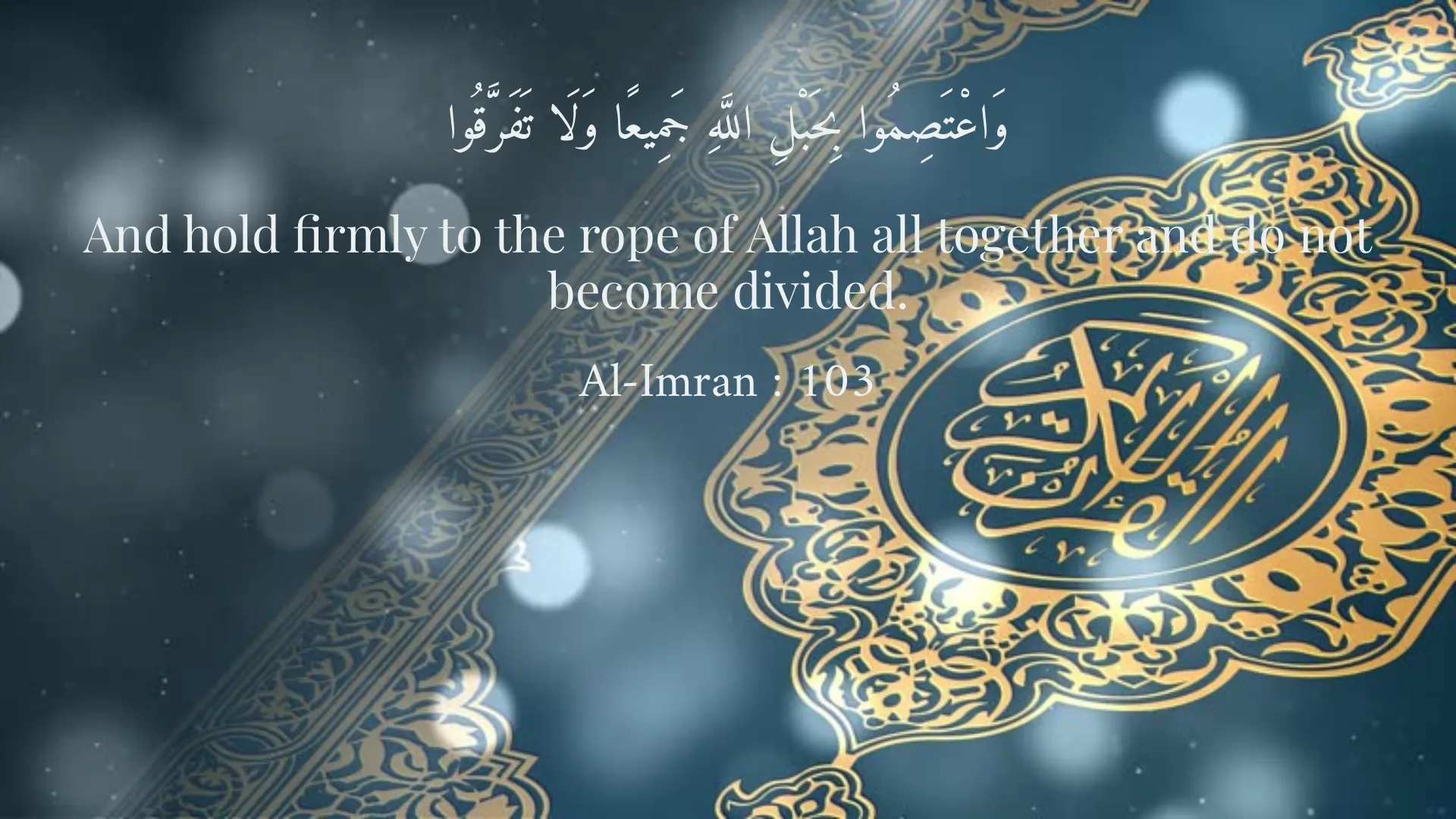
The concept of collective work and cooperation is profoundly embedded within the teachings of the Holy Quran, making it a vital aspect of Islamic philosophy. Unity is not merely an ideal but a divine mandate that serves as a cornerstone of Islamic society. This article explores the extensive significance of teamwork and collaboration as highlighted in the Quran, focusing on its implications in contemporary life and its potential to foster social change. In Islam, the idea of working together towards common goals is founded on the belief that the strength of a community lies in its unity. As highlighted in Surah Al-Imran, verse 103, Allah states: 'And hold firmly to the rope of Allah all together and do not become divided.' This verse encapsulates the importance of unity among Muslims. It serves as a clarion call for believers to resist division, which can lead to disunity and weaken their collective strength. The imagery of holding onto the 'rope of Allah' signifies that when individuals come together in faith and purpose, they forge a strong bond that is unbreakable and filled with divine support. The necessity for unity finds further emphasis in the Quran when Allah advises the Prophet Muhammad, as noted in Surah Al-Imran, verse 159: 'So by mercy from Allah, [O Muhammad], you were lenient with them.' This verse reflects the essence of compassion and collaboration in building and nurturing positive relationships within the community. It stresses that success is inherently linked to the spirit of teamwork, where collective action is propelled by mutual respect, kindness, and understanding. Such attributes are indispensable for fostering an environment where collaboration leads to greatness. Collective work, as emphasized in Islamic tradition, acts as a formidable foundation for enhancing social cohesion. In a world increasingly characterized by individualism and fragmentation, the Quran’s perspective provides an alternative narrative: one where communities are strengthened through joint efforts to tackle common challenges. This is particularly salient in Surah Al-Ma'idah, verse 2, which states: 'And cooperate in righteousness and piety.' The encouragement to engage in righteous deeds and to work together towards beneficial goals serves as a driving force for progress within a community. Muslims are reminded that their efforts bear more fruit when executed together, as collaboration intensifies the impact of their good deeds. Historically, Islamic civilization has thrived on the principles of teamwork and solidarity. Many achievements in various fields, including science, arts, and culture, can be attributed to collaborative efforts among scholars, artists, and philosophers. For instance, during the Golden Age of Islam, universities became centers of knowledge where individuals from diverse backgrounds worked together to advance learning and discovery. These collaborative endeavors were fueled by shared goals and a commitment to the betterment of society as a whole. The relevance of collective work is not confined to historical contexts; it extends seamlessly into today's world. In our contemporary society, the need for cooperation is more pronounced than ever. Whether addressing climate change, poverty, or social injustice, the complexities of these issues necessitate a collaborative approach that draws on the strengths and resources of diverse groups. The Islamic principle of unity and teamwork can serve as a powerful framework for modern collaborations that seek to create positive change. For instance, interfaith dialogues and community service projects unite individuals from varied backgrounds with a mutual aim of fostering understanding and goodwill across divides. Moreover, teamwork in Islam is not limited to mere collaboration; it also encompasses leading by example and inspiring others through one’s actions. The leadership demonstrated by Prophet Muhammad serves as a significant example of this principle. His ability to unite diverse tribes under the banner of Islam, fostering a sense of belonging and shared purpose, exemplifies the transformative power of collective effort. Such leaders recognize the importance of listening, encouraging, and uplifting their peers in the pursuit of common objectives, thereby embodying the ideals of cooperation and unity. In addition to social and communal benefits, collective work generates a myriad of blessings, both spiritually and materially. The Quran emphasizes that when individuals come together to strive for goodness and righteousness, they not only contribute positively to society but also draw closer to Allah's mercy and blessings. Verses throughout the Quran correlate intention and action with divine reward, further motivating believers to engage in collaborative efforts that are aligned with their spiritual objectives. Furthermore, teamwork fosters an environment of mutual support and shared responsibility. In working closely with others, individuals develop vital skills such as empathy, leadership, communication, and conflict resolution. These skills are essential not only in the realm of community service but in navigating various aspects of life, including the workplace and family dynamics. The values of patience, perseverance, and forgiveness that emerge from collaboration ultimately enrich one's personal growth and spiritual journey. Conclusion: In essence, the concept of collective work and cooperation is intricately linked to the core values of Islam. The Quran repeatedly emphasizes the vital importance of unity, teamwork, and collaboration in the pursuit of goodness, underscoring that collective efforts yield greater blessings and success. As Muslims navigate the complexities of the modern world, the teachings of the Quran remain highly relevant, reinforcing that by coming together, supporting one another, and standing united, they can transform their communities and foster a legacy of positive change that extends beyond their immediate circles. Through the enduring principles of collaboration and cohesion, the path to a flourishing and harmonious society can be achieved, fulfilling the divine promise of support and success that accompanies unity.
Related Verses
وَاعْتَصِمُوا بِحَبْلِ اللَّهِ جَمِيعًا وَلَا تَفَرَّقُوا
And hold firmly to the rope of Allah all together and do not become divided.
Al-Imran : 103
فَبِمَا رَحْمَةٍ مِّنَ اللَّهِ لِنْتَ لَهُمْ
So by mercy from Allah, [O Muhammad], you were lenient with them.
Al-Imran : 159
وَتَعَاوَنُوا عَلَى الْبِرِّ وَالتَّقْوَى
And cooperate in righteousness and piety.
Al-Ma'idah : 2
Short Story
One day, a responsible and kind-hearted man decided to do his utmost to help his community. He gathered with his friends to hold a meeting to discuss the needs of the society. Together, they brainstormed new ideas and arranged programs to assist others. This collaboration not only alleviated the problems in the community but also fostered greater friendship and unity among the people.