Quranic Answer
The Holy Quran, as a divine guide, provides a comprehensive set of principles and directives for all aspects of human life, including social interactions and responsibility towards the community. Although the term 'voluntary work' is not explicitly mentioned in the Quranic verses, its spirit and essence – that is, helping fellow human beings, cooperating in good deeds, and spending from what one possesses – are clearly and emphatically encouraged. Quranic teachings aim to cultivate believers who not only care for their own well-being but also strive for the betterment of the society in which they live. This active and responsible approach provides strong foundations for the modern concept of 'voluntary work' in Islam. One of the most central Quranic concepts deeply connected to voluntary work is 'Ihsaan' (benevolence or excellence). Ihsaan goes beyond mere justice; while justice means giving everyone their due, Ihsaan implies doing something beyond what is owed, out of generosity and kindness. The Quran repeatedly invites believers to Ihsaan and declares it to be a beloved attribute to God. In Surah Al-Baqarah, verse 195, it states: "And do good; indeed, Allah loves the doers of good." This invitation to Ihsaan encompasses every type of goodness and sacrifice that an individual voluntarily and sincerely undertakes for the well-being of others. Whether it involves material aid, dedicating time, sharing knowledge, or offering skills, all these fall under the umbrella of Ihsaan. Voluntary work, at its core, is an act of Ihsaan, performed by an individual willingly for the collective benefit, without expecting material reward or gratitude. This act not only benefits the recipient but also refines the soul of the benefactor, granting them a sense of inner peace and satisfaction. Another fundamental principle underpinning collective and voluntary action is 'Taa'wun 'alal Birr wal-Taqwa' (cooperation in righteousness and piety). In Surah Al-Ma'idah, verse 2, Allah states: "And cooperate in righteousness and piety, but do not cooperate in sin and aggression." This verse provides a clear directive for collective participation in positive and constructive endeavors. Voluntary work, by its very nature, is a group and participatory activity where individuals come together with the shared goal of helping society and solving its problems. This cooperation can manifest in various forms, such as charitable organizations, disaster relief groups, educational programs for needy children, or environmental initiatives. This verse teaches believers that their social responsibility is not limited to individual religious obligations but extends to active participation in building a better and more just society. Furthermore, the concept of 'Infāq fi Sabilillah' (spending in the way of Allah) extensively covers voluntary work. Although 'Infāq' is often interpreted as financial giving, in its broader Quranic sense, it includes any form of spending or sacrifice in the way of Allah, whether it be wealth, life, time, knowledge, experience, or skills. The Quran emphasizes the immense rewards for Infāq. In Surah Al-Baqarah, verse 261, we read: "The example of those who spend their wealth in the way of Allah is like a seed [of grain] which grows seven spikes; in each spike is a hundred grains. And Allah multiplies [His reward] for whom He wills. And Allah is all-Encompassing and Knowing." This multiplied reward is not only for financial spending but for any type of sacrifice and dedication in the way of Allah, including the time and energy devoted to voluntary work. These verses serve as a strong incentive for participating in benevolent activities, demonstrating that every effort, however small, made in the way of Allah will be manifold in reward. Moreover, the Quran repeatedly emphasizes the necessity of attending to the rights of the underprivileged and vulnerable segments of society. Orphans, the needy, captives, travelers, and the poor have always received special attention in the Quran. In Surah Al-Insan, verses 8 and 9, the pinnacle of altruism and selflessness in helping the needy is depicted: "And they give food, in spite of love for it, to the needy, the orphan, and the captive, [saying], 'We feed you only for the countenance of Allah. We wish not from you reward or gratitude.'" This spirit of sacrifice and assistance without expecting recompense forms the basis of voluntary work. Whether through providing food, education, healthcare, or assisting with home repairs, all such activities align with these Quranic directives. 'Amr bil Ma'ruf wa Nahi anil Munkar' (enjoining good and forbidding evil) is another social dimension of Islam that can manifest as voluntary work. This duty is not limited to verbal admonition but includes active participation in reforming society, promoting moral values, and combating corruption and wrongdoing. In Surah Aal-Imran, verse 104, Allah states: "And let there be [arising] from you a nation inviting to [all that is] good, enjoining what is right and forbidding what is wrong, and those will be the successful." This verse emphasizes the necessity of a group of people taking on the responsibility of inviting to good and combating evil. These groups can operate as voluntary organizations aimed at improving the cultural, ethical, and health standards of society. This act is not only a religious duty but also a powerful tool for building a healthy and vibrant society. Ultimately, the overarching philosophy of 'Khilafah' (stewardship) and 'Amal Salih' (righteous deeds) in the Quran provides a solid foundation for voluntary work. As Allah's vicegerents on Earth, humans bear the responsibility for its cultivation and the care of Allah's creations. Performing 'Amal Salih,' which is repeatedly mentioned alongside faith in the Quran, is not limited to individual acts of worship but includes any action that benefits the individual, family, and society. Voluntary work is a clear manifestation of 'Amal Salih' that brings no personal gain but is entirely for the benefit of others and society. These good deeds deepen one's faith and guide them toward success in this world and the hereafter. From this perspective, the Quran not only holds a positive view of voluntary work but considers it an integral part of social responsibility and true servitude in Islam, encouraging believers to actively participate in this field. These activities are a practical manifestation of faith and a reflection of the mercy that Allah bestows upon His servants, which humans should also embrace and extend to others.
Related Verses
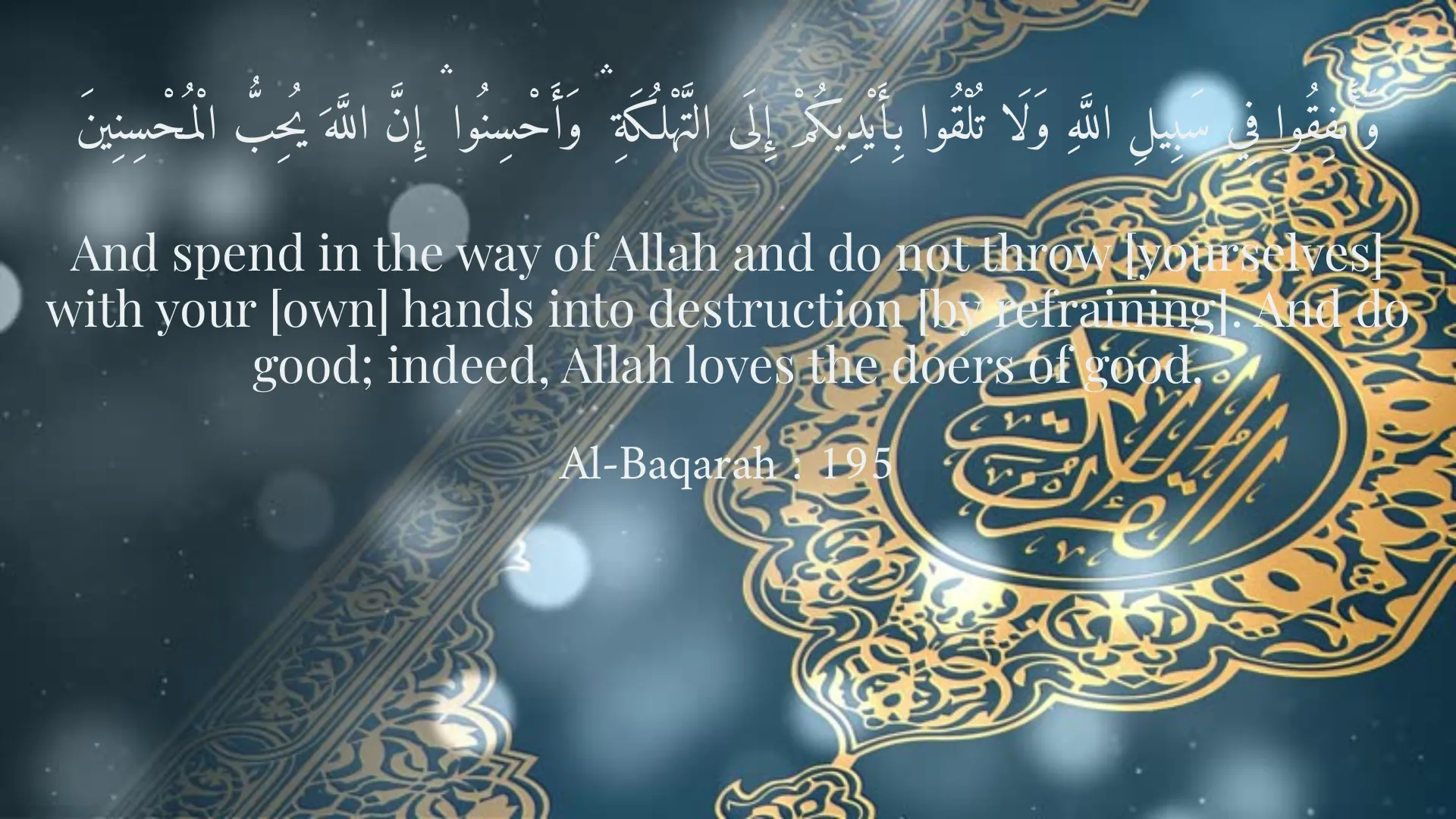
وَأَنفِقُوا فِي سَبِيلِ اللَّهِ وَلَا تُلْقُوا بِأَيْدِيكُمْ إِلَى التَّهْلُكَةِ ۛ وَأَحْسِنُوا ۛ إِنَّ اللَّهَ يُحِبُّ الْمُحْسِنِينَ
And spend in the way of Allah and do not throw [yourselves] with your [own] hands into destruction [by refraining]. And do good; indeed, Allah loves the doers of good.
Al-Baqarah : 195
يَا أَيُّهَا الَّذِينَ آمَنُوا لَا تُحِلُّوا شَعَائِرَ اللَّهِ وَلَا الشَّهْرَ الْحَرَامَ وَلَا الْهَدْيَ وَلَا الْقَلَائِدَ وَلَا آمِّينَ الْبَيْتَ الْحَرَامَ يَبْتَغُونَ فَضْلًا مِّن رَّبِّهِمْ وَرِضْوَانًا ۚ وَإِذَا حَلَلْتُمْ فَاصْطَادُوا ۚ وَلَا يَجْرِمَنَّكُمْ شَنَآنُ قَوْمٍ أَن صَدُّوكُمْ عَنِ الْمَسْجِدِ الْحَرَامِ أَن تَعْتَدُوا ۘ وَتَعَاوَنُوا عَلَى الْبِرِّ وَالتَّقْوَىٰ ۖ وَلَا تَعَاوَنُوا عَلَى الْإِثْمِ وَالْعُدْوَانِ ۚ وَاتَّقُوا اللَّهَ ۖ إِنَّ اللَّهَ شَدِيدُ الْعِقَابِ
O you who have believed, do not violate the rites of Allah or [the sanctity of] the sacred month or [hinder] the sacrificial animals [from reaching the Kaaba] or the garlanded [animals] or those intending [to visit] the Sacred House, seeking bounty from their Lord and [His] approval. But when you come out of ihram, then [you may] hunt. And do not let the hatred of a people for having obstructed you from al-Masjid al-Haram lead you to transgress. And cooperate in righteousness and piety, but do not cooperate in sin and aggression. And fear Allah; indeed, Allah is severe in penalty.
Al-Ma'idah : 2
وَيُطْعِمُونَ الطَّعَامَ عَلَىٰ حُبِّهِ مِسْكِينًا وَيَتِيمًا وَأَسِيرًا
And they give food, in spite of love for it, to the needy, the orphan, and the captive,
Al-Insan : 8
إِنَّمَا نُطْعِمُكُمْ لِوَجْهِ اللَّهِ لَا نُرِيدُ مِنكُمْ جَزَاءً وَلَا شُكُورًا
[Saying], 'We feed you only for the countenance of Allah. We wish not from you reward or gratitude.'
Al-Insan : 9
Short Story
One day, Saadi Shirazi was asked, 'Which act is most pleasing to God?' With a warm smile, he replied, 'Bringing joy to a sorrowful heart.' He continued, 'Relieving the need of a poor person is better than a hundred cycles of supererogatory prayer. Do not imagine that merely fasting and praying will bring you closer to God; true devotion lies in serving His creation. If you wish to attain closeness to the Divine, then serve His creatures.' This beautiful story reminds us that voluntary work, meaning helping fellow human beings with pure intention, is one of the noblest forms of worship, bringing God's pleasure and illuminating hearts.