Quranic Answer
The importance of child upbringing has long been acknowledged as a fundamental principle in nurturing responsible, ethical, and contributing members of society. Within Islamic teachings, the Holy Quran serves as a vital source of wisdom, laying down foundational principles that prioritize the moral and spiritual development of children. The Quran emphasizes the role of parents as pivotal figures in the upbringing of children, reinforcing their responsibilities in instilling values that will guide their offspring throughout their lives. Through its verses, the Quran aims to equip parents with the necessary guidance to ensure their children grow into well-rounded individuals, embodying the values of love, responsibility, and righteousness. The divine message addresses parents directly, emphasizing their duty and responsibility in nurturing their children. In Surah Luqman, verses 13 to 19, we find a profound dialogue between Luqman, a wise figure in Islamic tradition, and his son. These verses highlight the timeless wisdom that Luqman imparts, encompassing the core principles that should be integral to any child's upbringing. For instance, the first piece of advice Luqman gives to his son is to worship God, reinforcing the significance of faith in a child's life. This advice underscores the belief that a strong spiritual foundation is paramount. It is not merely about performing rituals but rather about developing a deep connection with God through sincere worship and consciousness. Alongside the importance of worship, Luqman exhorts his son to be good to his parents, highlighting the significance of filial piety and respect for one's family. This counsel is reflective of a broader theme within the Quran: that the relationship between children and their parents is sacred and should be built on love, respect, and understanding. By instilling these values, parents can foster a loving environment that encourages open communication and trust between themselves and their children. Verse 31 of Surah At-Tahrim further stresses the notion of responsibility that parents hold in safeguarding their children’s spiritual well-being. The command to 'protect your children from the fire of Hell' serves as a powerful reminder of the implications of parental influence. This verse indicates that parenting is not just about providing for physical needs but also entails actively guiding children in avoiding sinful behavior and moral corruption. It reinforces the idea that parents must be proactive in creating an environment that shields children from negative influences that may lead them astray from righteousness. Moreover, the Quran’s emphasis on nurturing children in a society imbued with love and wisdom highlights the collective responsibility of the community as well. It suggests that child upbringing should not be done in isolation but rather supported by familial, educational, and societal frameworks that encourage virtuous behavior and personal growth. Parents are encouraged to create a supportive environment where children can thrive, empowered by the strength of communal values and guidance. This approach contrasts with the often individualistic views prevalent in many modern societies, reminding us that children are not merely products of their environment but are also formed by the ethos of the community surrounding them. In addition to moral and ethical teachings, the Quran also stresses the importance of setting a good example. Children are impressionable and often replicate the behaviors of their parents. Therefore, the Quran encourages parents to embody the values they wish to instill. By practicing what they preach, parents align their actions with their words, reinforcing the messages they impart. It is essential for parents to exemplify honesty, kindness, compassion, and just behavior, for these attributes serve as the model that children will aspire to emulate in their own lives. The principle of responsibility extends to teaching children the importance of ethical behavior. The Quran advocates for responsible actions that benefit not only the individual but society as a whole. Parents are charged with the task of instilling a strong sense of social responsibility in their children. This includes highlighting the importance of kindness, charity, and community service—values that emphasize the Islamic principle of helping others and fostering a spirit of solidarity. Furthermore, the Quran encourages dialogue and education within the parent-child relationship. Rather than solely dictating behavior, parents should engage children in thoughtful discussions about values and morals, allowing them to understand the reasoning behind these teachings. Such interactions promote critical thinking and moral reasoning in children, preparing them to face life’s challenges with discernment and integrity. Ultimately, child upbringing in the context of Quranic teachings is a comprehensive endeavor that goes beyond mere discipline or instruction. It requires a nuanced understanding of a child's emotional, intellectual, and spiritual needs. When parents approach child-rearing as a holistic journey focused on love, guidance, and responsibility, they cultivate fertile ground for raising individuals who not only abide by moral and ethical standards but also contribute positively to society. Children imbued with these teachings become effective, compassionate leaders who carry forward the values instilled in them to future generations. In conclusion, the principles of child upbringing as outlined in the Holy Quran resonate deeply in today's world and remain essential for nurturing not only the next generation but society as a collective. The framework provided by the Quran invites parents to engage profoundly with their children’s upbringing, nurturing them in a manner rich with love, responsibility, and moral guidance. Through unwavering commitment to these teachings, parents can contribute to a brighter and more ethical society.
Related Verses
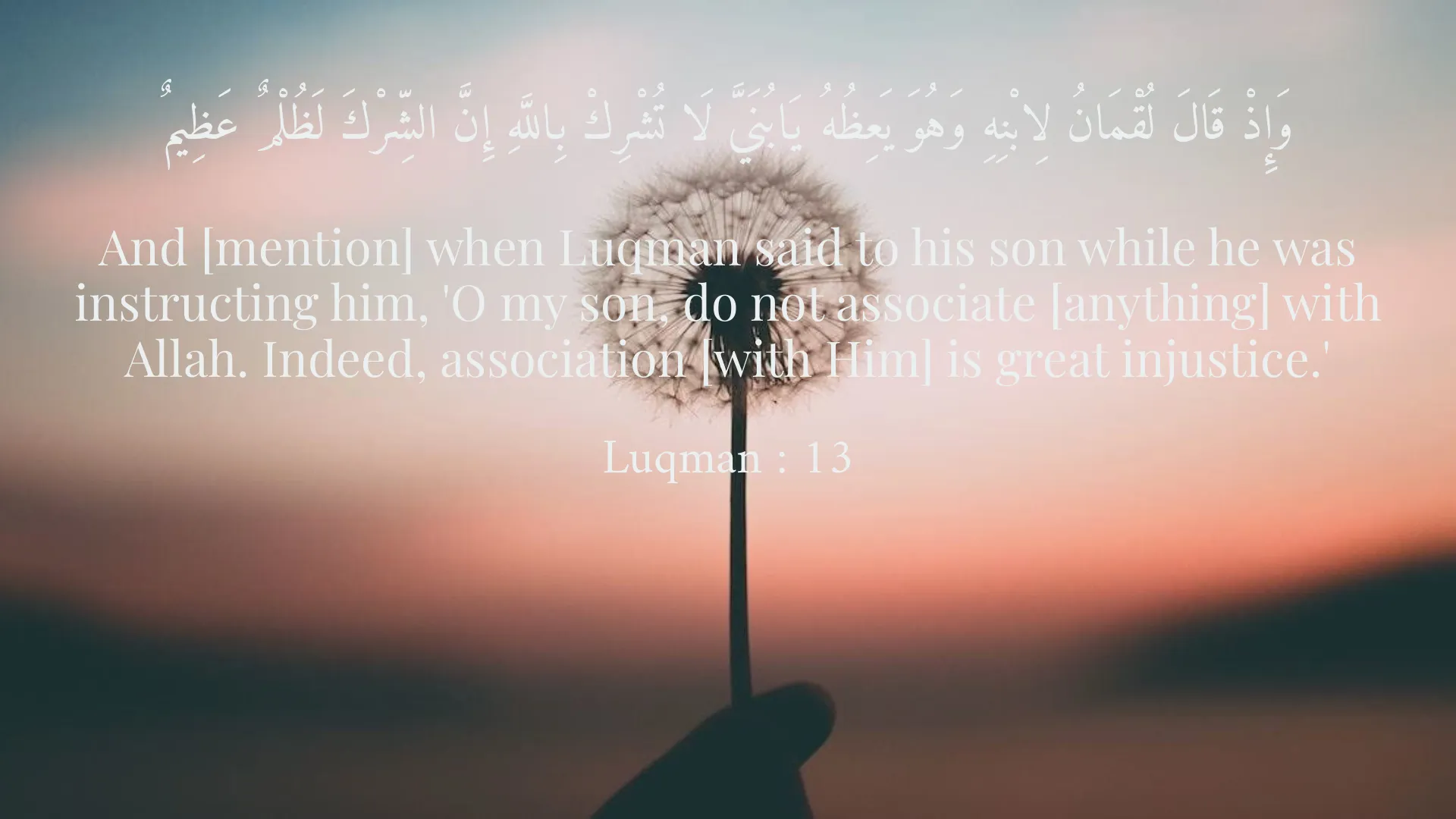
وَإِذْ قَالَ لُقْمَانُ لِابْنِهِ وَهُوَ يَعِظُهُ يَابُنَيَّ لَا تُشْرِكْ بِاللَّهِ إِنَّ الشِّرْكَ لَظُلْمٌ عَظِيمٌ
And [mention] when Luqman said to his son while he was instructing him, 'O my son, do not associate [anything] with Allah. Indeed, association [with Him] is great injustice.'
Luqman : 13
يَا أَيُّهَا الَّذِينَ آمَنُوا قُوا أَنفُسَكُمْ وَأَهْلِيكُمْ نَارًا...
O you who have believed, protect yourselves and your families from a Fire...
At-Tahrim : 6
وَوَالِدَاتٌ يُرْضِعْنَ أَولَادَهُنَّ حَوَاليَ نِعْشٍ مُنْتَحَوٌ...
Mothers may breastfeed their children two complete years for whoever wishes to complete nursing...
Al-Baqarah : 233
Short Story
Once, in a small village, there lived a man named Hassan who was very charitable and pious. He always advised his children to value ethics and piety in life. Hassan would read Quranic verses to his children and encourage them to love and assist one another. One day, one of his children asked him, 'Father, why should we always be kind to others?' Hassan smiled and said, 'Because love always brings blessings and happiness in our lives.' This story illustrates that through proper teaching and love, one can raise virtuous and effective children.