Quranic Answer
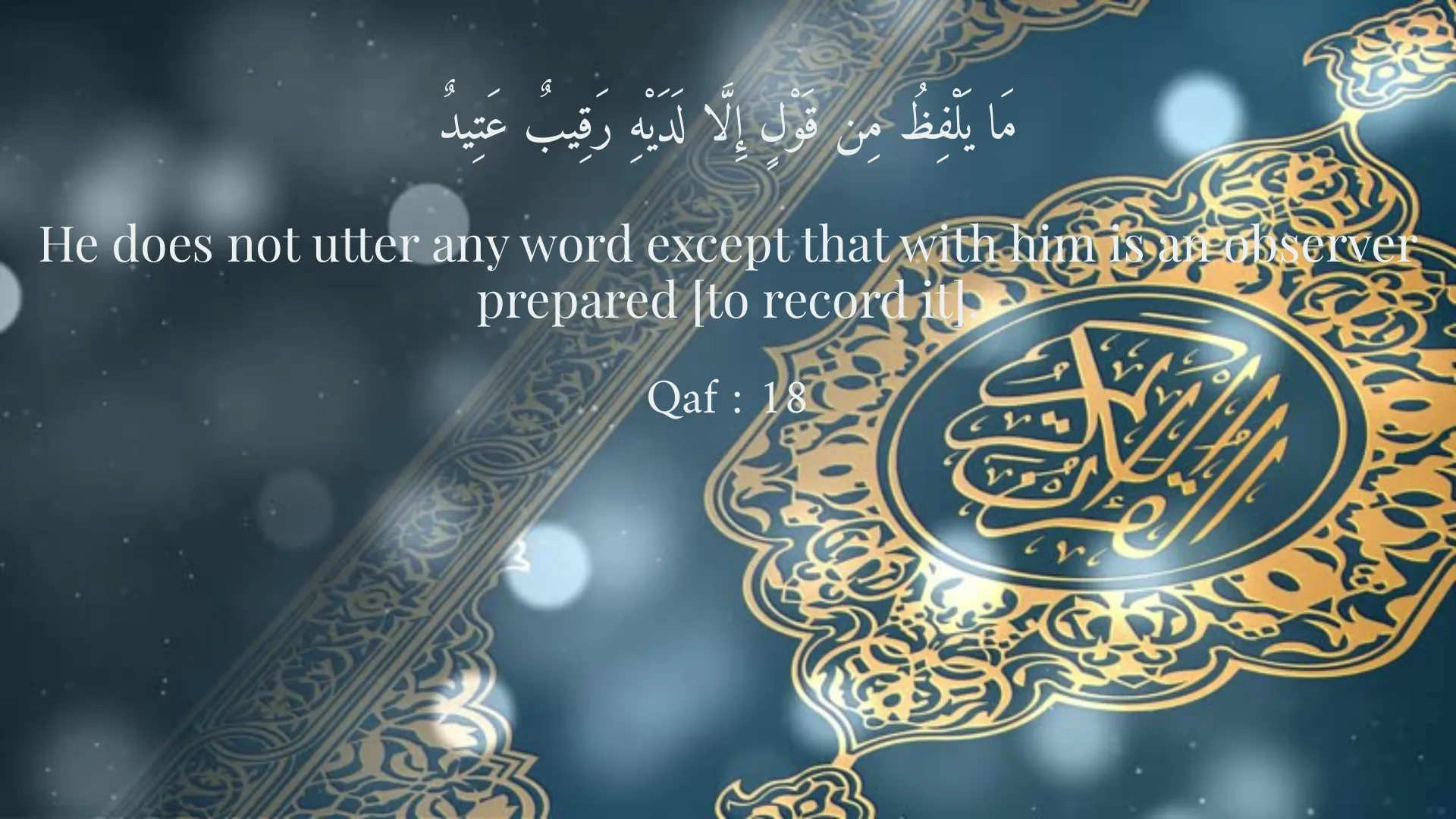
The Holy Quran, as a divine guide for all times and ages, does not explicitly mention concepts like the 'online world,' 'internet,' or 'virtual space' as they did not exist during its revelation. However, its universal principles and teachings regarding speech, linguistic ethics, and the impact of words are entirely applicable and relevant to any communication platform, including today's online world. Indeed, the Quran has meticulously addressed various dimensions of speaking and its effects on individuals and society, and these teachings have gained even greater significance in the digital age. One of the most crucial principles emphasized by the Quran is accountability for every word uttered. In Surah Qaf, verse 18, Allah states: "Mā yalfizu min qawlin illā ladayhi raqībun 'atīd" (He does not utter any word except that with him is an observer prepared [to record it]). This verse forms the foundational basis for moral responsibility concerning our speech. In the online world, every word, every post, every comment, and every message we publish is, in a sense, 'recorded' and leaves a lasting impact. This 'observer prepared' can refer to the divine recording of our deeds and words, for which we will be questioned on the Day of Judgment, and it also alludes to the permanent digital footprint we leave in cyberspace, which can persist indefinitely and have worldly consequences. The Quran also places strong emphasis on the necessity of truthfulness and avoiding falsehoods and rumor-mongering. In Surah Al-Hujurat, verse 6, it states: "Yā ayyuhā alladhīna āmanū in jā'akum fāsiqun binaba'in fatabayyanū an tuṣībū qawman bijahālatin fatuṣbiḥū 'alā mā fa'altum nādimīn" (O you who have believed, if there comes to you a disobedient one with information, investigate, lest you harm a people out of ignorance and then become regretful for what you have done). This verse is a vital guide in the age of misinformation and fake news in the online world. Users of social media must verify the accuracy of any news before disseminating it to avoid harming society and individuals. Spreading falsehoods and rumors online can propagate rapidly, damaging reputations and even undermining social security. Furthermore, the Quran attaches special importance to the nature and quality of speech. Numerous verses emphasize 'qawl hasan' (good speech). In Surah Al-Baqarah, verse 83, we read: "Wa qūlū lil-nāsi ḥusnan" (And speak to people good words). This includes refraining from vulgar, offensive, mocking, and abusive language. In an online environment where individuals are often hidden behind screens, there is a tendency to use harsh and impolite words. The Quran teaches us that we should always observe decorum and respect in our speech, whether in the physical or virtual world. Mocking others (Al-Hujurat, 11), backbiting and speaking ill behind one's back (Al-Hujurat, 12), and making false accusations (An-Nur, 19) are all major sins strongly prohibited in the Quran, and unfortunately, they frequently occur on social media platforms. Additionally, the Quran refers to the powerful influence of words. In Surah Ibrahim, verses 24-26, a beautiful parable is given about good and bad words: "Alam tara kayfa ḍaraba Allāhu mathalan kalimatan ṭayyibatan kashajaratin ṭayyibatin aṣluhā thābitun wa-far'uhā fī al-samā' Tu'tī ukulahā kulla ḥīnin bi-idhni rabbihā ۗ wa-yaḍribu Allāhu al-amthāla lil-nāsi la'allahum yatadhakkarūn Wa mathalu kalimatin khabīthatin kashajaratin khabīthatin ujtuṭṭat min fawqi al-arḍi mā lahā min qarār" (Have you not considered how Allah presents an example: a good word [is] like a good tree, whose root is firmly established and whose branches are in the sky? It yields its fruit every season by permission of its Lord. And Allah presents examples for the people that perhaps they may be reminded. And the example of a bad word is like a bad tree, uprooted from the surface of the earth, not having any stability). These verses clearly demonstrate that our words can be like a fruitful tree, a source of good, blessing, and growth, or like a rootless tree, a cause of corruption, ruin, and instability. In the online world, a good word can inspire thousands, while a destructive word can tear apart a community. The online space is a platform where words, both good and bad, spread with unparalleled speed and leave widespread impacts. In summary, although the Quran does not refer to modern technologies, its comprehensive and profound guidance on speech ethics, accountability for words, the importance of verification, avoidance of verbal harm, and the use of speech to spread good and truth provides an unparalleled framework for 'digital ethics' and the proper use of the power of words in the online world. These teachings remind us that the tongue, whether in the real world or in virtual space, is a divine trust that must be used with care, responsibility, and good intentions.
Related Verses
مَا يَلْفِظُ مِن قَوْلٍ إِلَّا لَدَيْهِ رَقِيبٌ عَتِيدٌ
He does not utter any word except that with him is an observer prepared [to record it].
Qaf : 18
يَا أَيُّهَا الَّذِينَ آمَنُوا إِن جَاءَكُمْ فَاسِقٌ بِنَبَإٍ فَتَبَيَّنُوا أَن تُصِيبُوا قَوْمًا بِجَهَالَةٍ فَتُصْبِحُوا عَلَىٰ مَا فَعَلْتُمْ نَادِمِينَ
O you who have believed, if there comes to you a disobedient one with information, investigate, lest you harm a people out of ignorance and then become regretful for what you have done.
Al-Hujurat : 6
أَلَمْ تَرَ كَيْفَ ضَرَبَ اللَّهُ مَثَلًا كَلِمَةً طَيِّبَةً كَشَجَرَةٍ طَيِّبَةٍ أَصْلُهَا ثَابِتٌ وَفَرْعُهَا فِي السَّمَاءِ
Have you not considered how Allah presents an example: a good word [is] like a good tree, whose root is firmly established and whose branches are in the sky?
Ibrahim : 24
Short Story
In Saadi's Golestan, it is mentioned that a great sage was asked: "Among all the organs of the body, which one suffers the least and brings the most benefit?" He replied: "The one that speaks with goodness, that is, the tongue." And if it speaks ill, it brings great pain and calamity. It is narrated that there was a merchant who suffered greatly from his tongue. Sometimes, with his ill-considered words, he would ruin a reputation, and sometimes he would break a heart. One day, he went to a wise man and sighed, saying: "O wise sage! I am tired of this tongue of mine that always gets me into trouble. Show me a solution!" The sage, with a kind smile, said: "The secret is to rein in your tongue. Just as you can compel it to speak ill, so too can you train it to speak well and appropriately. Know that every word you utter is recorded in the book of existence, and one day you will see its reward or punishment. It is like a seed; if you sow goodness, you will reap goodness, and if you sow evil, you will see nothing but loss." The merchant took heed of the sage's wise counsel and from then on, he was careful with his words. He spoke nothing but good, and his words carried the scent of love and truthfulness. Gradually, his reputation grew, and people trusted him, for they knew that his words were a reflection of his pure soul. This story reminds us that the power of the tongue, whether in face-to-face conversation or in the vast online world, is immense and must be used with care and responsibility.