Quranic Answer
The Holy Quran, as a book of guidance for all ages and places, though it does not explicitly mention 'virtual space' or 'internet,' is rich with ethical and behavioral principles that can serve as astonishing guides for managing emotions and conduct in the digital age and virtual environments. This divine book is built upon human nature and فطرت (innate disposition), and thus its commandments transcend time and place. In fact, what the Quran teaches us is not only applicable to the real world but also perfectly relevant to our interactions in any communication medium, including social networks and digital platforms. One of the most crucial Quranic teachings in this regard is the concept of 'Taqwa' or God-consciousness. Taqwa means refraining from what God has forbidden and performing what He has commanded, and this includes controlling one's tongue and behavior. In virtual spaces, where many individuals might feel anonymous and unaccountable, Taqwa acts as an internal self-monitoring mechanism. When someone believes that God is watching all their actions and words, even in the virtual world, they will be more careful about how they express emotions, share information, and interact with others. This Taqwa serves as a shield against unwarranted anger, accusations, backbiting, and hasty judgments. Quran clearly emphasizes the importance of 'controlling one's tongue' and 'Qawl-e-Karim' (noble speech). Verses like 'Say to people what is good' (Al-Baqarah 83) invite us to speak kindly to others. In virtual spaces, where words spread rapidly and can have profound psychological impacts, this principle is of paramount importance. Before typing and sending any message, one should ask themselves: Is this word good? Does it harm anyone? Does it cause misunderstanding? Does it lead to peace and tranquility instead of fueling animosity? Managing emotions in this context means controlling one's anger even when facing opposing or provocative opinions, and responding with respectful and logical words, or choosing silence if necessary, as Allah describes the servants of the Most Gracious in Surah Al-Furqan, verse 63: 'And when the ignorant address them, they say [nothing but] 'Peace'.' Furthermore, the Quran strongly prohibits 'backbiting' (Gheebat) and 'slander' (Buhtan). Surah Al-Hujurat, verse 12, likens backbiting to eating the flesh of one's dead brother, which is utterly repugnant. In virtual spaces, backbiting and spreading falsehoods (rumors) have become much more common and easier. Hiding behind pseudonyms or anonymous profiles allows some individuals to spread misinformation or defame others without any sense of responsibility. The Quran teaches us to verify the truth of any news before disseminating it (Surah Al-Hujurat, verse 6) and to avoid suspicion and prying into others' private affairs. Emotional management here means controlling unhealthy curiosity, not spreading unverified information, and refraining from fueling rumors and baseless controversies, even if our emotions tempt us to do so. The concept of 'Sabr' (patience) and 'Hilam' (forbearance) is also repeatedly emphasized in the Quran. In the digital world, where reactions are quick and verbal disputes can escalate rapidly, patience helps us not to react immediately to insults or provocations, but rather to reflect and choose the best response. This means managing instantaneous emotions and preventing later regrets. Also, in Surah Al-Imran, verse 134, it describes the characteristics of the righteous as 'Kaazimin al-Ghayz' (those who suppress their anger). This teaching directly refers to controlling and managing the emotion of anger in any environment, including virtual spaces. Before pressing the send button for an angry message, it is necessary to pause for a moment and suppress our anger, to prevent regret and its adverse consequences. In addition, the Quran advises 'moderation' and 'balance' in all matters. Extremism in using virtual spaces, both in terms of time and content, can harm mental health and quality of life. Emotional management here includes recognizing the appropriate time to enter and exit virtual spaces, and avoiding addiction to them, which can lead to anxiety, depression, or loss of real-life connections. This moderation means not becoming overly attached to the approval of others (likes and comments) and not being excessively influenced by unhealthy social comparisons, which are very common in this space. In conclusion, although the Quran does not explicitly speak of 'virtual space,' its general and universal rules regarding ethics, human relations, self-control, and responsibility for words and actions are fully adaptable to the challenges of the modern era. Managing emotions in virtual spaces based on these Quranic principles means: being aware of divine supervision, speaking kindly, avoiding backbiting and slander, patience in the face of adversity, and moderation in using these tools. This approach not only helps maintain an individual's psychological well-being but also contributes to creating a healthier, more positive, and constructive environment in digital settings.
Related Verses
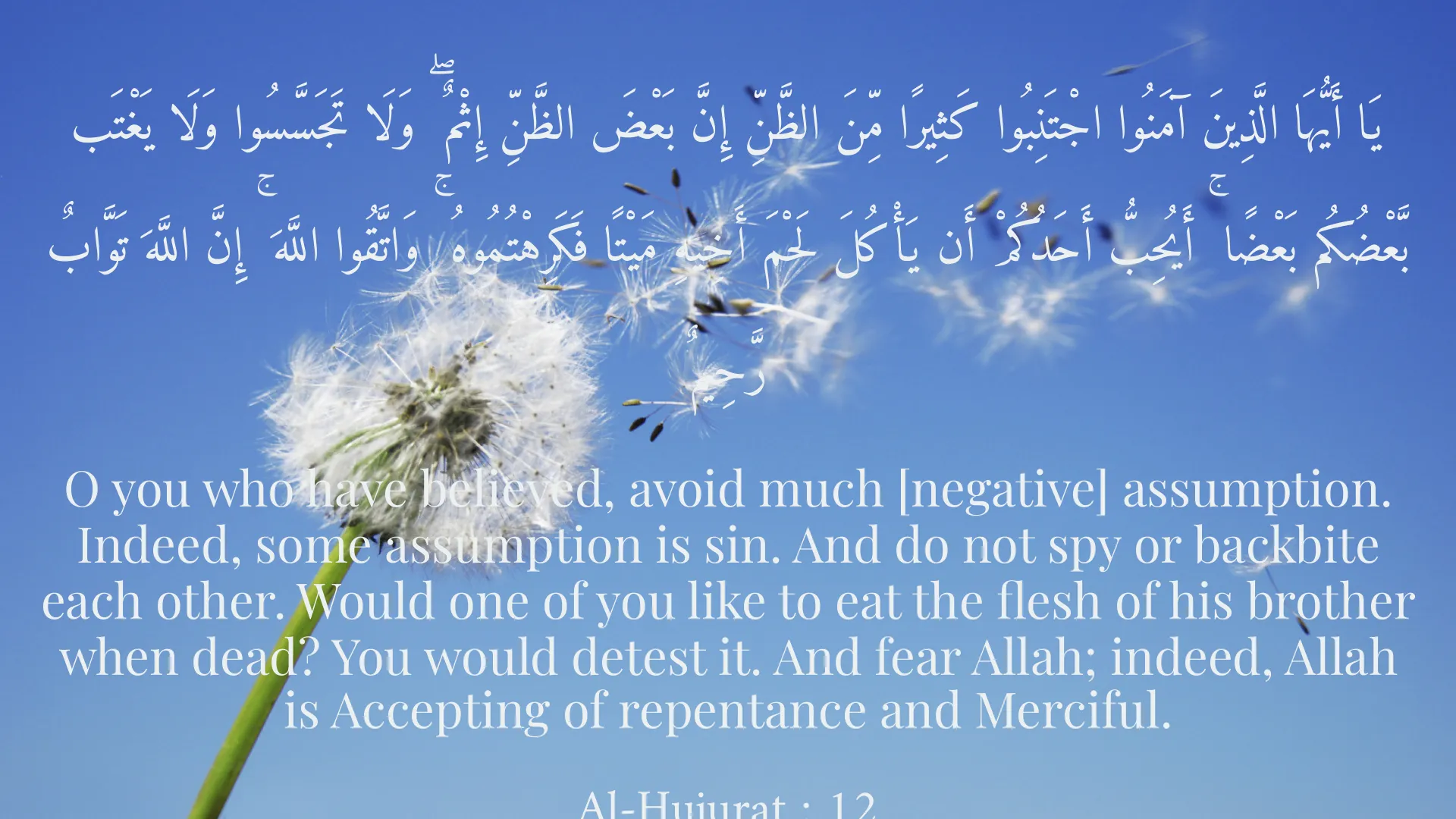
يَا أَيُّهَا الَّذِينَ آمَنُوا اجْتَنِبُوا كَثِيرًا مِّنَ الظَّنِّ إِنَّ بَعْضَ الظَّنِّ إِثْمٌ ۖ وَلَا تَجَسَّسُوا وَلَا يَغْتَب بَّعْضُكُم بَعْضًا ۚ أَيُحِبُّ أَحَدُكُمْ أَن يَأْكُلَ لَحْمَ أَخِيهِ مَيْتًا فَكَرِهْتُمُوهُ ۚ وَاتَّقُوا اللَّهَ ۚ إِنَّ اللَّهَ تَوَّابٌ رَّحِيمٌ
O you who have believed, avoid much [negative] assumption. Indeed, some assumption is sin. And do not spy or backbite each other. Would one of you like to eat the flesh of his brother when dead? You would detest it. And fear Allah; indeed, Allah is Accepting of repentance and Merciful.
Al-Hujurat : 12
الَّذِينَ يُنفِقُونَ فِي السَّرَّاءِ وَالضَّرَّاءِ وَالْكَاظِمِينَ الْغَيْظَ وَالْعَافِينَ عَنِ النَّاسِ ۗ وَاللَّهُ يُحِبُّ الْمُحْسِنِينَ
Those who spend [in the cause of Allah] during ease and hardship and who restrain anger and who pardon the people - and Allah loves the doers of good.
Al-Imran : 134
وَعِبَادُ الرَّحْمَٰنِ الَّذِينَ يَمْشُونَ عَلَى الْأَرْضِ هَوْنًا وَإِذَا خَاطَبَهُمُ الْجَاهِلُونَ قَالُوا سَلَامًا
And the servants of the Most Merciful are those who walk upon the earth easily, and when the ignorant address them [harshly], they say [nothing but] 'Peace.'
Al-Furqan : 63
Short Story
I heard it is mentioned in Saadi's Golestan: 'I saw a man speaking in a gathering, and whatever he said caused discomfort to others. One of his friends told him: 'My dear, although speaking is an art, silence is also a skill; if one masters it, one will rarely regret. Speech should be weighed in such a way that if placed on the scales of intellect, it would heavy the pan of wisdom, not the burden of regret.' In our world today, where a single word reaches thousands of ears with a mere tap, Saadi's advice shines brighter than ever. Let us remember that every message we send, every comment we write, are words that remain from us. So, let us weigh our words with intellect and manage our emotions with wisdom to protect ourselves from the harm of our own tongues and others', and to create an environment of peace and affection, not a fire of hostility and regret.