Quranic Answer
Mental health is a crucial aspect of human well-being that has garnered increasing attention over the years. While mental health issues have traditionally been acknowledged in medical and psychological frameworks, religious texts have also provided insights into achieving mental well-being. Among these texts, the Holy Quran stands out, not as a direct manual for mental health, but as a source of profound guidance and wisdom that can greatly contribute to emotional and psychological resilience. This article explores how the teachings of the Quran can support mental health and well-being, focusing on themes such as trust in Allah, prayer, gratitude, patience, and the significance of family. The foundation of mental health, according to the Quran, is the establishment of a deep connection with Allah, the Creator. This relationship is built on trust and reliance on Him, which can foster a sense of security and peace. Surah Al-Baqarah, verse 286, states: 'Allah does not burden a soul beyond that it can bear.' This verse serves as a reminder to individuals that they are equipped with unique strengths and capacities to manage life's adversities. During times of despair or when faced with overwhelming difficulties, this principle instills a sense of hope and encourages individuals to persevere. Believers can draw comfort from this verse, understanding that their struggles are ultimately manageable and within their capability to overcome. Moreover, the Quran places significant importance on prayer (Salah) and supplication (Dua) as vital practices that enhance mental well-being. These acts of worship create an intimate connection with God, helping individuals find tranquility and solace amidst the chaos of life. Engaging in regular prayers allows believers to take a break from their daily challenges, facilitating reflection and spiritual rejuvenation. The rhythmic nature of Salah instills discipline, and through mindful engagement in these practices, believers can foster mental peace and clarity. Through prayer, individuals can express their worries, fears, and gratitude to Allah. This act of supplication serves as an emotional release, allowing individuals to voice their concerns and seek divine assistance. The Quran encourages believers to approach Allah with their problems, assuring them that their sincerity will be met with compassion and support. Therefore, the routines and practices derived from the Quran can provide not just spiritual upliftment but also act as powerful tools for psychological relief. In addition to trust and prayer, the concepts of gratitude and patience (Sabr) are extensively emphasized in the Quran. Surah Ibrahim, verse 7, highlights this by stating: 'If you are grateful, I will surely increase your favor upon you.' Practicing gratitude is a transformative exercise that allows individuals to shift their focus from what they lack to recognizing the blessings they have received. This shift in perspective can significantly enhance mental health, as individuals cultivate a more positive outlook towards life. Moreover, patience is a crucial virtue in Islamic teachings. The challenges and trials faced in life often require endurance and acceptance, qualities that can lead to personal growth and resilience. Believers are encouraged to cultivate patience through their awareness of Allah's wisdom and timing. By practicing Sabr, individuals can learn to navigate through difficulties with grace, reducing feelings of anxiety and despair that may arise during turbulent times. The Quran also profoundly emphasizes the importance of family and relationships. Family serves as a source of love, support, and security—factors that are essential for mental health. The Quran advocates kindness, respect, and compassion within familial relationships, promoting harmony and understanding. Healthy family dynamics can provide emotional stability, making individuals feel cherished and valued. Support from family members can alleviate the burden of mental health struggles, offering a sense of belonging that many individuals find comforting. In Surah Al-Isra, verse 31, Allah advises against excessive grief or sorrow over what is beyond one’s control, emphasizing the importance of being content and finding solace in loved ones. This support system highlights the necessity of cultivating strong relationships with family members, as these connections can offer emotional refuge. It is also worth discussing the role of community in enhancing mental well-being, as highlighted by the Quran. The concept of Ummah, or community, holds a significant place within Islamic teachings. Belonging to a supportive community can provide individuals with a sense of purpose and identity, as well as opportunities for social interaction. Acts of charity, kindness, and community service are encouraged in Islam, creating bonds that foster mutual support and collective well-being. In times of distress, communal gatherings, social support, and shared experiences can lessen feelings of isolation that often accompany mental health challenges. Engaging with others can remind individuals that they are not alone in their struggles, further easing emotional burdens and enhancing overall well-being. In summary, while the Quran does not directly address psychological concepts or mental health in the manner of modern psychology, its teachings offer profound insights that can significantly contribute to mental well-being. The principles of trust in Allah, the importance of prayer and supplication, the emphasis on gratitude and patience, and the value of family provide a comprehensive framework for fostering resilience and coping with life's challenges. By integrating these teachings into daily life, individuals can enhance their mental health and navigate through adversities with strength and hope. The Quran, thus, serves not only as a spiritual guide but also as a source of inspiration for improving mental health, encouraging individuals to overcome challenges through their faith and supportive relationships.
Related Verses
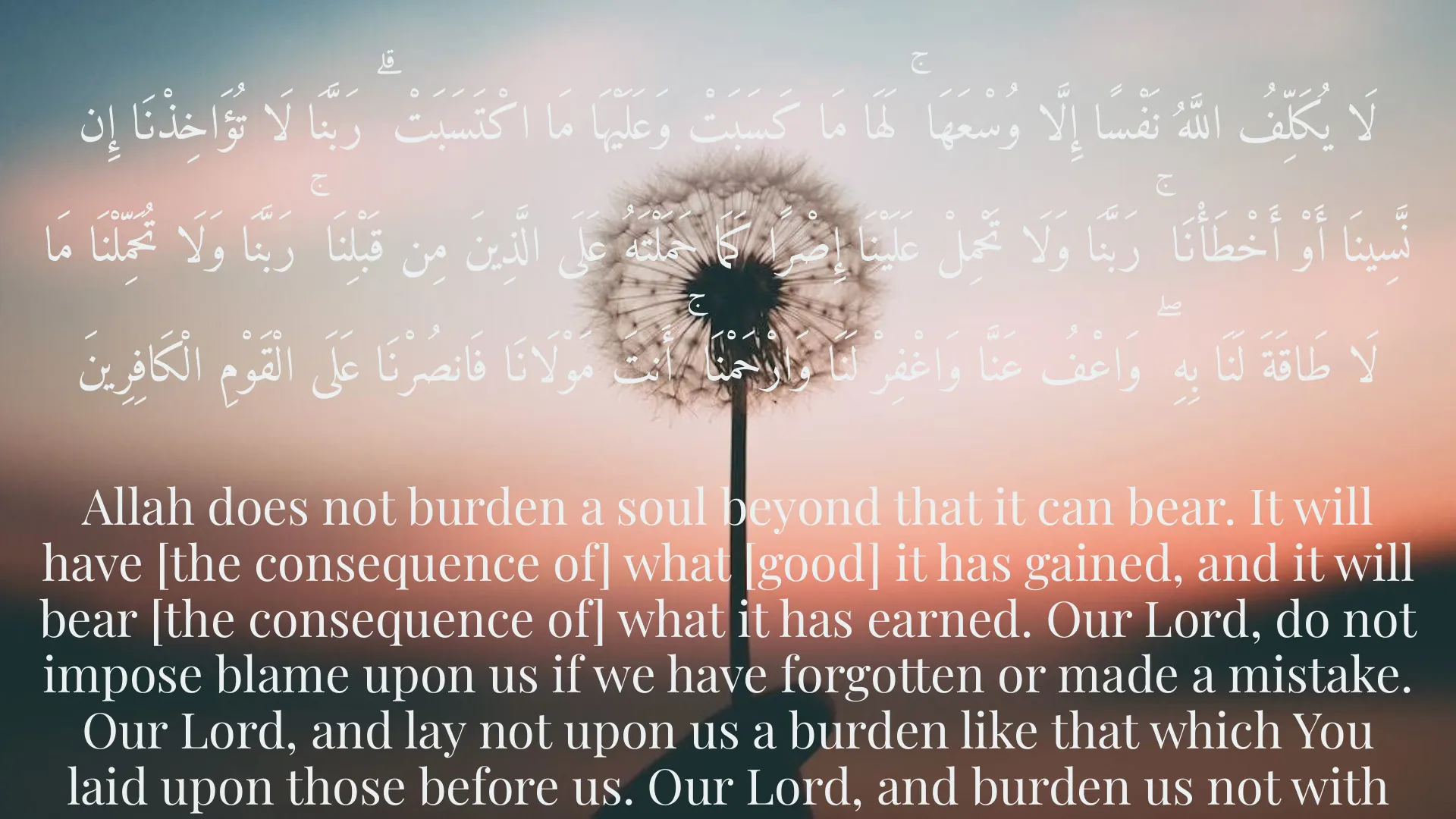
لَا يُكَلِّفُ اللَّهُ نَفْسًا إِلَّا وُسْعَهَا ۚ لَهَا مَا كَسَبَتْ وَعَلَيْهَا مَا اكْتَسَبَتْ ۗ رَبَّنَا لَا تُؤَاخِذْنَا إِن نَّسِينَا أَوْ أَخْطَأْنَا ۚ رَبَّنَا وَلَا تَحْمِلْ عَلَيْنَا إِصْرًا كَمَا حَمَلْتَهُ عَلَى الَّذِينَ مِن قَبْلِنَا ۚ رَبَّنَا وَلَا تُحَمِّلْنَا مَا لَا طَاقَةَ لَنَا بِهِ ۖ وَاعْفُ عَنَّا وَاغْفِرْ لَنَا وَارْحَمْنَا ۚ أَنتَ مَوْلَانَا فَانصُرْنَا عَلَى الْقَوْمِ الْكَافِرِينَ
Allah does not burden a soul beyond that it can bear. It will have [the consequence of] what [good] it has gained, and it will bear [the consequence of] what it has earned. Our Lord, do not impose blame upon us if we have forgotten or made a mistake. Our Lord, and lay not upon us a burden like that which You laid upon those before us. Our Lord, and burden us not with that which we have no ability to bear. And pardon us; and forgive us; and have mercy upon us. You are our protector, so give us victory over the disbelieving people.
Al-Baqarah : 286
لَئِن شَكَرْتُمْ لَأَزِيدَنَّكُمْ ۖ وَلَئِن كَفَرْتُمْ إِنَّ عَذَابِي لَشَدِيدٌ
If you are grateful, I will surely increase your favor upon you; but if you deny, indeed, My punishment is severe.
Ibrahim : 7
Short Story
Once upon a time, a young man named Hossein was always worried about his future. He found peace through reciting the verses of the Quran. One day, after reading Surah Al-Baqarah, he realized the importance of gratitude and decided to express thanks for his blessings daily. Over time, he felt a greater sense of assurance and calmness, discovering that a stronger connection with God helped him overcome his challenges.