Quranic Answer
The Holy Quran, the sacred scripture of Islam, serves not only as a guide for spiritual enlightenment but also as a foundational text on moral and ethical conduct. One of the recurring themes found throughout its verses is the notion of forgiveness. This concept is particularly underscored within the context of family relationships, where the bond of kinship is paramount. In numerous verses, Allah sheds light on the significance of forgiving others, illustrating that such an act is not merely an option but rather an obligation that enhances familial connections and promotes a harmonious living environment. In Surah An-Nur, verse 22, Allah commands believers to exercise forgiveness, particularly in situations where good has been extended to them. This directive highlights an essential principle: forgiving those who have hurt us, especially when they have previously shown kindness, reinforces the idea of mutual respect and love within family dynamics. When family members experience conflict or disputes, the capacity to forgive creates possibilities for reconciliation and peace. Within families, conflicts can arise from misunderstandings, differing opinions, and emotional disagreements. However, by invoking the principle of forgiveness taught in the Quran, families can navigate these challenges with grace and understanding. The importance of forgiveness within familial settings is further emphasized in Surah Al-Imran, verse 134, where Allah reminds the believers that the hallmark of the righteous is their propensity to forgive others. The verse states: 'And they love to forgive people.' This statement encapsulates a profound truth – that forgiveness is not merely a charitable act; it is a fundamental characteristic of a person striving to live a life of righteousness. This innate willingness to forgive promotes a culture of compassion and understanding, carving a path for individuals to foster strong interpersonal relationships within their families. Forgiveness acts as a balm for emotional wounds and promotes healing. In many instances, the absence of forgiveness leads to lingering resentment and strife, which can strain relationships. For instance, family members who hold onto grievances may find it challenging to engage in meaningful communication or emotional intimacy. Conversely, when forgiveness is extended, it nurtures an atmosphere of love and warmth. The act of letting go of past grievances can free individuals from the burdens of anger and resentment, allowing them to embrace a more peaceful and fulfilling life. Moreover, forgiveness can serve as a vital tool in conflict resolution within families. Every family sees its share of disputes and disagreements, but handling them through the lens of forgiveness enables family members to address issues constructively. For instance, consider two siblings who have quarreled over an inheritance or property. Each may feel justified in their grievances, leading to a familial rift. However, if they choose to forgive each other for their differences and approach the situation with understanding, they not only resolve their immediate conflict but also strengthen their sibling bond and lay the groundwork for future harmony. It’s essential to note that forgiveness does not mean condoning wrongdoing or ignoring the hurt caused; rather, it signifies a conscious choice to let go of resentment. This act can foster a deeper understanding among family members, allowing them to recognize that everyone is fallible. The Quran teaches that compassion and empathy should guide our interactions, reminding us that we are all human and capable of making mistakes. This principle serves as a reminder for individuals to practice patience and understanding in their relationships with family members. Furthermore, the Quran illustrates forgiveness as a reciprocal process. When family members choose to forgive, they often encourage others to do the same. This cycle of forgiveness can create a powerful, positive feedback loop within a family, leading to an environment where open communication and mutual respect thrive. For example, parents who model forgiveness teach their children valuable lessons about empathy and the importance of resolving conflicts amicably, ultimately fostering a nurturing family culture. The process of forgiveness can significantly improve mental well-being, promoting inner peace among family members. Studies indicate that individuals who practice forgiveness often experience lower levels of stress, anxiety, and depression. Thus, integrating forgiveness into everyday family life not only strengthens familial bonds but also contributes to individual mental health and overall well-being. In essence, fostering an environment that prioritizes forgiveness can create a loving, supportive atmosphere conducive to development and emotional growth. In conclusion, the Holy Quran presents forgiveness as a vital tenet of our interactions, particularly within families. The verses of Surah An-Nur and Surah Al-Imran emphasize the importance of forgiving others as a means to cultivate peace, nurture relationships, and bring about personal healing. As individuals strive for righteousness, the willingness to forgive should be embraced as an essential element of familial life. The act not only enhances the emotional well-being of family members but also promotes an atmosphere of love, understanding, and support. Thus, the teachings of the Quran implore us to practice forgiveness actively, fostering enduring connections and harmony among family members for generations to come.
Related Verses
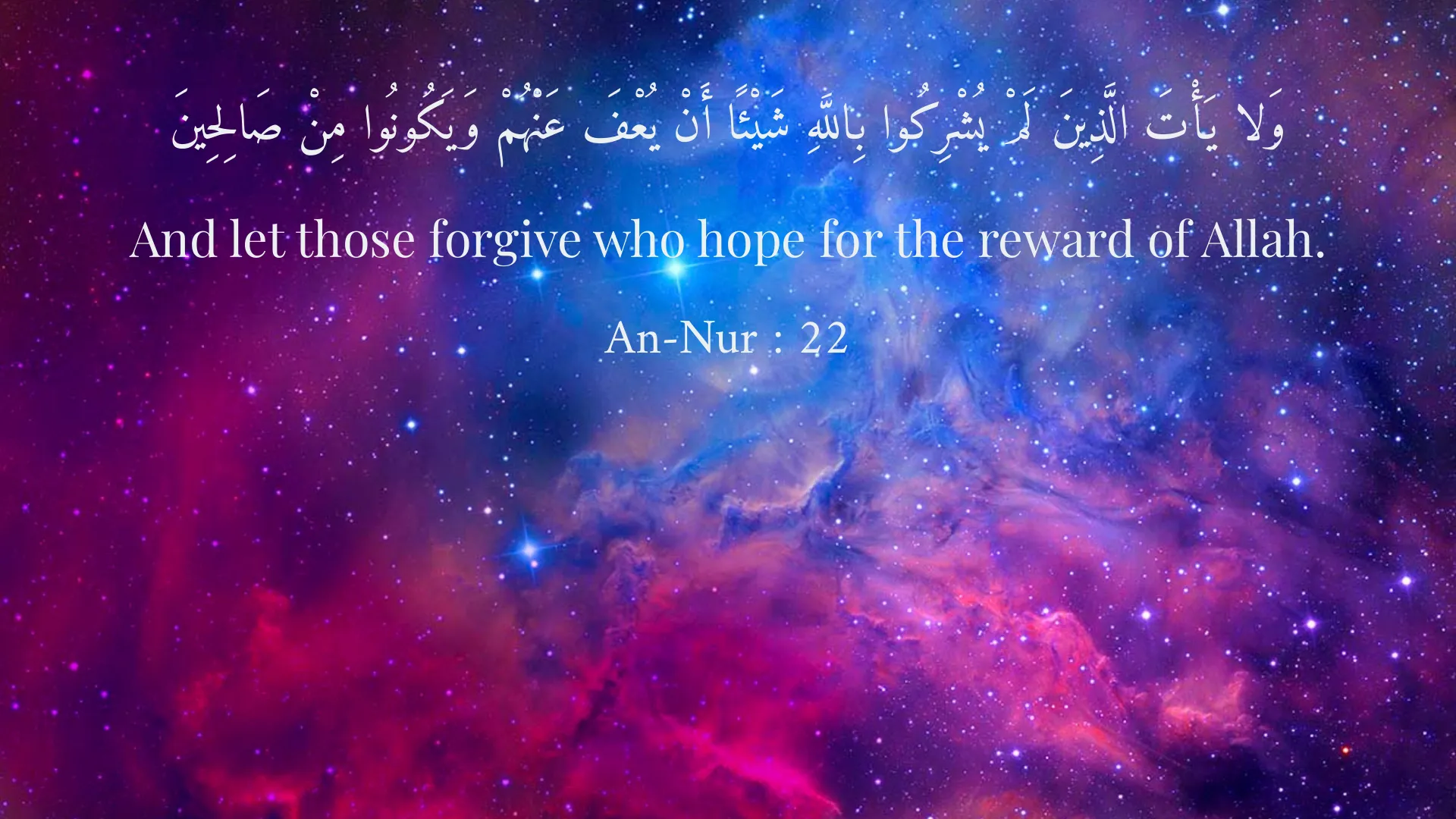
وَلا يَأْتَ الَّذِينَ لَمْ يُشْرِكُوا بِاللَّهِ شَيْئًا أَنْ يُعْفَ عَنْهُمْ وَيَكُونُوا مِنْ صَالِحِينَ
And let those forgive who hope for the reward of Allah.
An-Nur : 22
وَالَّذِينَ يُنفِقُونَ فِي السَّرَّاءِ وَالضَّرَّاءِ وَالْكَاظِمِينَ الْغَيْظَ وَالْعَافِينَ عَنِ النَّاسِ ۗ وَاللَّهُ يُحِبُّ الْمُحْسِنِينَ
And those who spend in ease and in hardship and who restrain anger and who pardon the people - and Allah loves the doers of good.
Al-Imran : 134
Short Story
One day, in a family, a disagreement arose, causing the members to drift apart. However, one of them decided to apologize and approached others with kindness. The other members were influenced by this act, and soon they reconciled. This story reminds us that forgiveness can foster peace and friendship in any family.