Quranic Answer
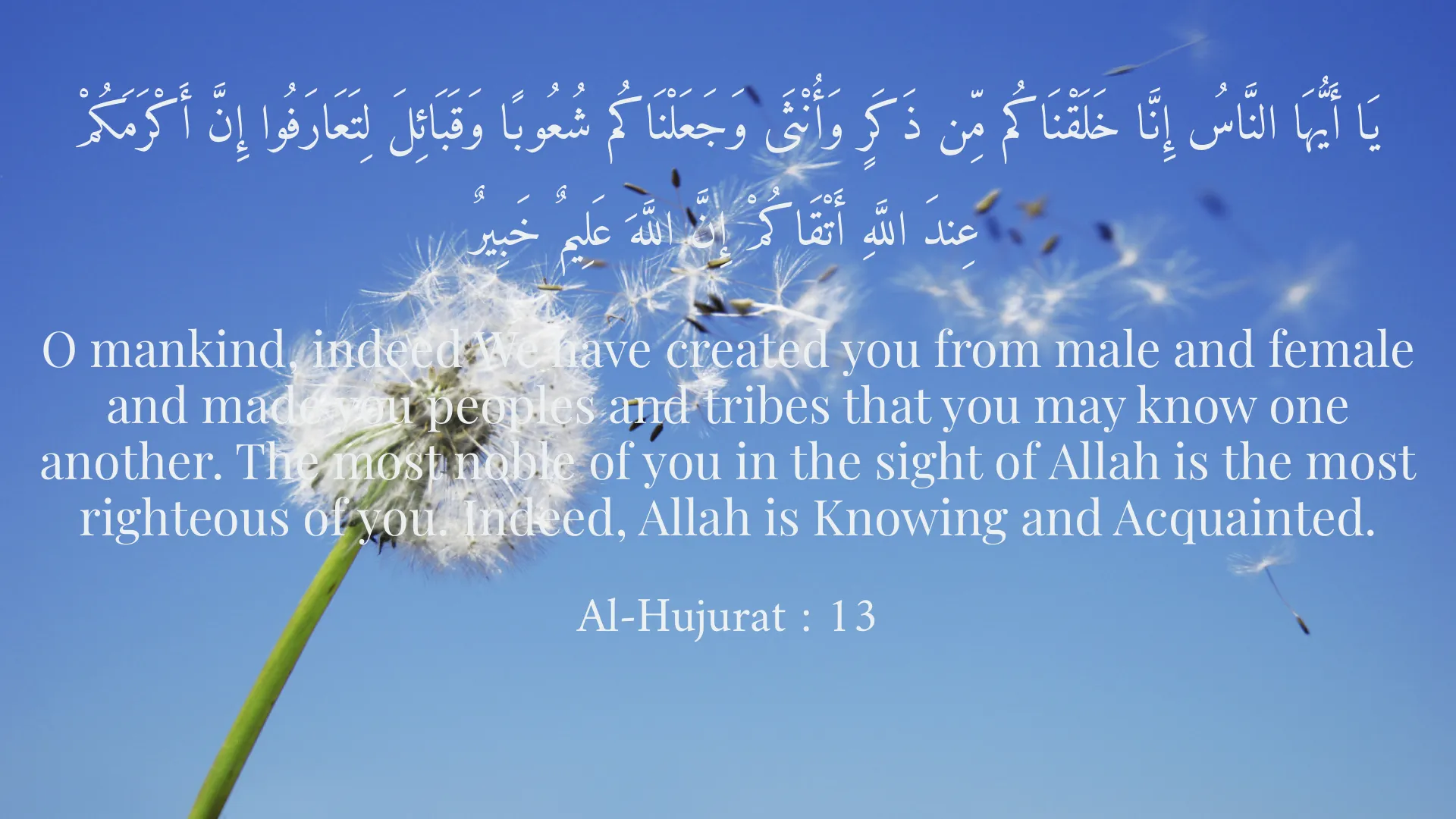
The Holy Quran holds a revered position in the lives of over a billion Muslims worldwide, serving not only as a holy scripture but also as a comprehensive guide for personal conduct and social interactions. Though it does not explicitly promote solitude, it offers various insights regarding both solitude and the importance of social connections. Central to Islamic teachings is the notion of community and interaction with others, which is considered vital for individual and collective growth. One of the strongest messages found in the Quran is articulated in Surah Al-Hujurat, verse 13, where Allah states: 'O mankind, indeed We have created you from male and female and made you peoples and tribes that you may know one another.' This verse serves as a profound reminder that human beings are fundamentally interconnected. Rather than encouraging individuals to retreat into isolation, the Quran emphasizes the need for relationships that foster understanding and empathy among people. Human relationships and community living are pivotal in Islam. They not only aid in personal development but also fulfill a social obligation to support one another through life's challenges. This theme is further elaborated in Surah Al-Ma'idah, verse 2: 'And cooperate in righteousness and piety, but do not cooperate in sin and aggression.' This verse conveys the importance of living collectively with kindness and integrity, advocating for cooperation in efforts that lead to greater good, while simultaneously discouraging behaviors that could lead to harm or discord. The Quran’s emphasis on communal living does not negate the idea of solitude altogether. In fact, solitude becomes significant in the context of self-reflection and spiritual rejuvenation. Surah Az-Zumar, verse 9, hints at the balance between engaging with the bustling world and finding time for introspection. The verse states: 'Is one who is devoutly obedient during the night prostrating and standing [in prayer] while fearing the Hereafter and hoping for the mercy of his Lord, [like one who does not]?' This gentle reminder beckons toward spending moments alone in thought, prayer, and introspection, echoing the sentiment that solitude can be a powerful tool for personal growth. While the Quran appears to favor social interaction, it simultaneously acknowledges that retreating into solitude at certain times can hold value for the soul. Moments of solitude can serve as opportunities for individuals to ponder their actions, nurture their spirituality, and strengthen their relationship with Allah. The balance becomes key — engaging with others to cultivate good, while also allowing oneself the necessary quietude to reflect and reconnect with one’s inner thoughts and intentions. The Prophet Muhammad (peace be upon him) further exemplifies the balance between community involvement and solitary reflection. He would often retreat to the Cave of Hira, where he engaged in meditation and prayer before receiving divine revelations from Allah. This period of solitude was crucial in preparing him for his role as a messenger and leader, emphasizing that even individuals who are destined for great social roles require moments alone for contemplation and connection with the Divine. Moreover, the Quran encourages not just physical interaction but emotional engagement as well. In Surah Al-Imran, verse 159, Allah instructs Prophet Muhammad on how to engage with people: 'So by mercy from Allah, [O Muhammad], you were lenient with them. And if you had been rude in speech or بغلی heart, they would have disbanded from about you.' This verse reinforces the need for compassion and kindness in social relationships, indicating that emotional warmth is as necessary as physical presence in establishing connections. As modern society presents new challenges and complexities, the Quranic messages of empathy and community are more relevant than ever. In a world where individualism often holds sway, the Quran invites believers to think beyond themselves and contribute to the collective well-being of their communities. Cooperation, understanding, and the pursuit of collective righteousness serve as focal points that Muslims are reminded of frequently. The balance between solitude and community is a nuanced aspect of Islamic teaching. In fulfilling attentiveness to community responsibilities, individuals must not neglect their own spiritual well-being. Thus, while the Holy Quran does not recommend solitude as a lifestyle choice, it does offer guidance for times when solitude is beneficial for introspection and recharging one’s spirit. Striking a balance between engaging with others and taking time for oneself is crucial in leading a fulfilling and pious life according to Islamic teachings. In conclusion, the Quran intricately presents the themes surrounding solitude and social interaction. By emphasizing the significance of community ties and mutual support while also recognizing the merits of quiet contemplation, it provides a holistic framework that guides Muslims in navigating their relationships with others and themselves. Therefore, the Quran's teachings suggest that a life enriched by both connections and moments of solitude leads to a deeper understanding of oneself and an appreciation for the collective human experience.
Related Verses
يَا أَيُّهَا النَّاسُ إِنَّا خَلَقْنَاكُم مِّن ذَكَرٍ وَأُنْثَى وَجَعَلْنَاكُم شُعُوبًا وَقَبَائِلَ لِتَعَارَفُوا إِنَّ أَكْرَمَكُمْ عِندَ اللَّهِ أَتْقَاكُمْ إِنَّ اللَّهَ عَلِيمٌ خَبِيرٌ
O mankind, indeed We have created you from male and female and made you peoples and tribes that you may know one another. The most noble of you in the sight of Allah is the most righteous of you. Indeed, Allah is Knowing and Acquainted.
Al-Hujurat : 13
وَتَعَاوَنُوا عَلَى الْبِرِّ وَالتَّقْوَى وَلَا تَعَاوَنُوا عَلَى الإِثْمِ وَالعدوان
And cooperate in righteousness and piety, but do not cooperate in sin and aggression.
Al-Ma'idah : 2
أَمَّنْ هُوَ قَانِتٌ آنَاءَ اللَّيْلِ سَاجِدًا وَقَائِمًا يَحْذَرُ الْآخِرَةَ وَيَرْجُو رَحْمَةَ رَبِّهِ
Is one who is devout during the night, prostrating and standing in prayer, fearing the Hereafter and hoping for the mercy of his Lord, [like one who does not]?
Az-Zumar : 9
Short Story
One day, a man named Amin went to the forest to find peace with nature. However, after a few hours of solitude, he realized that life without connection to others felt meaningless. Remembering verses from the Quran that emphasize cooperation and kindness to others, he understood that life should be filled with love and affection alongside family and friends.