Quranic Answer
The direct perception of God, or divine intuition (shahud), is a profound and multifaceted concept that has been interpreted in various ways by Muslim scholars and mystics throughout history. The Holy Quran does not explicitly or directly refer to "seeing" God with the physical eye in this world; in fact, it negates it. However, it frequently alludes to other forms of deep understanding, inner knowledge, and heartfelt intuition concerning God and His presence, which can be considered a type of "direct perception," albeit not in a physical or sensory manner. Let's explore this topic with greater precision. The Quran emphasizes in several verses that God is beyond the grasp of our material senses. One of the clearest verses in this regard is Surah Al-An'am (6:103), which states: "No vision can grasp Him, but He grasps all vision. He is the Most Subtle, the All-Aware." This verse explicitly negates the possibility of God being seen with physical eyes. Furthermore, the story of Prophet Moses' request to see God in Surah Al-A'raf (7:143) serves as another testament to this point. When Moses said, "My Lord, show me [Yourself] that I may look at You," God replied, "You will not see Me." He then manifested His glory to the mountain, which crumbled into dust. These verses clearly indicate that sensory and physical perception of God is not possible for humans in this world. However, the negation of seeing God with the physical eye does not imply a negation of all forms of "direct perception" or "shahud." The Quran repeatedly emphasizes God's perpetual presence, His closeness to humanity, and His signs in the horizons and within oneself, all of which can lead to a profound and experiential knowledge of God. For instance, Surah Fussilat (41:53) states: "We will show them Our signs in the horizons and within themselves until it becomes clear to them that it is the truth." This verse invites contemplation and reflection on creation and on one's own existence; a contemplation that can lead to an intuitive and heartfelt understanding of the Creator. Moreover, Surah Qaf (50:16) declares: "And We are closer to him than his jugular vein." This extraordinary closeness of God provides the ground for a deep and internal connection that transcends any intermediaries. This proximity does not signify a physical presence but an encompassing, knowing, and present reality that can be felt in the believer's heart and lead to a form of spiritual intuition. The concept of "Iman" (faith) in the Quran is not merely an intellectual belief but a state of submission, certainty (yaqin), and inner peace that stems from a deeper understanding and experience of divine truths. A true believer is one who has perceived God not only with the intellect but with their entire being and heart. This is the "yaqin" that is achieved in the higher stages of faith, which mystics consider akin to seeing with the eye of the heart. In summary, the Holy Quran negates the physical perception of God but frequently refers to a heartfelt, intuitive, and gnostic understanding that is achieved through contemplation of divine signs, remembrance of God (dhikr), and sincerity in servitude. This type of perception, though different from seeing with the eye, is in its own way "direct" and unmediated, as it occurs in the depths of one's soul and brings one closer to a truth that cannot be expressed by any words or images. This "shahud" is what mystics refer to as "seeing with the eye of the heart" or "experiencing the Divine Presence," considering it the pinnacle of closeness to God. Therefore, it can be said that the Quran provides the basis for a direct and inner perception of God, even though this perception has a different nature from sensory and material perception. This kind of perception leads to spiritual elevation and inner peace, assisting individuals in their path of pure servitude and a deeper knowledge of their Lord.
Related Verses
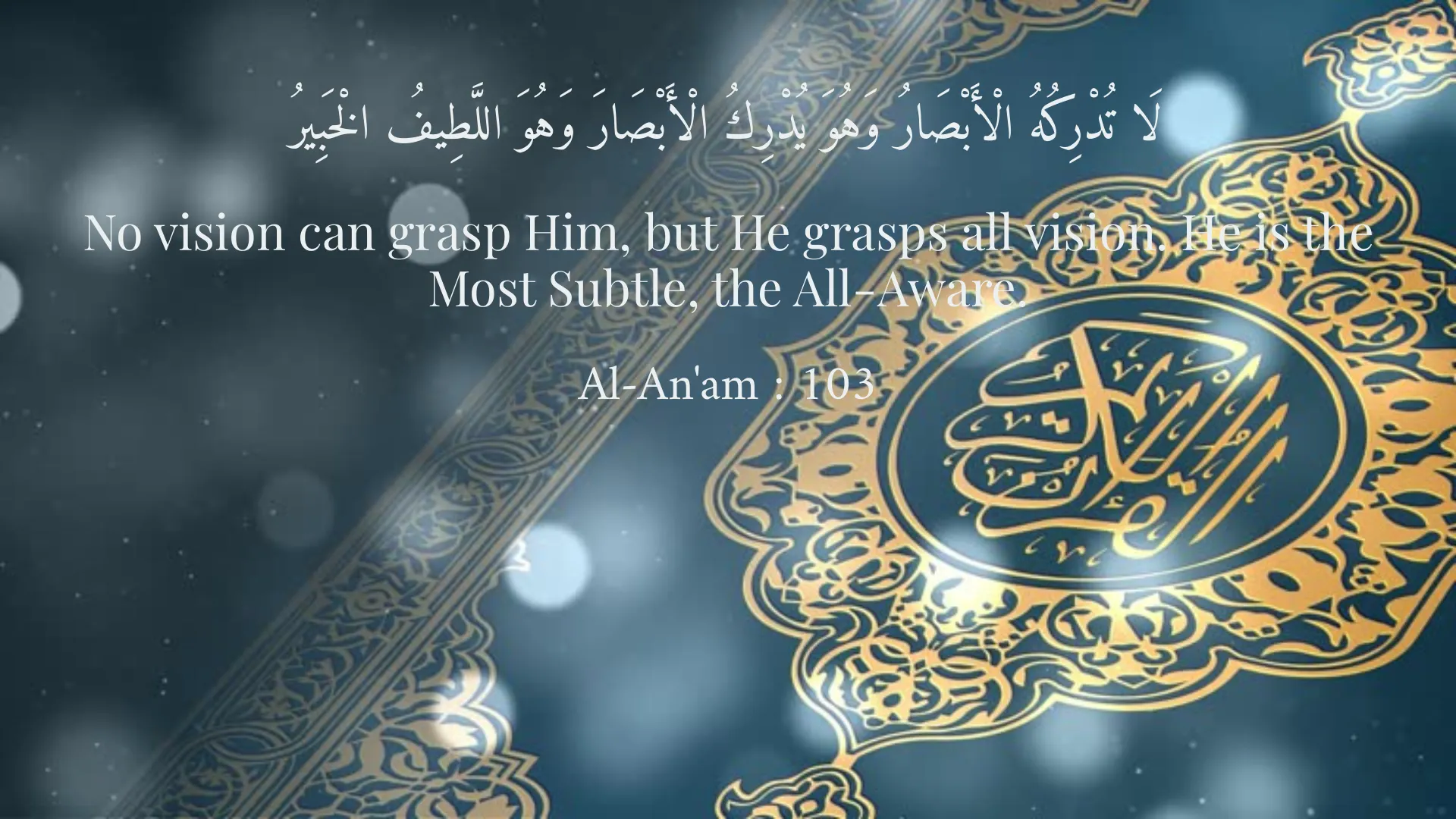
لَا تُدْرِكُهُ الْأَبْصَارُ وَهُوَ يُدْرِكُ الْأَبْصَارَ وَهُوَ اللَّطِيفُ الْخَبِيرُ
No vision can grasp Him, but He grasps all vision. He is the Most Subtle, the All-Aware.
Al-An'am : 103
وَلَمَّا جَاءَ مُوسَىٰ لِمِيقَاتِنَا وَكَلَّمَهُ رَبُّهُ قَالَ رَبِّ أَرِنِي أَنظُرْ إِلَيْكَ ۚ قَالَ لَن تَرَانِي ۚ وَلَٰكِنِ انظُرْ إِلَى الْجَبَلِ فَإِنِ اسْتَقَرَّ مَكَانَهُ فَسَوْفَ تَرَانِي ۚ فَلَمَّا تَجَلَّىٰ رَبُّهُ لِلْجَبَلِ جَعَلَهُ دَكًّا وَخَرَّ مُوسَىٰ صَعِقًا ۚ فَلَمَّا أَفَاقَ قَالَ سُبْحَانَكَ تُبْتُ إِلَيْكَ وَأَنَا أَوَّلُ الْمُؤْمِنِينَ
And when Moses arrived at Our appointed time and his Lord spoke to him, he said, "My Lord, show me [Yourself] that I may look at You." He said, "You will not see Me, but look at the mountain; if it remains in its place, then you will see Me." But when his Lord manifested His glory to the mountain, He made it crumble to dust, and Moses fell unconscious. And when he recovered, he said, "Exalted are You! I have repented to You, and I am the first of the believers."
Al-A'raf : 143
سَنُرِيهِمْ آيَاتِنَا فِي الْآفَاقِ وَفِي أَنفُسِهِمْ حَتَّى يَتَبَيَّنَ لَهُمْ أَنَّهُ الْحَقُّ ۗ أَوَلَمْ يَكْفِ بِرَبِّكَ أَنَّهُ عَلَىٰ كُلِّ شَيْءٍ شَهِيدٌ
We will show them Our signs in the horizons and within themselves until it becomes clear to them that it is the truth. But is it not sufficient concerning your Lord that He is, over all things, a Witness?
Fussilat : 53
وَلَقَدْ خَلَقْنَا الْإِنسَانَ وَنَعْلَمُ مَا تُوَسْوِسُ بِهِ نَفْسُهُ ۖ وَنَحْنُ أَقْرَبُ إِلَيْهِ مِنْ حَبْلِ الْوَرِيدِ
And We have already created man and know what his soul whispers to him, and We are closer to him than his jugular vein.
Qaf : 16
Short Story
In Sa'di's Gulistan, it is related that an ascetic spent years in a mountainous retreat, engaged in worship, constantly seeking gnosis and the perception of God's presence. One day, he asked his Sheikh: "How can one see the Lord and truly comprehend His reality?" The Sheikh replied: "My son, seeing Him with the physical eye is not possible, for 'no vision can grasp Him.' However, whoever looks into the mirror of their heart and cleanses it from the dust of sin and heedlessness will find His signs in every particle of existence and in their own being. It is then that the light of gnosis, like the radiant sun, shines upon the heart, and one perceives a presence that is clearer than any sight. As Sa'di said: 'Whoever gazed with a single eye at the Beloved, saw that Beloved in everything.' Thus, the way of seeing does not arise from the eye, but from an awakened and pure heart.