Quranic Answer
The Holy Quran addresses the concept of friendship and human relations in depth, highlighting several aspects of true friendship. The significance of friendship in human life cannot be overstated – it enriches our experiences, provides support in times of need, and builds bridges of understanding among individuals. In the Islamic tradition, friendships are not only a social construct but are also deeply rooted in spiritual and moral values. This essay will explore the various dimensions of friendship as depicted in the Quran, drawing on specific verses and prophetic teachings to highlight what constitutes a true friend in the Islamic context. One of the most important themes in the Quran is friendship based on guidance and mutual assistance in righteous matters. In Surah Al-Imran, verse 103, Allah instructs the believers to hold firmly to the rope of Allah and not be divided. This verse underscores the essential nature of unity and solidarity among believers, suggesting that true friendship is inherently tied to shared beliefs and values. In a world often characterized by division and animosity, the Quran advocates for friendships that foster communal strength and uphold the principles of faith. Through this verse, Allah calls upon individuals to create bonds that survive challenges and adversity, emphasizing that these relationships should be centered on a common purpose – the pursuit of righteousness and divine guidance. Friendships rooted in love and generosity are also highly valued in the Quran. In Surah Al-Ma'idah, verse 55, the true friends are identified as those who believe and strive in the way of Allah. Here, friendship transcends mere social interaction; it becomes a noble endeavor filled with purpose and commitment to a higher cause. Such friendships are not merely based on temporal interests or fleeting emotions; rather, they are anchored in faith, altruism, and a dedication to serve not just oneself, but also the community. This essence of friendship reinforces the idea that true companions share in each other’s spiritual journeys and work collectively towards achieving their goals in the path of Allah. In addition to the pursuit of righteous matters, the Quran emphasizes the significance of mutual support and sincerity among friends. In Surah At-Tawbah, verse 71, it is mentioned that the believers are brothers to one another and should support each other in friendship and honesty. These verses articulate a profound message of camaraderie and encourage individuals to be pillars of support in times of hardship while celebrating each other’s joys. The concept of brotherhood in Islam fosters a sense of collective identity as well, where individuals are reminded of their responsibility towards one another, reinforcing the idea that a true friend is someone who stands by you during both trials and successes. Moreover, the Quran admonishes its believers to love the truth and to extend that love towards others. Friendship, therefore, is not merely a social contract but a moral obligation to uphold honesty and integrity. Honesty in friendship builds trust, which serves as the foundation for meaningful relationships. A true friend in the Islamic perspective is one who encourages the truth, promotes justice, and speaks against wrongdoing, no matter how difficult that may be. It is through this lens that friendships become a channel for self-improvement and ethical growth, as friends help one another navigate life’s trials and tribulations. Islamic teachings also stress the importance of compassion in friendships. The Prophet Muhammad (peace be upon him) emphasized the value of treating friends with kindness and respect. He stated that “The best of friends is the one who is best to his friend.” This highlights the reciprocal nature of friendship where the pillars of respect, understanding, and kindness must be mutual. The Prophet’s reflections on friendship guide Muslims to evaluate the nature of their relationships and to make conscious efforts toward embodying these values. A true friend, in this view, is someone who facilitates personal growth, makes sacrifices for the benefit of their companions, and cultivates an environment of love and acceptance. Additionally, the Quran speaks to the transcendent aspects of friendship and the spiritual dimension involved in these relationships. Companionship is a source of inspiration; friends can uplift one another spiritually, imparting wisdom, guidance, and support needed to stay steadfast in faith. Islamic scholars emphasize that a true friend is one whose company encourages believers to draw closer to Allah and engage in righteous actions. This highlights the Quranic view that friendships can also be transformative forces in a person’s life, helping them navigate both worldly affairs and spiritual journeys. The impact of these teachings on friendship is profound, particularly in a world where superficial relationships often characterize social interactions. The Quran advocates for friendships that are sincere, based on shared beliefs, and driven by the goal of mutual upliftment. Friends who strive together for spiritual excellence form a bond that is both sacred and rewarding. This understanding of friendship is crucial in both personal and communal contexts, fostering a sense of belonging and creating supportive networks among believers. In conclusion, the Holy Quran presents a comprehensive view of friendship that is foundational to the Muslim experience. It emphasizes characteristics such as love, support, unity, honesty, and spiritual guidance in establishing true friendships. In a society where divisions often arise, the values outlined in the Quran serve as a timeless reminder of the importance of nurturing relationships rooted in shared faith and mutual respect. As believers strive to embody these ideals, they not only enhance their individual lives but also contribute positively to the fabric of society. True friendship, as defined by the Quran, is ultimately a path toward collective righteousness and spiritual fulfillment.
Related Verses
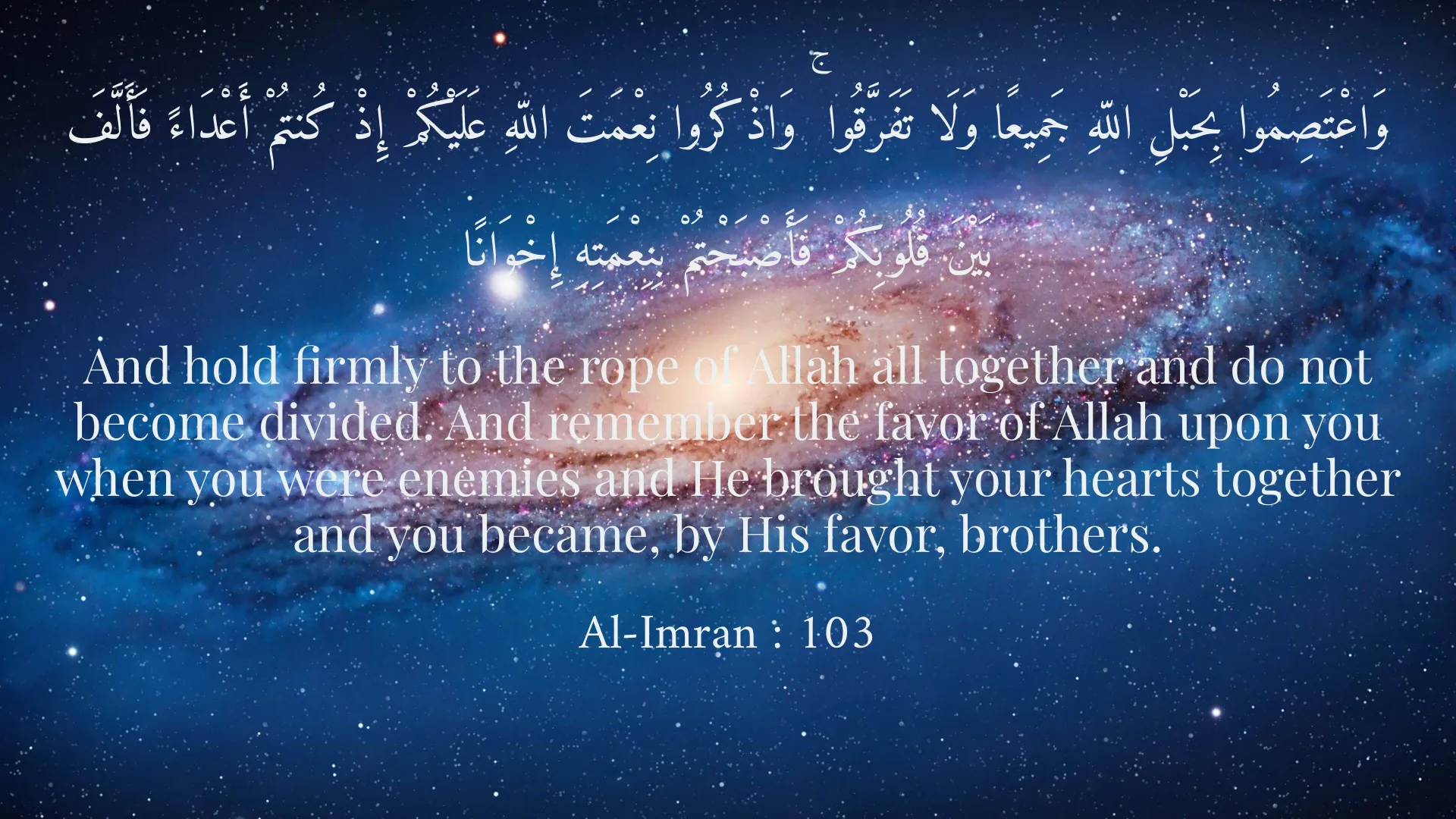
وَاعْتَصِمُوا بِحَبْلِ اللّهِ جَمِيعًا وَلَا تَفَرَّقُوا ۚ وَاذْكُرُوا نِعْمَتَ اللّهِ عَلَيْكُمْ إِذْ كُنتُمْ أَعْدَاءً فَأَلَّفَ بَيْنَ قُلُوبِكُمْ فَأَصْبَحْتُمْ بِنِعْمَتِهِ إِخْوَانًا
And hold firmly to the rope of Allah all together and do not become divided. And remember the favor of Allah upon you when you were enemies and He brought your hearts together and you became, by His favor, brothers.
Al-Imran : 103
إنما وليكم الله ورسوله والذين آمنوا الذين يقيمون الصلاة ويقِيمون الصلاة ويقِيمون الزكاة وهم راكعون.
Your ally is none but Allah and His Messenger and those who have believed — those who establish prayer and pay zakah while they bow.
Al-Ma'idah : 55
وَالمُؤْمِنُونَ وَالْمُؤْمِنَاتُ بَعْضُهُمْ أَوْلِيَاءُ بَعْضٍ ۖ يَأْمُرُونَ بِالْمَعْرُوفِ وَيَنْهَوْنَ عَنِ الْمُنكَرِ وَيُقِيمُونَ الصَّلاةَ وَيُقِيمُونَ الزَّكَاةَ وَيُطِيعُونَ اللّهَ وَرَسُولَهُ ۚ أُولَـئِكَ سَيَرْحَمُهُمُ اللّهُ ۚ إِنَّ اللّهَ عَزِيزٌ حَكِيمٌ
And the believing men and believing women are allies of one another. They enjoin what is right and forbid what is wrong and establish prayer and give zakah and obey Allah and His Messenger. Those are the ones Allah will have mercy upon. Indeed, Allah is Exalted in Might and Wise.
At-Tawbah : 71
Short Story
On a beautiful day, two friends named Nasser and Saman were discussing life and true friendship. Nasser said that true friendship is not just in times of joy, but they should stand by each other in hard times as well. Saman agreed and added that they should invite each other to goodness and love. One day, while Nasser was in prayer, Saman poured some water over him to wake him up. Nasser was very upset, but after Saman explained that he wanted to remind him of God, they both apologized and strengthened their friendship.