Quranic Answer
### Love for Neighbors in Islam: A Deep Dive into Quranic Teachings and Prophetic Traditions The essence of Islam encompasses a set of moral and ethical guidelines that establish the foundation for harmonious living within communities. One of the pivotal themes found throughout these teachings is the importance of love and good behavior towards one's neighbors. While the Holy Quran does not explicitly name 'love for neighbors,' it intricately weaves the concept within its broader messages of kindness, compassion, and social justice. This article explores the significance of neighborly love in Islamic teachings, drawing upon Quranic verses and prophetic traditions that underscore this essential aspect of human interaction. #### The Quran's Call for Kindness and Goodwill At the heart of Islamic teaching is the notion of worshiping Allah while concurrently treating others with respect and kindness. This duality is beautifully captured in Surah An-Nisa (4:36). The verse implores believers to worship Allah alone and delineates various groups to whom one must show kindness. It emphasizes, 'And worship Allah and do not associate anything with Him, and to parents, do good, and to relatives, orphans, the needy, the near neighbor, the neighbor further away, and the companion at your side, and the companion along the way, and those whom your right hands possess.' This verse reveals a tiered approach to kindness, starting from those closest—such as parents and relatives—to neighbors, emphasizing that love for oneself and others is crucial for a balanced and fulfilling life. The classification of neighbors into 'near' and 'further away' highlights the need for community cohesion and support, indicating that good treatment should extend to all, regardless of the proximity. #### The Prophetic Traditions: Elevating Neighborly Rights The teachings of Prophet Muhammad (peace be upon him), through his actions and sayings (hadiths), further illuminate the principle of neighborly love. The emphasis on the rights of neighbors is a recurring theme; it is documented that the Prophet frequently expressed the significance of these rights. A particularly noteworthy hadith mentions that the angel Gabriel emphasized neighborly rights to such a degree that the Prophet pondered whether neighbors would be regarded as heirs—a testament to their paramount significance in Islam. From his teachings, it becomes evident that good behavior towards neighbors transcends mere politeness; it is a sacred duty. Neighbors are not merely individuals living in proximity; they are members of a communal fabric, deserving of our care and empathy. The Prophet's life serves as an exemplary model of fostering neighborly bonds—be it through acts of service, sharing of resources, or simple gestures of kindness. #### Neighborly Love: An Avenue for Social Justice In a broader context, love for one’s neighbors aligns with the Islamic principle of social justice. Islam encourages believers to foster an environment where kindness and support prevail over discord and enmity. The idea is that a nurturing community where neighbors care for one another naturally leads to reduced social injustices, enhanced welfare, and a sense of belonging. Living in a society characterized by mutual care contributes to the collective well-being of its members. When individuals prioritize relationships with their neighbors, barriers can be dismantled, leading to increased understanding and cooperation among diverse groups. This communal support becomes particularly vital during times of hardship—be it personal struggles or societal crises—and reinforces the notion that humanity should unite in empathy and compassion. #### Practical Applications of Neighborly Love To embody the principles extolled by the Quran and the teachings of the Prophet Muhammad, individuals can adopt several practical applications of neighborly love in daily life. Here are some actionable steps: 1. Acts of Kindness: Small gestures—such as greeting neighbors, offering help with groceries, or sharing a meal—can significantly impact creating a positive environment. 2. Building Relationships: Taking time to engage with neighbors, whether through casual conversation or organized gatherings, lays the foundation for deeper connections. 3. Support during Hard Times: Providing assistance during illness, bereavement, or economic challenges demonstrates a commitment to community solidarity and care. 4. Conflict Resolution: Addressing disputes with a spirit of understanding and compassion can prevent long-lasting rifts and foster an atmosphere of forgiveness and reconciliation. 5. Community Involvement: Participating in local community services can galvanize collective efforts to address issues affecting neighbors while reinforcing the ethos of cooperation and support. ### Conclusion In summary, while the Holy Quran may not explicitly mention love for neighbors, its verses, alongside prophetic traditions, offer profound insights into the importance of neighborly compassion and good conduct. Islam advocates for a society where individuals recognize their interconnectedness and uphold the rights of those living around them. By embodying these values, believers not only fulfill religious obligations but also contribute to cultivating thriving, supportive neighborhoods. Love for neighbors is thus not merely an ethical norm but a foundational pillar upon which the fabric of an Islamic society is built, fostering peace, social cohesion, and shared humanity.
Related Verses
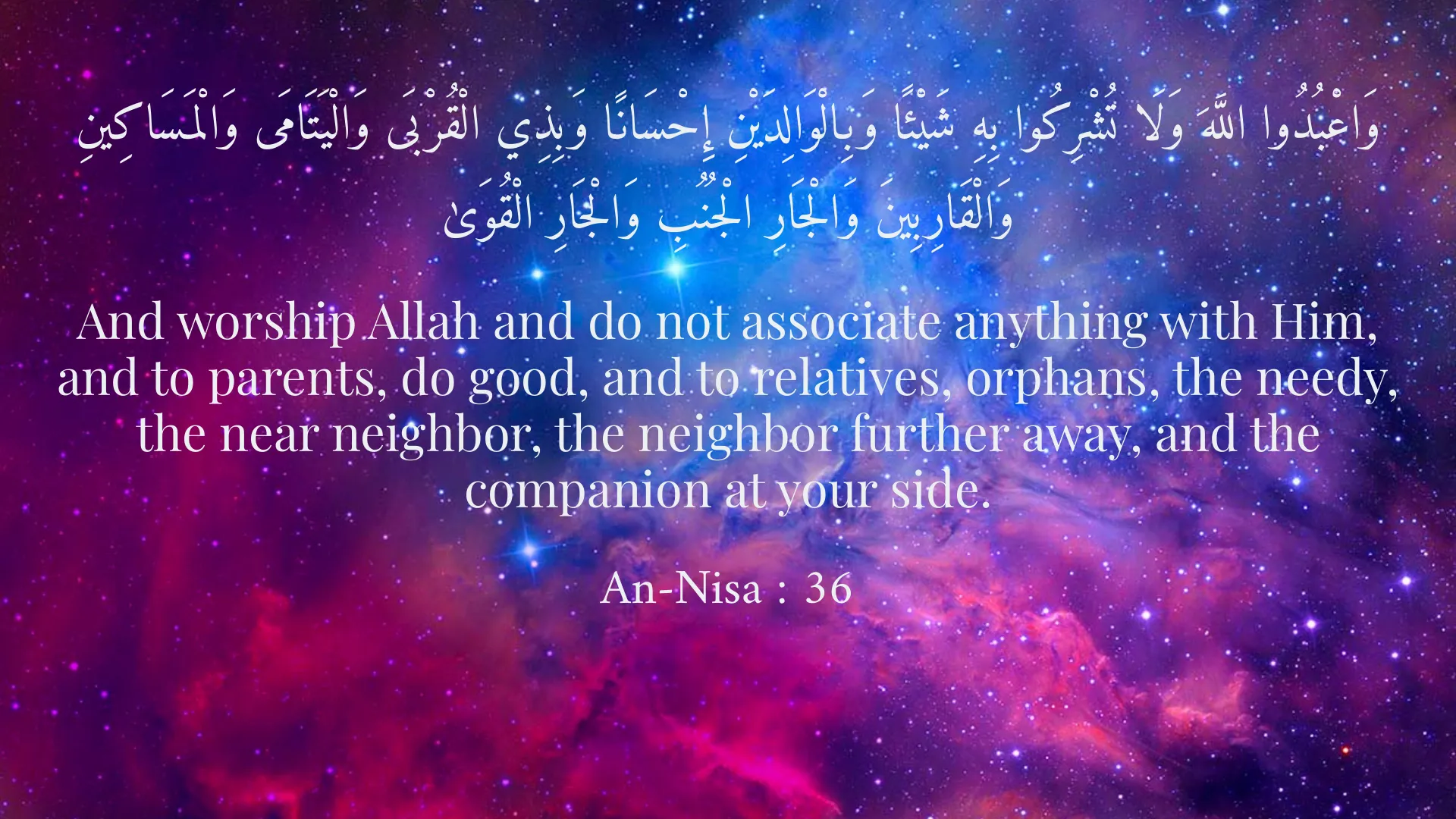
وَاعْبُدُوا اللَّهَ وَلَا تُشْرِكُوا بِهِ شَيْئًا وَبِالْوَالِدَيْنِ إِحْسَانًا وَبِذِي الْقُرْبَى وَالْيَتَامَى وَالْمَسَاكِينِ وَالْقَارِبِينَ وَالْجَارِ الْجُنُبِ وَالْجَارِ الْقُوَىٰ
And worship Allah and do not associate anything with Him, and to parents, do good, and to relatives, orphans, the needy, the near neighbor, the neighbor further away, and the companion at your side.
An-Nisa : 36
Short Story
One day, Aref noticed that his neighbor was facing difficulties. Without hesitation, he approached his neighbor and asked if he could help. The neighbor, surprised, accepted his request, and Aref willingly assisted him. This act of kindness not only made the neighbor happy, but also brought Aref a sense of fulfillment, leading him to decide to always be there for his neighbors. This story demonstrates the importance of love and good neighborliness in our lives.