Quranic Answer
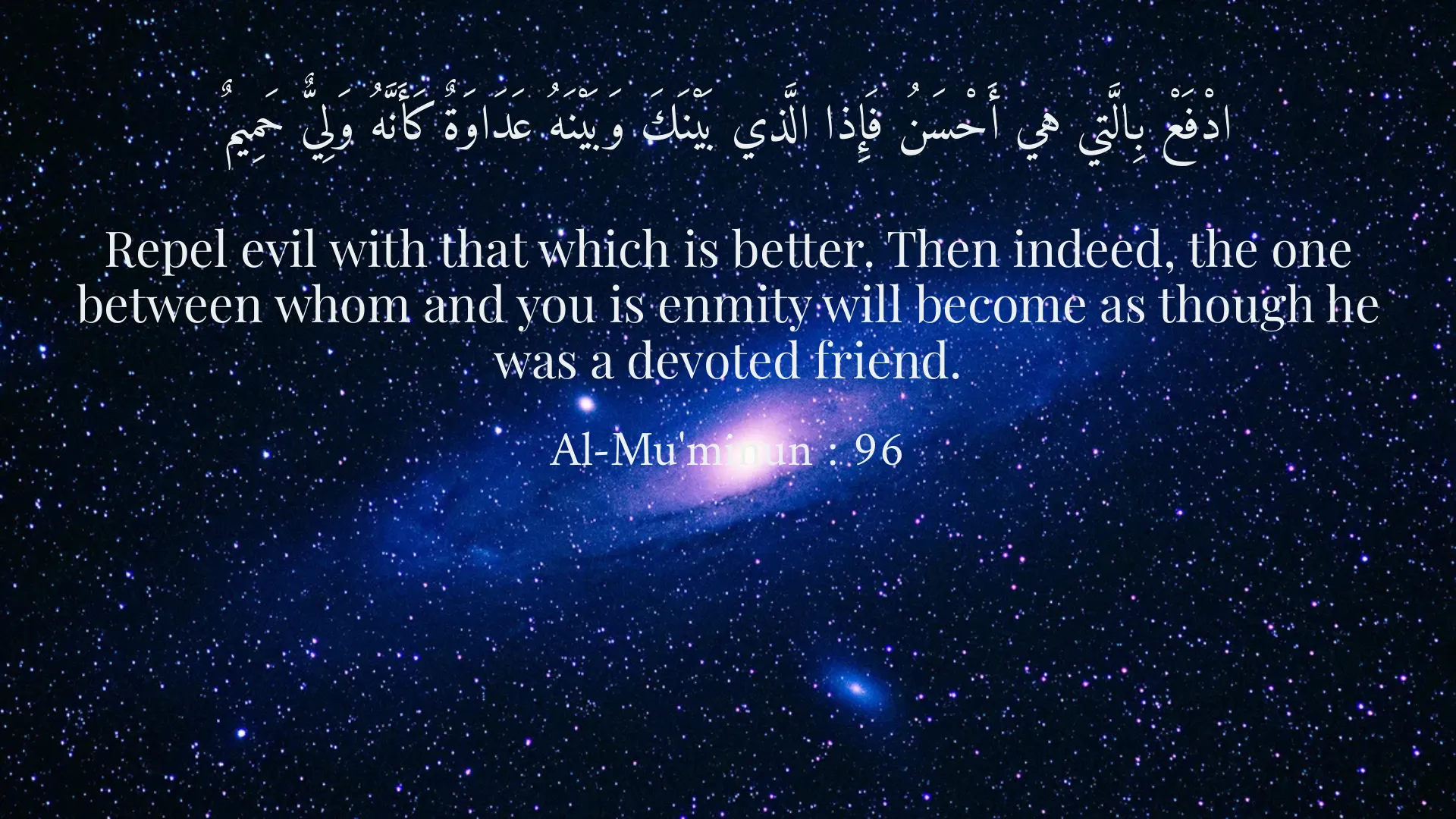
The Holy Quran, as a sacred text for Muslims around the world, stands as an eternal guide for ethical conduct and moral clarity in life. One of its most profound messages revolves around love, compassion, and forgiveness towards one another, even when it comes to adversaries or enemies. This principle is key to fostering harmonious relationships in society and serves as a reminder that love is the ultimate answer to conflict and division. In this article, we will explore the emphasis placed on love for others in the Holy Quran, focusing specifically on the themes of forgiveness and charity, as exemplified in verses from Surah Al-Mu’minun and Surah Aal-E-Imran. In Surah Al-Mu’minun, verse 96, Allah provides profound wisdom: 'Repel evil with that which is best. And We are most knowing of what they describe.' This verse serves as a guideline for navigating interpersonal conflicts. The instruction to 'repel evil with that which is best' highlights the importance of responding to hostility not with retaliation but rather with mercy and compassion. The act of forgiveness, as suggested by this verse, becomes crucial when one is wronged. Instead of seeking vengeance or harboring resentment, believers are encouraged to rise above trivial grievances and instead choose to forgive. This nuanced understanding of forgiveness is not merely an ethical suggestion; it is a means of achieving spiritual elevation and gaining proximity to Allah. By choosing forgiveness, individuals are rewarded with divine grace, thus highlighting the immediate and hereafter benefits of adopting such an attitude. Moreover, we can see how this notion of forgiveness corresponds to love, particularly love for one’s enemies. It requires a deep understanding of human fallibility and an acknowledgment that everyone is capable of erring. In this light, our approach to dealing with those who may harm us should be rooted in kindness rather than anger. In essence, the Quran invites believers to respond to negativity with positive action, demonstrating that true strength lies not in the ability to retaliate, but in the willingness to forgive. Similarly, in Surah Aal-E-Imran, verse 134 reinforces the significance of charitable actions and emotional control: 'Those who spend in the cause of Allah during ease and hardship and who restrain anger and who pardon the people — and Allah loves the doers of good.' This verse calls for selflessness and generosity in both prosperous and challenging times, stressing the need to be charitable regardless of personal circumstances. Charity extends beyond mere financial aid; it encompasses acts of kindness, support, and nurturing a spirit of forgiveness. Interestingly, this verse also emphasizes the critical role of 'restraining anger.' Anger is an innate human emotion, often leading to destructive behavior if left unchecked. However, the Quran challenges us to go beyond our impulses, urging us instead to demonstrate compassion, especially towards those who may not deserve it based on conventional wisdom. This message aligns beautifully with the concept of loving one’s enemies. By choosing to manage our anger and pursue reconciliation, we embody the very essence of what it means to love – being able to set aside grievances for a greater good. The emphasis on these virtues indicates that love is not always typical or easy; it often requires discipline, sacrifice, and a conscious effort to look past personal grievances. The Quran provides believers with the tools to navigate these emotionally charged situations in a way that aligns with their moral and spiritual responsibilities. Furthermore, it is essential to appreciate the transformative power of love and forgiveness in relation to societal harmony. When individuals embrace these principles, they contribute to a culture of peace and cooperation. The call for forgiveness does not negate justice; rather, it provides an avenue for healing and prevents cycles of retribution that can escalate conflict. It plants the seeds for understanding, dialogue, and reconciliation, which are fundamental for societal well-being and cohesion. These teachings from the Quran also resonate with broader human values shared across various cultures and faiths. They remind us of the universality of love, compassion, and forgiveness as essential elements for a peaceful co-existence. In times of conflict, such as those observed in contemporary society characterized by division and animosity, revisiting these teachings can serve as a pathway to healing. Encouraging love even for adversaries can inspire individuals to seek reconciliation rather than confrontation. In conclusion, the Holy Quran offers invaluable guidance on love and virtues that uphold the ethical fabric of society. Through an in-depth examination of verses from Surah Al-Mu’minun and Surah Aal-E-Imran, we see clear examples of how forgiveness and love for others, even those who may wish us harm, are central tenets of the Islamic faith. By practicing these principles, believers not only strive towards spiritual upliftment but also foster a more compassionate world. Ultimately, the Quran reminds us that love and forgiveness are not only the right choices; they are, in fact, the most effective pathways towards achieving divine mercy and societal harmony.
Related Verses
ادْفَعْ بِالَّتي هي أَحْسَنُ فَإِذا الَّذي بَيْنَكَ وَبَيْنَهُ عَدَاوَةٌ كَأَنَّهُ وَلِيٌّ حَمِيمٌ
Repel evil with that which is better. Then indeed, the one between whom and you is enmity will become as though he was a devoted friend.
Al-Mu'minun : 96
الَّذِينَ يُنفِقُونَ فِي السَّرَّاءِ وَالضَّرَّاءِ وَالْكَاظِمِينَ الْغَيْظَ وَالْعَافِينَ عَن النَّاسِ ۗ وَاللَّهُ يُحِبُّ الْمُحْسِنِينَ
Those who spend in the cause of Allah during ease and hardship and who restrain anger and who pardon the people — and Allah loves the doers of good.
Aal-E-Imran : 134
Short Story
One day, a man was arguing with another on the street and was filled with anger. Amid this, a passerby said to him, 'Why do you harm this person? Don’t you realize that forgiveness and love are the best path?' This statement had a profound impact on the man, and he decided to share nuts with the other man and show him kindness. Ultimately, this act of love led to a deep friendship between them.