Quranic Answer
The Holy Quran serves as a comprehensive guide for Muslims, addressing numerous aspects of life, morality, and social conduct. Among these essential themes is the issue of controlling the gaze and maintaining modesty, which is highlighted through various verses. This notion has profound implications not only for personal morality but also for the broader social framework within which individuals interact. A pivotal verse concerning this matter is found in Surah An-Nur, verse 30, where Allah instructs the believers: "Tell the believing men to reduce [some] of their vision and guard their private parts. That is purer for them. Indeed, Allah is Acquainted with what they do." This verse encapsulates the essence of controlling one's gaze and the significance of maintaining modesty, unearthing layers of meaning that resonate with both personal conduct and societal harmony. At its core, this verse addresses the mindset and behavior of believing men, urging them to lower their gaze and act with restraint. The directive to "reduce [some] of their vision" implies an active decision to refrain from looking at that which may lead to sinful thoughts or actions. By managing their gaze, individuals can cultivate a state of consciousness that fosters spiritual purity and moral integrity. In a world inundated with visual stimuli and temptations, the importance of this guidance is magnified. The implications extend beyond mere physical actions; they encompass one’s emotional and spiritual health as well. By guarding one’s eyes, believers proactively shield their hearts and minds from harmful influences that could lead to moral decay. Moreover, the phrase "guard their private parts" highlights the interconnectedness of one’s gaze and behavior. The Quran emphasizes that controlling the gaze is not just about physical sight; it reflects an inner discipline and a commitment to chastity and morality. When men limit their gazes, they are less likely to engage in inappropriate behavior, fostering an environment where mutual respect flourishes. This guidance aims to cultivate a society grounded in righteousness, where individuals uplift each other rather than lead one another astray. Allah's acknowledgement in the verse that He is "Acquainted with what they do" serves as a reminder that divine awareness encompasses the entirety of human actions, further encouraging adherence to these principles. Moving forward in the same Surah, verse 31 addresses the behavior of believing women: "And tell the believing women to draw their garments [of modesty] over themselves and not expose their adornment, except that which [ordinarily] appears thereof. And to draw their headcovers over their chests and not expose their adornment..." This verse underlines the importance of modesty not only for men but also for women, establishing a reciprocal relationship concerning moral behavior in society. Women, like men, are advised to be mindful of their interactions and presentations, not merely for personal reasons but for the larger impact their actions have on community dynamics. By advocating for modesty in appearance and behavior, these verses converge on a crucial societal objective: the preservation of dignity and respect among individuals. The emphasis on attire signifies that how one presents oneself can carry significant implications for societal values. Women are encouraged to dress modestly, suggesting that their choices reflect their self-respect and the respect they command from others. This guidance serves not only to safeguard women from unwanted attention but also reinforces their role in establishing standards of morality and decency within the community. Furthermore, the directive encourages women to engage in self-awareness about their attire and interactions. This reflection cultivates an understanding that modesty is a collective responsibility. It is not simply an individual, personal choice but a societal expectation that upholds the fundamental tenets of morality, respect, and dignity. Through these verses, the Quran effectively reinforces the messages of mutual respect and shared accountability between genders, fostering an environment where moral values thrive. In today’s fast-paced and interconnected world, the relevance of these teachings is more important than ever. With the advent of technology and social media, individuals are constantly exposed to images and interactions that challenge traditional values and moral standards. The boundaries that once defined personal interactions are now blurred, leading to heightened opportunities for misinterpretation, temptation, and moral compromise. In such circumstances, the Quranic instructions regarding modesty and gaze control become essential tools to navigate personal and social interactions safely and respectfully. Believers are encouraged to re-evaluate their habits, particularly within the modern landscape where visual distractions are omnipresent. From television and online platforms to public gatherings, maintaining modesty in one’s gaze and behavior can create a shield against deleterious influences. By adhering to these principles, individuals contribute to building a healthy societal environment where personal integrity and respect for others are prioritized. Moreover, these guidelines foster communal integrity by encouraging individuals to hold each other accountable within their social circles. Friends, family members, and colleagues can reinforce these teachings, promoting a culture of modesty and respect. Through collective adherence to these values, communities can flourish, ultimately enhancing the overall fabric of society and ensuring the preservation of ethical standards. In conclusion, the directives regarding controlling the gaze and maintaining modesty as outlined in Surah An-Nur serve as profound guidance for Muslims navigating their daily lives. These verses underscore the importance of proactively managing one's gaze, fostering an environment of respect and dignity, and recognizing the broader implications of personal conduct on societal health. Through individual efforts to embody these teachings, not only does one achieve personal growth and moral fortitude, but they also contribute to a collective journey towards a more virtuous and faithful society. As we move forward in a world filled with distractions and temptations, returning to these timeless teachings can inspire a generation committed to upholding the values of modesty, respect, and moral integrity.
Related Verses
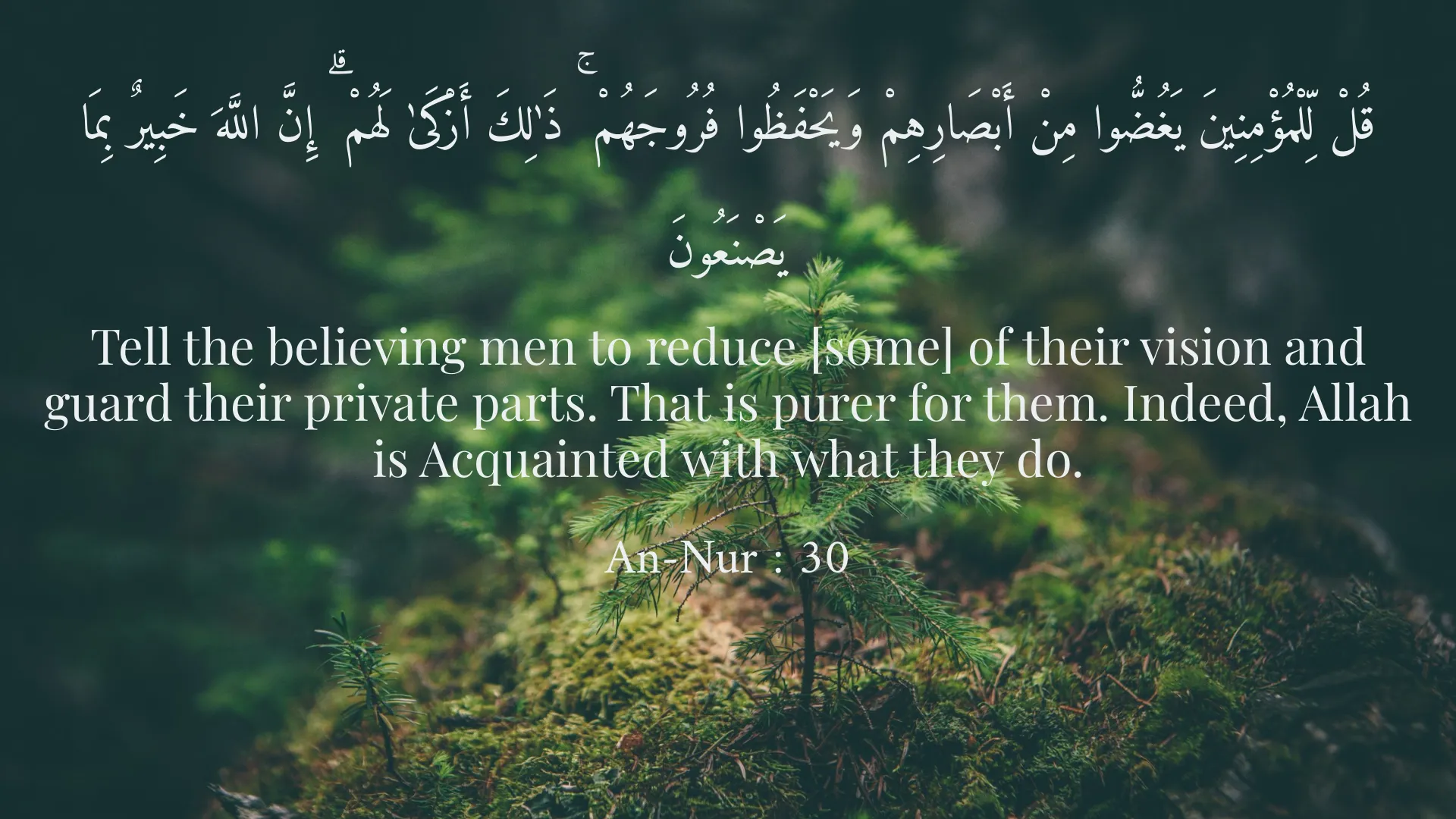
قُلْ لِّلْمُؤْمِنِينَ يَغُضُّوا مِنْ أَبْصَارِهِمْ وَيَحْفَظُوا فُرُوجَهُمْ ۚ ذَٰلِكَ أَزْكَىٰ لَهُمْ ۗ إِنَّ اللَّهَ خَبِيرٌ بِمَا يَصْنَعُونَ
Tell the believing men to reduce [some] of their vision and guard their private parts. That is purer for them. Indeed, Allah is Acquainted with what they do.
An-Nur : 30
وَقُل لِّلْمُؤْمِنَاتِ يَغْضُضْنَ مِنْ أَبْصَارِهِنَّ وَيَحْفَظْنَ فُرُوجَهُنَّ وَلَا يُبْدِينَ زِينَتَهُنَّ إِلَّا مَا ظَهَرَ مِنْهَا ۖ وَلْيَضْرِبْنَ بِخُمُرِهِنَّ عَلَى جُيُوبِهِنَّ وَلَا يُبْدِينَ زِينَتَهُنَّ إِلَّا لِأَزْوَاجِهُنَّ أَوْ آبَائِهِنَّ أَوْ آبَاءِ أَزْوَاجِهِنَّ أَوْ أَبْنَائِهِنَّ أَوْ أَبْنَاءِ أَزْوَاجِهِنَّ أَوْ إِخْوَانِهِمْ أَوْ بَنِي إِخْوَانِهِمْ أَوْ بَنِي أَخَوَاتِهِنَّ أَوْ نِسَائِهِنَّ أَوْ مَا مَلَكَتْ أَيْمَانُهُنَّ أَوِ التَّابِعِينَ غَيْرِ أُولي الإِربةِ مِنَ الرِّجَالِ أَوِ الاطِفَالِ الَّذِينَ لَمْ يَظْهَرُوا عَلَى عَوْرَاتِ النِّسَاءِ ۗ وَلَا يَضْرِبْنَ بِأَرْجُلِهِنَّ لِيُعْلَمَ مَا يُخْفِينَ مِنْ زِينَتِهِنَّ ۚ وَتُوبُوا إِلَى اللَّهِ جَمِيعًا أَيُّهَا الْمُؤْمِنُونَ لَعَلَّكُمْ تُفْلِحُونَ
And tell the believing women to reduce [some] of their vision and guard their private parts and not expose their adornment except that which [ordinarily] appears thereof and to draw their scarves over their chests and not expose their adornment except to their husbands or their fathers or the fathers of their husbands or their sons or the sons of their husbands or their brothers or the sons of their brothers or the sons of their sisters or their women or those whom their right hands possess or the male servants who have no physical desire or the children who are not yet aware of private matters of women. And let them not stomp their feet to make known what they conceal of their adornment. And turn to Allah in repentance, all of you, O believers, that you might succeed.
An-Nur : 31
Short Story
One day, a man named Hasan went to the market and while admiring various ornaments, he suddenly spotted a beautiful woman passing by. He recalled the verses of the Quran and decided to avert his gaze from her. This decision not only kept him away from sin but also gave him a greater sense of peace. Hasan thought to himself that by controlling his gaze and upholding modesty, he could experience a better life.