Quranic Answer
The Quran, regarded as the holy book of Islam, is filled with profound lessons and guidance that cover various aspects of human life. Among these teachings, the concept of justice stands out prominently, taking a central role not only in interactions among individuals in society but also within the intimate setting of the family. The principles outlined in the Quran present a blueprint for fostering healthier relationships through the practice of equity, fairness, and love. This article delves into the significance of justice as emphasized in the Quran, specifically in familial ties, and explores how adhering to these principles can lead to happier and more peaceful domestic environments. In many parts of the Quran, Allah commands believers to maintain justice, underlining its importance across various social strata. Surah An-Nisa (Chapter 4), verse 135, serves as a pivotal reminder of this obligation: "O you who have believed, be persistently standing firm in justice, witnesses in justice, and do not let the hatred of a people prevent you from being just. Be just; it is nearer to righteousness." This verse not only highlights the overarching importance of justice in social dealings but also implicitly calls upon families to embody this principle in their relationships. In a world fraught with conflicts and misunderstandings, such a divine reminder is essential to maintain harmony and peace within familial structures. The family is often considered the fundamental unit of society, and the dynamics within it can significantly impact the larger community. Justice among family members cultivates an environment conducive to love, understanding, and compassion. When parents and guardians commit to equitable treatment of their children, it fosters trust and mutual respect, laying the foundation for a strong family bond. The significance of this is further supported by teachings in the Quran that exhort collective family justice not just as a moral duty, but as a pathway to peace and happiness. Families that uphold the principles of justice can avoid harmful conflicts that often arise from favoritism or bias among children. It is a common observation that children who perceive fairness in how they are treated are more likely to develop positive self-esteem and social behaviors. Conversely, unfair treatment can lead to animosity among siblings and emotional distress, which can have detrimental effects on their overall development. Furthermore, the Quran advocates for justice not only in interpersonal relationships but also in financial matters and the upbringing of children. Parents are urged to manage resources impartially, ensuring that each child’s needs are met without bias. In Surah Al-Isra, verse 31, guidance is offered regarding the allocation of wealth, emphasizing moderation and fairness. This principle goes beyond mere financial equity and extends to emotional and educational nurturing as well. Children must not only receive equal access to material resources but also to emotional support and educational opportunities. When parents approach these responsibilities with a sense of equity, they contribute positively to their children’s growth and development. The teachings of the Quran are not limited to mere recommendations; they function as transformative lessons that can enhance family life significantly. As such, practicing justice within the family is essential for fostering empathy and understanding among its members. The Quran vividly illustrates the potential of a family grounded in justice to evolve into a haven of peace and a source of strength for its members. In contemporary society, where familial structures face various challenges such as socioeconomic pressures, cultural changes, and external conflicts, the application of Quranic principles becomes increasingly relevant. These guidelines provide a moral compass for individuals navigating complex social dynamics, calling attention to the necessity of kindness, fairness, and justice as fundamental values in daily interactions. In doing so, they contribute to creating a society that is more harmonious and resilient. One of the profound aspects of the Quran's teachings is its holistic approach to justice, emphasizing that it is not an abstract concept but one that must be lived out in daily life. For instance, justice must be woven into the fabric of everyday interactions, where each family member feels valued and acknowledged. Parents who model such behaviors are likely to raise children who embrace and replicate these values in their lives, extending the cycle of justice beyond their households into the wider community. Moreover, the importance of dialogue and open communication within families cannot be overstated. The Quran encourages believers to seek understanding and mutual respect, which are essential for promoting justice. This communication enables family members to express their needs and grievances adequately, allowing for issues to be addressed proactively rather than reactively. Consequently, when families prioritize justice, they cultivate an environment where every voice is heard, contributing to deeper emotional connections and healthier relationships. The Quran's attributions of justice thus serve as a guiding light for families, reinforcing the idea that the well-being of family members hinges on their ability to treat each other fairly. It encourages families to reflect upon their own internal dynamics critically, examining their practices and striving to align them with Quranic teachings. Such self-reflection fosters continuous improvement in relationships, resulting in stronger family bonds and a more profound sense of belonging among members. In conclusion, the Quran's emphasis on justice permeates every facet of familial life, beckoning believers to embrace fairness and equity in their interactions. Performing acts of justice not only cultivates love and understanding within families but also lays the groundwork for a peaceful existence. When families heed these teachings, they not only nourish their immediate relationships but also contribute positively to the community at large. The Quran indeed offers a comprehensive framework for navigating the complexities of family life, urging individuals to uphold justice as a principle that enriches their lives and fosters an environment empowered by compassion, understanding, and love.
Related Verses
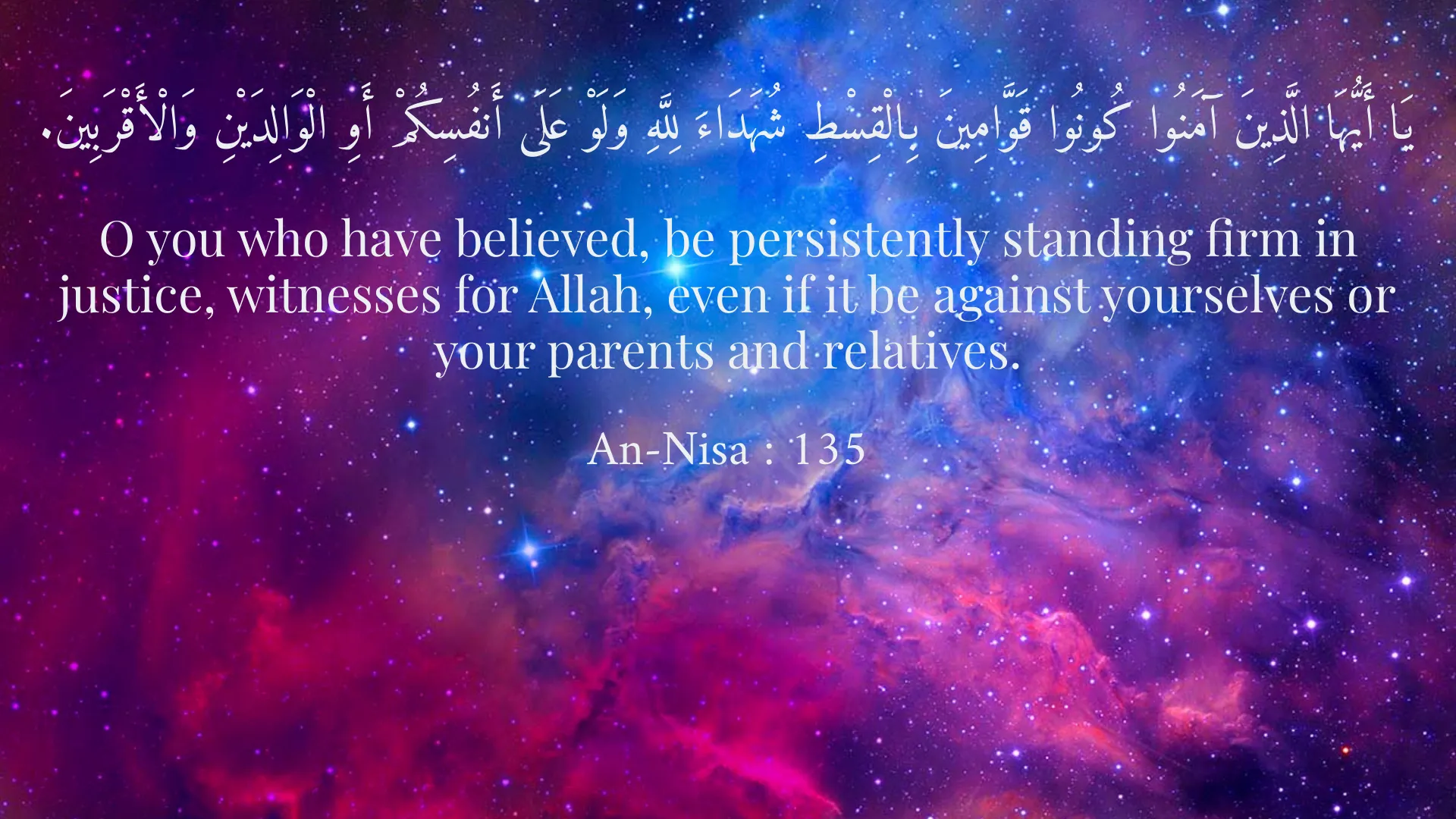
يَا أَيُّهَا الَّذِينَ آمَنُوا كُونُوا قَوَّامِينَ بِالْقِسْطِ شُهَدَاءَ لِلَّهِ وَلَوْ عَلَى أَنفُسِكُمْ أَوِ الْوَالِدَيْنِ وَالْأَقْرَبِينَ.
O you who have believed, be persistently standing firm in justice, witnesses for Allah, even if it be against yourselves or your parents and relatives.
An-Nisa : 135
يَا أَيُّهَا الَّذِينَ آمَنُوا كُونُوا قَوَّامِينَ لِلَّهِ شُهَدَاءَ بِالْقِسْطِ وَلَا يَجْرِمَنَّكُمْ شَنَآنُ قَوْمٍ عَلَى أَلَّا تَعْدِلُوا إِعْدِلُوا هُوَ أَقْرَبُ لِلتَّقْوَى.
O you who have believed, be persistently standing firm in justice, witnesses for Allah. And do not let the hatred of a people prevent you from being just. Be just; it is nearer to righteousness.
Al-Ma'idah : 8
Short Story
One day, in a family, the father and mother were discussing how to raise their children. The father emphasized the need for affection and care, while the mother insisted on considering the health and well-being of their children. They decided to reach an agreement and treat their children with love and justice. This collaboration led to better development for their بچوں, bringing the family closer together.