Quranic Answer
The Holy Quran, as a divine revelation and a comprehensive guide for human life, does not directly address the modern concepts of 'media' or 'public opinion' using these specific contemporary terms. This is naturally because such concepts and tools did not exist at the time of its revelation. However, the eloquence and universality of the Quranic verses are such that they establish profound and fundamental principles that remarkably align with and apply to contemporary phenomena, including the power of influencing and controlling information and public opinion through communication tools. In essence, the Quran delves into the roots and nature of this phenomenon and offers solutions to combat its negative aspects. One of the most crucial themes addressed by the Quran is the distinction between 'truth and falsehood.' The Quran repeatedly calls upon believers to be truthful and to refrain from lying, slander, false accusation, backbiting, and spreading indecency. In the modern era, media can be a powerful instrument for disseminating truth or spreading falsehoods. The Quran strongly condemns any dissemination of inaccurate or misleading information intended to deceive people and manipulate public opinion. Numerous verses speak about the punishment for liars and those who instigate discord and corruption through their words. The incident of the 'slander' (Ifk) in Surah An-Nur is a prime example of the spread of rumors and defamation, illustrating how it can affect a society and sway public opinion towards falsehood. This story vividly demonstrates how a false report can quickly spread and lead to destructive consequences, and Allah the Almighty addresses this issue with seriousness, guiding on how to deal with such information. Another fundamental principle in the Quran is the 'necessity of verification and investigation.' In Surah Al-Hujurat, verse 6, believers are explicitly commanded that if a wicked person brings them news, they should investigate it carefully, lest they harm a people in ignorance and then regret what they have done. This Quranic directive is a foundational principle in dealing with any information, especially in the age of mass media and social networks. This verse teaches us not to accept everything we hear or see without thought and deliberation. The power of media in shaping public opinion stems precisely from its ability to deliver information rapidly and unfiltered to audiences. The Quran calls upon believers to activate their faculty of discernment and analysis, and not to be easily swayed by rumors, false propaganda, or manipulative news. This principle helps us to discern truth from falsehood in a world brimming with information, ensuring we are not deceived. Furthermore, the Quran refers to the 'whispers of Satan' and his role in misleading humans. Satan, through deception, temptation, false promises, and beautifying falsehood, attempts to distort people's thoughts and beliefs. These whispers can manifest as attractive but hollow words, deceptive advertisements, or misleading ideas, which are inherently connected to the control of public opinion. The Quran encourages believers to seek refuge in Allah and to recognize satanic whispers. Surah An-Nas speaks of seeking refuge from the whispers of the slinking whisperer who whispers into the hearts of people. These whispers can infiltrate society through individuals who have become tools of Satan, thereby influencing public opinion. Moreover, the Quran places great emphasis on the 'responsibility of speech and utterance.' Every word a person utters is recorded, and they will be held accountable for it. This principle teaches us to be careful in disseminating any content and to refrain from speaking or republishing what we do not know for certain or what leads to corruption and misguidance. This individual responsibility serves as a strong barrier against the indiscriminate spread of misinformation and negative media influences. Finally, the Quran emphasizes 'avoiding blind imitation' and the importance of reason and critical thinking. Verses that criticize following ancestors or traditions without proof and reason are great lessons in combating intellectual domination. People should use their intellect and seek truth instead of passively accepting whatever is instilled in them. This approach is a way to liberate oneself from any attempts to control public opinion, as it transforms the individual from a passive follower into an active thinker. Considering these principles, it can be concluded that the Holy Quran, despite not using modern terminology, provides eternal and fundamental guidance for humanity to be vigilant and resilient against any misuse of communication tools to mislead public opinion. These verses equip believers with critical thinking, the necessity of investigation and verification, avoidance of falsehood and slander, and reliance on Allah for discerning the truth. Consequently, the Quran not only implicitly addresses aspects of influencing public opinion but also offers practical solutions for maintaining the intellectual and spiritual health of society.
Related Verses
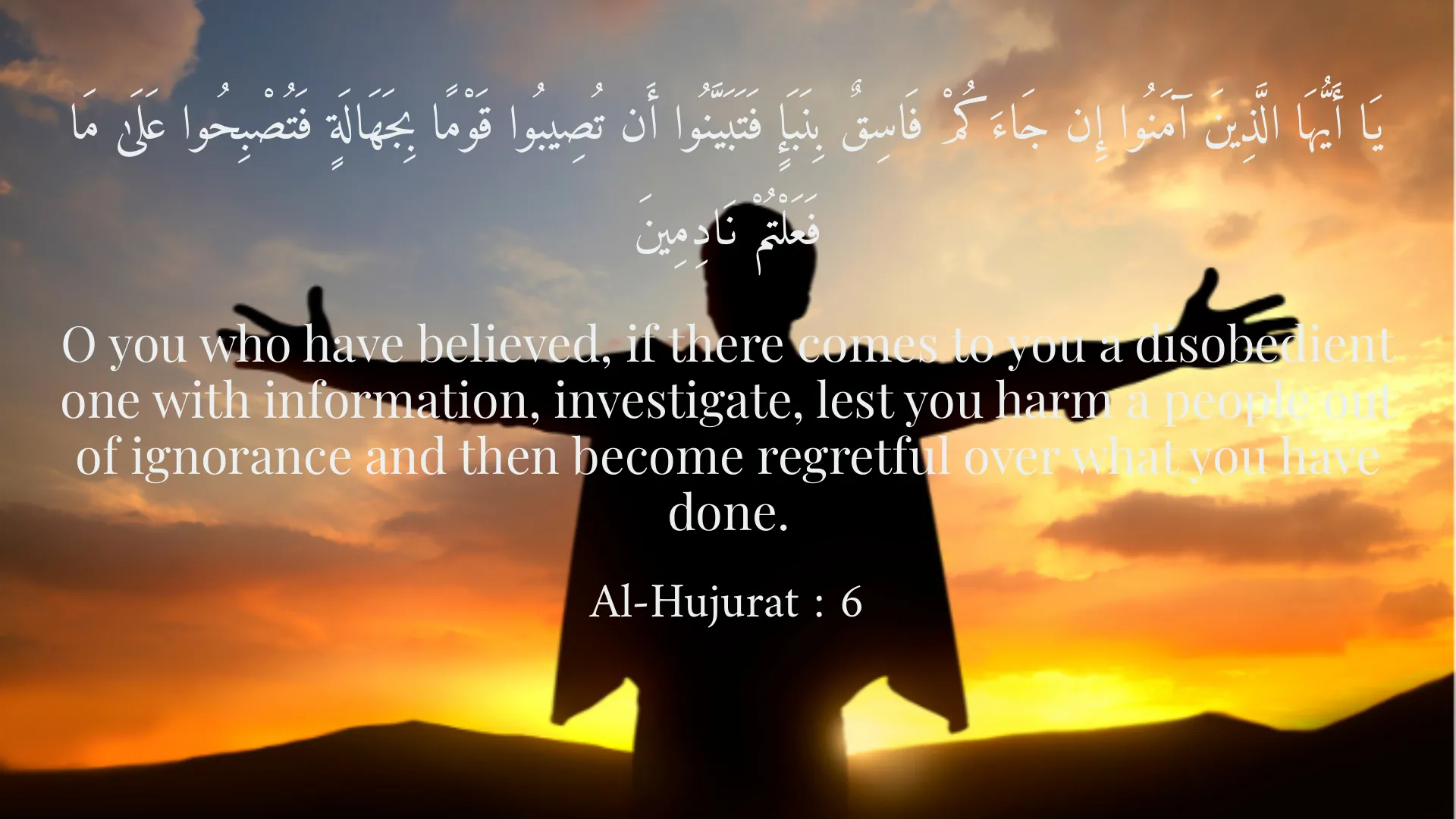
يَا أَيُّهَا الَّذِينَ آمَنُوا إِن جَاءَكُمْ فَاسِقٌ بِنَبَإٍ فَتَبَيَّنُوا أَن تُصِيبُوا قَوْمًا بِجَهَالَةٍ فَتُصْبِحُوا عَلَىٰ مَا فَعَلْتُمْ نَادِمِينَ
O you who have believed, if there comes to you a disobedient one with information, investigate, lest you harm a people out of ignorance and then become regretful over what you have done.
Al-Hujurat : 6
إِذْ تَلَقَّوْنَهُ بِأَلْسِنَتِكُمْ وَتَقُولُونَ بِأَفْوَاهِكُم مَّا لَيْسَ لَكُم بِهِ عِلْمٌ وَتَحْسَبُونَهُ هَيِّنًا وَهُوَ عِندَ اللَّهِ عَظِيمٌ
When you received it with your tongues and spoke with your mouths that of which you had no knowledge, and you thought it was insignificant while with Allah it was great.
An-Nur : 15
وَلَا تَقْفُ مَا لَيْسَ لَكَ بِهِ عِلْمٌ ۚ إِنَّ السَّمْعَ وَالْبَصَرَ وَالْفُؤَادَ كُلُّ أُولَٰئِكَ كَانَ عَنْهُ مَسْئُولًا
And do not pursue that of which you have no knowledge. Indeed, the hearing, the sight, and the heart - about all those [one] will be questioned.
Al-Isra : 36
Short Story
It is narrated that during the reign of a just king, there were two viziers; one truthful and the other very envious. The envious vizier, seeking to undermine his rival's position, went to the king and falsely claimed: "O King, the other vizier reveals court secrets and takes bribes from the people!" The king, hearing his words and taking them to heart without investigation, became disturbed with the truthful vizier, and doubt crept into his mind. The truthful vizier, sensing the king's change of attitude, went to a wise man and recounted his situation. The wise man replied: "Do not grieve, for falsehood has no foundation, and truth will eventually be revealed. Wise kings do not accept every word without investigation." It was not long before the king himself discovered the cunning and deceit of the envious vizier and realized his intention was to sow discord. The king regretted his actions and not only elevated the position of the truthful vizier but also taught his people that they should not be deceived by every word and should always seek the essence of truth. Saadi, with this beautiful story, teaches us how words, whether true or false, can influence thoughts and perhaps disturb hearts and ruin relationships, unless we look at every piece of news with an alert eye and an attentive but cautious ear, and do not judge hastily. This story reminds us of the Quranic verse that says: "If a disobedient one brings you news, investigate."