Quranic Answer
The Holy Quran, as a divine revelation and a comprehensive guide for humanity, does not explicitly use the terms "mental health" or "modern world." However, it profoundly addresses topics that form the very foundation of psychological well-being. The teachings of the Quran offer eternal and universal principles that transcend time and place, providing solutions to many human psychological and emotional challenges in any era, including the complex and high-pressure modern world. In essence, the Quran, with its holistic view of humanity and its existential dimensions, provides pathways to achieve inner peace, cope with anxiety, depression, stress, and find meaning in life, all of which are directly related to one's mental health. These solutions are presented not merely as ethical recommendations but as practical guidelines for a balanced and meaningful life, capable of acting as an antidote to contemporary psychological pressures such as the high pace of change, complexities of social relations, economic pressure, and information overload. One of the most central Quranic concepts in this regard is "Dhikr," or the remembrance of God. In Surah Ar-Ra'd (The Thunder), verse 28, Allah states: "أَلَا بِذِكْرِ اللَّهِ تَطْمَئِنُّ الْقُلُوبُ" (Unquestionably, by the remembrance of Allah hearts are assured). This key verse is not merely a recommendation but a divine promise, indicating that the ultimate source of peace and tranquility of the heart lies in a constant connection and remembrance of the Creator. In the modern world, where individuals are constantly bombarded with information, work pressure, intense competition, and material concerns, this remembrance can act as an anchor, saving the soul from turbulence. The five daily prayers (Salah), recitation of the Quran, Dhikr (remembrance), and supplication (Du'a) are all manifestations of this remembrance of God, providing regular opportunities for introspection, focus, and connection to the source of peace. These acts of worship are not only religious obligations but powerful tools for emotional regulation, stress reduction, and building psychological resilience. Performing these acts regularly creates a calming routine in the chaotic modern life, helping individuals devote moments away from worldly distractions to their inner selves and connection with the divine, which significantly improves mental well-being. Another crucial concept is "Tawakkul," or reliance on God. Surah At-Talaq (The Divorce), verse 3, declares: "وَمَن يَتَوَكَّلْ عَلَى اللَّهِ فَهُوَ حَسْبُهُ" (And whoever relies upon Allah - He is sufficient for him). Tawakkul does not mean abandoning effort; rather, it means entrusting the outcome to God after fulfilling one's duties and making earnest endeavors, thereby freeing oneself from anxiety about the future. This approach lifts a heavy burden from the modern human psyche, which is constantly preoccupied with future worries, career success, economic status, and social issues. It provides reassurance that Allah will be their helper in all circumstances. This sense of divine support significantly reduces feelings of helplessness and loneliness, replacing them with hope and spiritual self-confidence. Tawakkul acts as a psychological shield, bringing tranquility against the fear of failure and lack of control, allowing individuals to face challenges with greater courage. "Sabr," or patience and perseverance, is another vital Quranic teaching that plays a fundamental role in preserving mental health. Surah Al-Baqarah (The Cow), verse 153, states: "يَا أَيُّهَا الَّذِينَ آمَنُوا اسْتَعِينُوا بِالصَّبْرِ وَالصَّلَاةِ ۚ إِنَّ اللَّهَ مَعَ الصَّابِرِينَ" (O you who have believed, seek help through patience and prayer. Indeed, Allah is with the patient). In today's challenging world, people encounter numerous setbacks, failures, illnesses, loss of loved ones, and economic difficulties. Patience in this context means resilience, steadfastness, and not succumbing to problems. The Quran encourages perseverance and promises that Allah is with those who are patient. This type of patience protects individuals from despair and hopelessness, which can lead to depression, enabling them to view problems constructively and learn from them. Furthermore, patience in the Quran is often linked with the concept of 'Ihtisab,' meaning seeking reward from God in the hereafter, which motivates individuals to endure hardships with a positive outlook, knowing that every suffering will ultimately lead to good or reward, thereby greatly alleviating the psychological burden of difficulties. Moreover, the Quran emphasizes the importance of "Shukr," or gratitude (Surah Ibrahim, verse 7). Being grateful for divine blessings, even the smallest ones, shifts one's focus from what is lacking to what is present, fostering a positive outlook. This approach directly counteracts feelings of envy, discontent, and toxic comparisons prevalent in modern social media and consumer culture, contributing to a deeper sense of inner satisfaction. Gratitude is a powerful mental exercise that changes one's perspective from what they lack to what they possess, enhancing a sense of abundance and blessings in their life. Additionally, the Quran also highlights "moderation" and "avoidance of extremes" (Wasatiyyah, Surah Al-Furqan, verse 67) as principles contributing to mental well-being. In the modern world, where the boundaries between work and personal life are blurred, and pressure for greater achievement leads to burnout and psychological exhaustion, the Quran advises maintaining balance in all aspects of life, whether in worship or worldly affairs. This moderation entails considering the rights of the body, soul, family, and society, preventing exhaustion and psychological pressure. This balance allows individuals to manage their energy effectively and prevent burnout. The Quran also places great emphasis on "healthy social connections" and "empathy." Encouragement of kinship ties, kindness to parents and the needy, helping others, and avoiding backbiting and slander all contribute to building strong support networks and a healthy society, which indirectly positively impact individuals' mental health. Feelings of belonging, social support, and the ability to forgive and overlook are among the most important factors in reducing anxiety and depression. The Quran commands believers to cooperate in righteousness and piety (Surah Al-Ma'idah, verse 2), which significantly strengthens the sense of solidarity and reduces feelings of loneliness. Living in a society that operates on Quranic principles reduces violence, injustice, and hostilities, creating a safer and calmer environment for psychological growth. Finally, the Quran imbues human life with "purpose and meaning." The awareness that life is purposeful and that all actions are recorded in the presence of God (Surah Adh-Dhariyat, verse 56: "And I did not create the jinn and mankind except to worship Me") provides immunity against the emptiness and meaninglessness of life, which is one of the afflictions of the modern world. This sense of purpose motivates individuals to strive for perfection despite challenges, leading a fruitful and meaningful life. This sense of purpose, especially in a world where many individuals struggle with identity and meaning crises, is a huge source of peace and direction. Therefore, it can be concluded that the Quran, by providing strong foundational beliefs, ethics, and practical guidelines, serves as a comprehensive guide for maintaining and enhancing mental health, even if it does not explicitly use the term. Its teachings offer an antidote to many psychological pressures stemming from the speed and complexity of the modern world, guiding individuals towards inner peace, resilience, and a meaningful existence, and offering a healthy and sustainable framework for life.
Related Verses
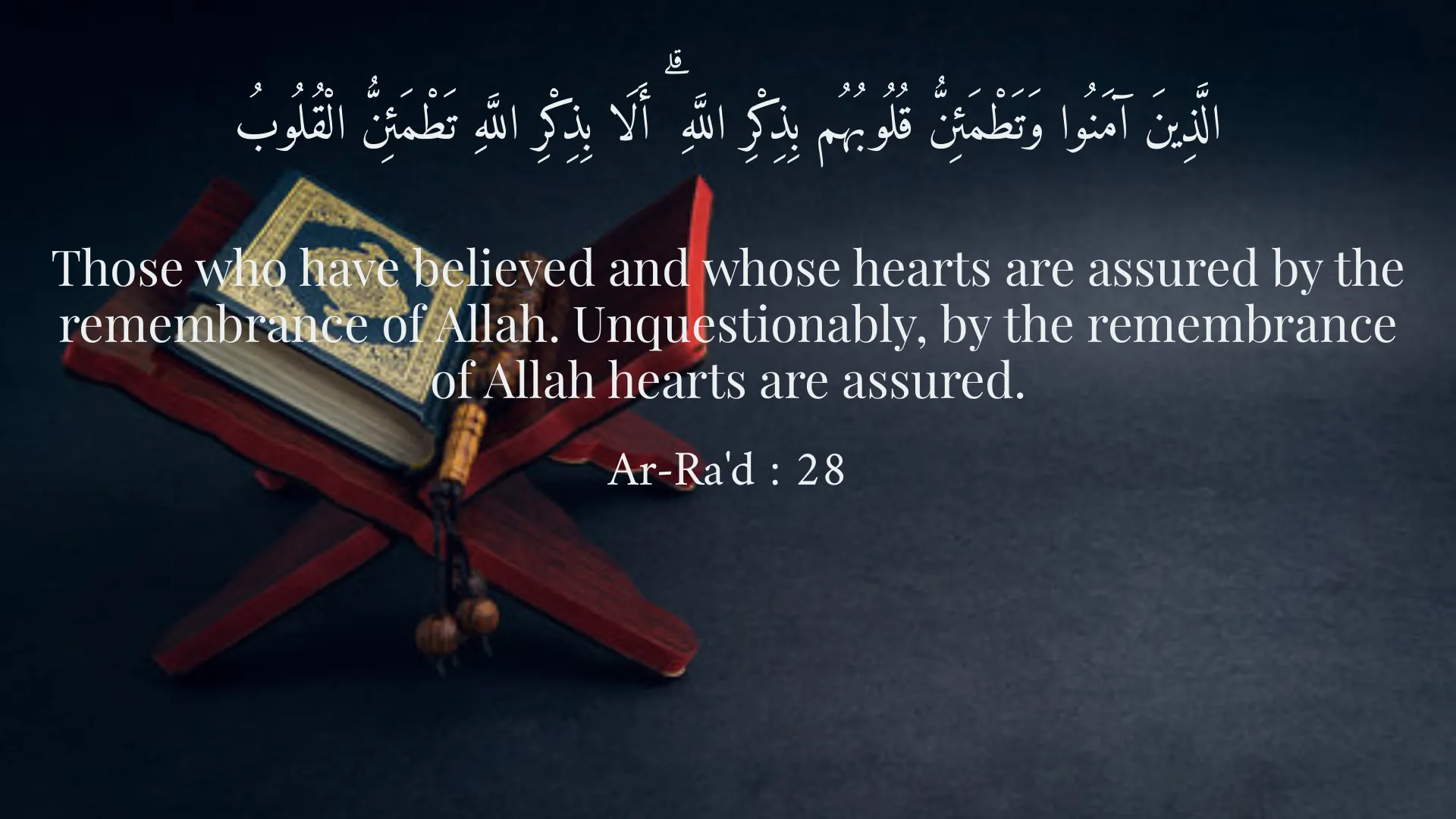
الَّذِينَ آمَنُوا وَتَطْمَئِنُّ قُلُوبُهُم بِذِكْرِ اللَّهِ ۗ أَلَا بِذِكْرِ اللَّهِ تَطْمَئِنُّ الْقُلُوبُ
Those who have believed and whose hearts are assured by the remembrance of Allah. Unquestionably, by the remembrance of Allah hearts are assured.
Ar-Ra'd : 28
يَا أَيُّهَا الَّذِينَ آمَنُوا اسْتَعِينُوا بِالصَّبْرِ وَالصَّلَاةِ ۚ إِنَّ اللَّهَ مَعَ الصَّابِرِينَ
O you who have believed, seek help through patience and prayer. Indeed, Allah is with the patient.
Al-Baqarah : 153
وَمَن يَتَوَكَّلْ عَلَى اللَّهِ فَهُوَ حَسْبُهُ ۚ إِنَّ اللَّهَ بَالِغُ أَمْرِهِ ۚ قَدْ جَعَلَ اللَّهُ لِكُلِّ شَيْءٍ قَدْرًا
And whoever relies upon Allah - He is sufficient for him. Indeed, Allah will accomplish His purpose. Allah has already set for everything a [decreed] extent.
At-Talaq : 3
Short Story
In Saadi's Golestan, it is recounted that a king, despite his immense wealth and power, was perpetually anxious and tormented by restless thoughts. His face was troubled and pale. One day, he passed by a dervish who sat peacefully under a tree, singing joyfully. Astonished by this contrast, the king approached the dervish and asked, 'O virtuous man, how is it that I, with all my possessions and power, am enslaved by anxiety and worry, while you, owning nothing, are so serene and joyful?' The dervish replied with a warm smile, 'O King, my peace of mind stems from possessing nothing to fear losing, and from entrusting all my affairs to God, who owns everything. My heart finds rest in knowing that my sustenance is from Him and my refuge is His mercy. Therefore, no worldly concern can disturb my inner calm.' The king listened thoughtfully to the dervish's words and realized that true peace was not in worldly possessions or power, but in detachment from the world and reliance on God, which frees the heart from worldly burdens.