Quranic Answer
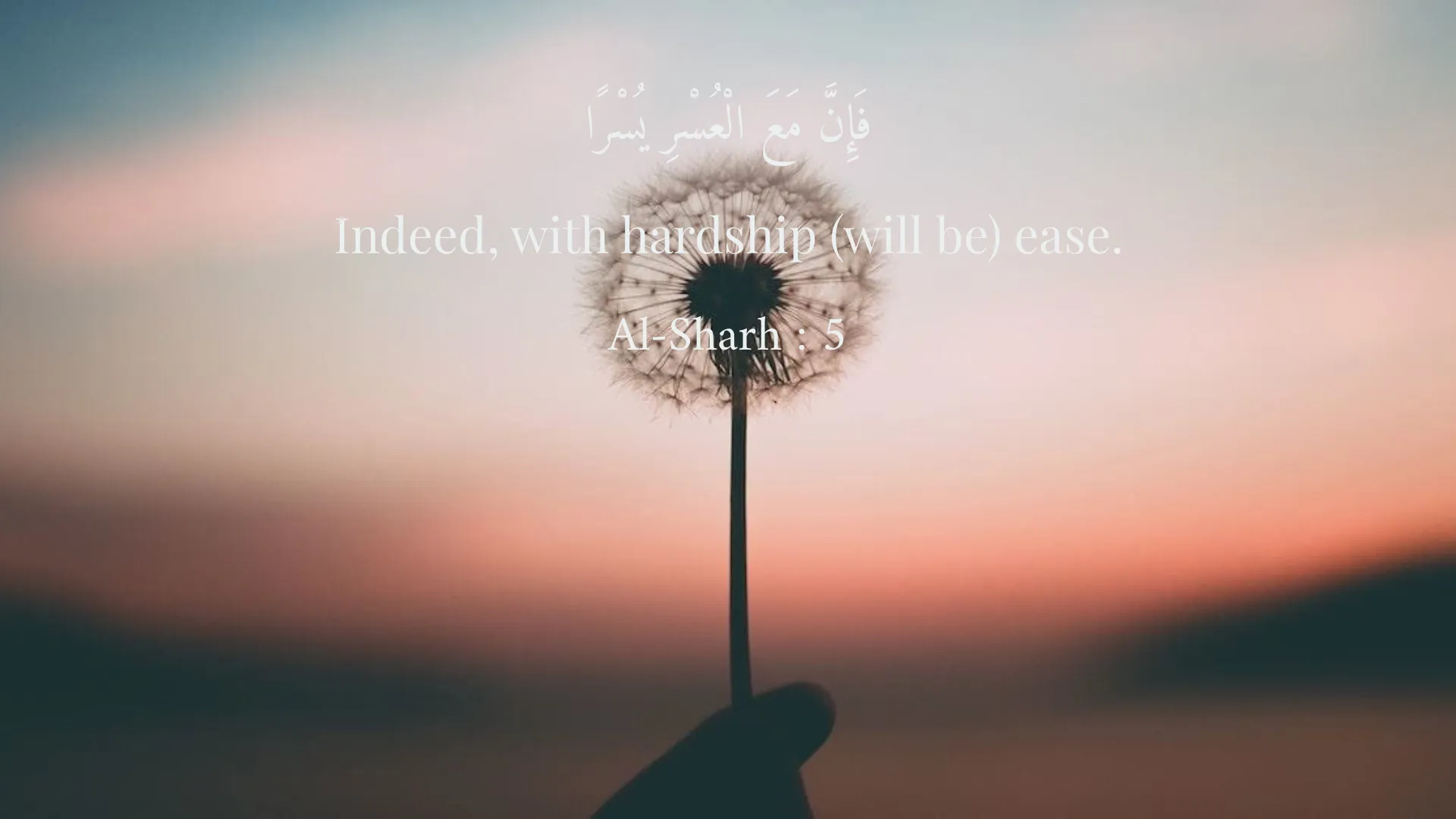
The concept of peace holds immense significance in our lives, and the Holy Quran serves as an excellent guide for achieving this tranquility. In various verses, it encourages believers to find resilience and comfort amidst difficulties. One of the prominent verses that stand out in this regard is found in Surah Al-Sharh, where verses 5 and 6 state, 'For indeed, with hardship [will be] ease.' This simple yet profound statement presents an essential perspective on the human experience, signifying that life will often present us with challenges; however, with these obstacles also comes relief and ease. This duality is a crucial reminder for individuals enduring hardships: to remain hopeful. The Quran continually emphasizes the importance of maintaining a positive outlook even during trying times. Life, at times, can feel overwhelmingly tough, and despair may creep into our thoughts, convincing us that there is no way out of our troubles. Nonetheless, the Quran reassures us that after every struggle, ease will follow. This ideology fosters a sense of optimism and faith in God's wisdom, allowing individuals to navigate their difficulties with patience and trust. It reminds us that setbacks are not permanent, and what may feel like the end of the road is often a stepping stone towards better days. In moments of despair, it is essential to keep these verses close to heart, allowing them to serve as beacons of light, guiding us towards hope. Furthermore, another crucial verse in Surah Al-Baqarah, verse 153, emphasizes the importance of seeking help through patience and prayer. 'O you who have believed, seek help through patience and prayer.' This instruction from Allah is not merely a suggestion but a directive to utilize the tools of patience and prayer as means of achieving peace. The act of praying connects believers with their Creator, and in the midst of our struggles, prayer can serve as a profound source of comfort. Through the supplication to God, individuals can express their fears, frustrations, and desires, finding solace in the act of relinquishing control and trusting in a higher power. It serves as a moment of reflection, allowing us to regain our composure and focus on what truly matters—our relationship with God and the strength He embodies. Prayer is further highlighted in Islamic teachings as a mechanism that evokes tranquility. When one turns to prayer, it is a form of meditation that encourages mindfulness, reflection, and gratitude. By dedicating time to connect with God through offering prayers, believers can create a space of inner silence amidst the chaos of life. This repeated act of devotion can instill a sense of routine and stability in one's daily life, presenting a counter to external chaos that may lead to stress and anxiety. Moreover, as mentioned in Surah Ar-Ra'd, verse 28: 'Unquestionably, by the remembrance of Allah hearts are assured.' This beautiful verse highlights the transformative power of remembrance (Dhikr) in soothing the heart. Remembrance of Allah serves as a spiritual anchor that can help individuals ground themselves in times of distress. It offers a form of reassurance that irrespective of life’s trials, God's presence surrounds us, providing the peace we so desperately seek. Practicing Dhikr allows the heart to find solace; it calms the spirit and revitalizes faith. It brings an awareness that we are not alone in our struggles, that there is a divine purpose behind every experience, and that every hardship can lead to deeper understanding and growth. The teachings of the Quran manifest a significant truth; peace comes from establishing a deep connection with God. The more one engages in prayer, reflection, and the remembrance of God, the more they cultivate inner serenity. For instance, during periods of excessive stress or ongoing worry, the appropriate response is often to retreat inwardly through supplication, Quranic recitation, and meditation on the meanings of the verses. By immersing ourselves in the divine words of the Quran, we can retrain our thoughts and emotions, fostering a greater sense of calmness and balance. The teachings imparted through the Quran remind us that maintaining hope is essential. Even in periods of uncertainty, we should not cower in fear of the future but instead place our trust in God. Every hardship is an opportunity for growth and a chance to experience joyful moments that follow the gloom. Such teachings advocate for resilience, perseverance, and a proactive approach towards life’s challenges. Believers are encouraged to face their problems with courage, patience, and continual faith in God’s mercy. In conclusion, the Holy Quran profoundly elucidates the pursuit of peace in our lives through divine guidance. It is a remarkable source of inspiration that teaches individuals how to remain hopeful, serene, and steadfast amid life’s ups and downs. By embracing the lessons of the Quran, such as the promise of ease with hardship, the significance of patience and prayer, as well as the comforting nature of remembering God, we can navigate life's challenges with an empowered heart. Our journey through struggles can thus become a path to enlightenment, through which we learn to cultivate faith, resilience, and above all, peace.
Related Verses
فَإِنَّ مَعَ الْعُسْرِ يُسْرًا
Indeed, with hardship (will be) ease.
Al-Sharh : 5
يَا أَيُّهَا الَّذِينَ آمَنُوا اسْتَعِينُوا بِالصَّبْرِ وَالصَّلَاةِ ۚ إِنَّ اللَّهَ مَعَ الصَّابِرِينَ
O you who have believed, seek help through patience and prayer. Indeed, Allah is with the patient.
Al-Baqarah : 153
أَلَا بِذِكْرِ اللَّهِ تَطْمَئِنُّ الْقُلُوبُ
Unquestionably, by the remembrance of Allah hearts are assured.
Ar-Ra'd : 28
Short Story
One day, a man named Ahmad felt sadness and despair amidst the hardships of life. He decided to seek peace. By reading the Quran and reflecting on its verses, he concluded that the remembrance of God could calm him. Gradually, by establishing a closer relationship with God, he experienced greater happiness and tranquility.